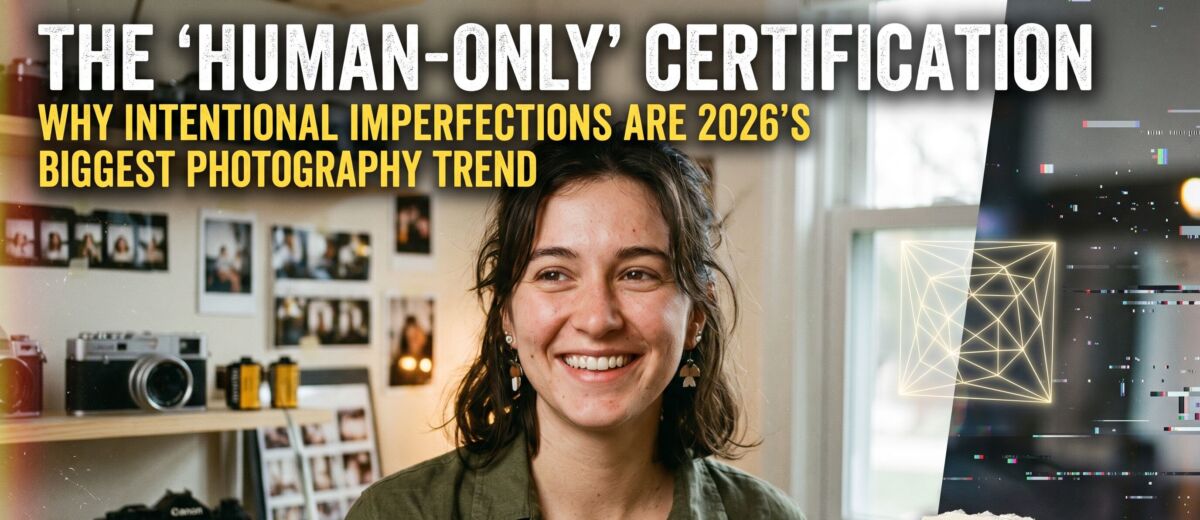
For the past two years, digital feeds have been flooded with hyper-optimized, symmetrical, and flawlessly saturated AI-generated content. In 2026, the visual arts community has reached a critical turning point: absolute perfection is no longer the goal; it is a massive red flag. If a commercial photograph looks too flawless, the modern consumer’s brain immediately clocks it as a bot and scrolls past. Consequently, the defining visual movement of 2026 is “Human-Proofing”—the strategic injection of intentional friction, tactile errors, and raw authenticity into photography. Audiences are craving unfiltered storytelling and the cinematic, nostalgic aesthetics associated with analog film.
The psychological shift driving this trend is rooted in a phenomenon known as “Post-Perception Fatigue.” After being bombarded by millions of mid-journey generations that boast impossible skin clarity and “perfect” golden hour lighting, the human eye has developed a subconscious distrust of visual harmony. In response, 2026 has seen a dramatic resurgence in “lo-fi” techniques. Photographers are now intentionally introducing lens flares, light leaks, and motion blur—elements that were once considered technical failures—to serve as a “digital fingerprint” of human presence. These imperfections act as a form of non-verbal authentication, signaling to the viewer that the image was captured in a physical space with real light hitting a real sensor.
This pushback is so strong that even AI-heavy software developers are pivoting their messaging. Companies like Aftershoot are emphasizing that AI should be used for background workflow tasks—like culling images or matching a photographer’s unique editing style—rather than generating fake pixels on a blank canvas. The industry is moving toward a “support, not replace” model where AI handles the drudgery of sorting thousands of raw files, leaving the photographer free to focus on the “pinchable” moments—the tears that aren’t retouched, the messy hair in a breeze, and the genuine, unscripted laughter that feels lived-in.
Furthermore, the rise of “Intentional Imperfection” has birthed a new luxury market for analog and hybrid workflows. Large-format film photography and CCD-sensor digital cameras from the early 2000s have become the “Human-Only” gold standard. These tools offer a specific color science and noise profile that AI still struggles to replicate without appearing “patterned” or “calculated.” By leaning into the unpredictable nature of chemical development or the limited dynamic range of older sensors, creators are producing work that feels tangibly grounded in history.
In the commercial world, this trend has manifested as a “Human-Only” certification in spirit, if not yet in law. Brands are intentionally choosing “character-rich” faces over traditional model standards, valuing natural asymmetry and visible skin texture as assets rather than flaws. Even product photography has abandoned the sterile showroom look for “lived-in” environments—cluttered desks, wrinkled linens, and half-finished cups of coffee that tell a story of a day actually spent. This “narrative grit” is what currently converts browsers into buyers, as it fosters a sense of trust that “clean” AI assets simply cannot achieve.
In a synthetic digital landscape, a portrait is no longer just a visual record; it is a statement of identity. Embracing the imperfect, the grainy, and the unpredictable is how human photographers will command premium value in 2026. This shift isn’t just about a retro aesthetic; it’s about a psychological need for visual proof of existence. When we see a slightly out-of-focus foreground or a natural skin texture that hasn’t been airbrushed into oblivion, we feel a connection that an algorithm simply cannot replicate. In the current economy of attention, the most valuable thing a creator can offer is a soul, and in 2026, that soul is found strictly within the flaws. The “Human-Only” era isn’t about rejecting technology; it is about reclaiming the beauty of the mistake.