
Dead last. Final turn. Twenty-three to one odds. She became the first in 152 years.
May 2, 2026. Churchill Downs. 152nd Kentucky Derby.
Cherie DeVaux stood trackside in a red blazer watching her horse run dead last.
Not second-to-last. Not mid-pack. Last.
Golden Tempo was so far behind the leaders that the NBC cameras couldn’t fit him in the same frame.
This was supposed to be her moment. Her shot. Her one chance to do something no woman had done in the 152-year history of the Kentucky Derby.
And her horse was losing. Badly.
Twenty-three to one odds. Nobody believed Golden Tempo could win. The bettors had picked Renegade—the 5-to-1 favorite. The analysts had their eye on Commandment, So Happy, Chief Wallabee.
Golden Tempo? He was an afterthought. A filler horse. The kind of entry people glance past in the program.
Cherie knew better.
She’d spent months studying this horse. Watching how he moved. Learning his personality. Understanding his strategy.
Golden Tempo was what trainers call a “deep closer.” He had no early speed. Couldn’t keep pace with the front-runners if he tried.
But he had something else: stamina. Heart. And what Cherie called a “quick turn of foot”—the ability to accelerate when other horses were gasping for air.
Golden Tempo’s strategy was simple: let everyone else do the hard work. Hang back. Conserve energy. Then unleash hell in the final stretch.
It was a strategy that required perfect timing. Perfect patience. Perfect trust between horse, jockey, and trainer.
And it only worked if there was space to run.
As the field rounded the final turn, Golden Tempo was buried. Seventh lengths back. Boxed in by tiring horses.
This is where Derby dreams die. Where longshots fade. Where the favorites pull away and the story writes itself.
Cherie watched. Waited. Trusted her jockey—Jose Ortiz, riding his 11th Derby, still searching for his first win.
Then it happened.
A seam opened along the rail. Just enough space for a closing horse with one final burst left.
Golden Tempo exploded.
Not gradually. Not inch by inch. Like a lightning strike.
He devoured ground. Picked off one rival. Then another. Then another.
The crowd’s roar shifted from excitement to disbelief.
The announcers’ voices went up an octave.
Golden Tempo was flying.
Jose Ortiz didn’t use the whip. Didn’t need to. Just let the horse run.
They caught the leaders. Passed them. Drew even with Renegade—the favorite, ridden by Jose’s own brother, Irad Ortiz Jr.
Final twenty yards. Two horses. Two brothers. History on the line.
Golden Tempo stuck his nose in front.
Hit the wire.
Won by a nose.
2:02.27.
The greatest comeback in recent Derby history.
And Cherie DeVaux—44 years old, red blazer, tears streaming down her face—became the first woman in 152 years to train a Kentucky Derby winner.
One hundred and fifty-two years.
Since 1875, when the Derby began, thousands of horses had run. Hundreds of trainers had tried.
All of them men.
Until now.
The cameras found Cherie immediately. Standing alone. Hands covering her face. Shoulders shaking.
Not from sadness. From the sheer weight of what had just happened.
When the microphones reached her, she could barely speak.
“I don’t have any words right now,” she said, voice cracking. “I’m just so, so happy for Golden Tempo. Jose did a wonderful job, a masterful job at getting him there.”
Someone asked what the win meant for women in racing.
“I’m glad I can be representative of women everywhere,” she said. “We can do anything we set our minds to.”
The phrase could have sounded like a platitude. A post-race cliché.
But coming from a woman who’d just accomplished something that had eluded every female trainer for a century and a half, it landed differently.
It wasn’t aspirational. It was proven.
Cherie’s journey to Churchill Downs didn’t follow the traditional path.
She grew up in Saratoga Springs, New York—horse racing country. Rode horses her whole life. Loved them obsessively.
But she didn’t think she could make a living in racing.
So she went to college. Studied pre-med at Florida Gulf Coast University. Planned to become a physical therapist.
“I wanted to have a life that afforded horses,” she explained later. “Because they’re not cheap.”
During summer break, she took a job working with racehorses. Just to stay close to the animals she loved.
And she got hooked.
Started as a stable worker. The lowest rung. Mucking stalls. Grooming horses. Learning the rhythms of the track at 5 AM.
She worked under Chuck Simon—a veteran trainer who taught her the fundamentals. Then became an assistant trainer under Chad Brown, one of the biggest names in the business.
For years, she learned. Observed. Absorbed everything.
But she dreamed of running her own stable. Making her own calls. Training horses her way.
In 2017, she was at a crossroads. Stay as an assistant forever? Or take the leap?
She took the leap.
In 2018—eight years ago—Cherie opened her own stable.
The first three years were brutal.
“Really slow to get started,” she said. “Kind of like Golden Tempo.”
Owners didn’t trust a relatively unknown female trainer with their expensive horses. Clients were hard to find. Money was tight.
But Cherie kept grinding. Took whatever horses she could get. Built relationships. Proved herself one race at a time.
Her husband, David Ingordo—a bloodstock agent—supported her through the lean years. Believed in her when the industry didn’t.
And slowly, things changed.
Better horses. Better clients. Better results.
Then Golden Tempo came into her barn.
Son of Curlin—a two-time Horse of the Year. Good pedigree. Decent performances in the Louisiana Derby and Risen Star Stakes.
But nothing that screamed “Derby winner.”
Cherie saw something others didn’t. A psychological resilience. A horse who didn’t panic when he was behind. Who saved his best for when it mattered most.
“He just doesn’t have a lot of speed,” she explained. “But he has a lot of stamina, and towards the end of the race, he has what we call a quick turn of foot. He can make up a lot of ground.
“In the early stages, he likes to just hang out behind and let them all do the hard work. Then he can just finish up and beat them all.”
It was a risky strategy. Derby crowds love front-runners. Speed. Dominance.
Closers have to trust that space will open. That they’ll have enough track left. That their final kick will be enough.
All the pressure falls on the jockey’s timing.
Jose Ortiz understood the assignment.
When that seam opened in the stretch, he didn’t hesitate. Didn’t second-guess. Just let Golden Tempo run.
“The credit for winning the race definitely goes to Jose,” Cherie said afterward. “He had to time that perfectly. And he had all of the faith in the horse.”
In the winner’s circle, draped in roses, Cherie stood in that red blazer—the one that would end up in the Kentucky Derby Museum—and let herself feel it.
Not just the win. The barrier.
Before Saturday, 17 women had trained horses in the Derby. Some came close—Shelley Riley got second place with Casual Lies in 1992.
But close doesn’t rewrite history books. Close doesn’t change “never” to “finally.”
Young girls seeing a woman in the winner’s circle of the world’s most famous horse race. Seeing that red blazer against the sea of suits. Seeing proof that “never in 152 years” can become “first in history” in two minutes.
The racing industry had been struggling. Declining interest. Aging fan base. The same stories year after year.
Then came the “DeVaux Effect.”
Suddenly horse racing wasn’t just about gambling or fashion or tradition. It was about something bigger: shattering a ceiling that had stood for a century and a half.
The human interest angle breathed life into a sport that had been suffocating under its own history.
In her post-race press conference, Cherie was asked if she considered herself a trailblazer.
“I consider myself a horse trainer,” she said. “And I just happen to be a female.”
Then she added: “Being a woman or my gender has never really crossed my mind in this. The thing that has become apparent to me is not everyone has the same constitution I have mentally.”
Translation: she never let the barrier stop her from trying. Never accepted “no woman has ever” as a reason not to attempt it.
When asked about the Preakness—the second leg of the Triple Crown, scheduled for May 16—Cherie wouldn’t commit.
“It’s up to the horse,” she said. “The horse comes first in any conversation. He needs to be back, healthy, jumping up and down, feeling his oats.”
The Belmont Stakes—the third Triple Crown race—would be held in Saratoga Springs. Cherie’s hometown.
A potential homecoming. A chance to chase the Triple Crown.
But that’s for later.
Right now, on May 2, 2026, at Churchill Downs, Cherie DeVaux stood under the twin spires holding a trophy no woman had ever held.
One hundred and fifty-two years of Derby history. Thousands of horses. Hundreds of trainers.
All men. Until her.
She didn’t do it by being louder or pushier or more aggressive than the men around her.
She did it by being better. By understanding Golden Tempo. By trusting her strategy when everyone else doubted it. By watching her horse run dead last and believing—knowing—he’d find a way.
And he did.
Because Cherie had prepared him for exactly that moment.
The red blazer will go in a museum. The photos will become iconic. The story will be told for generations.
But the lesson isn’t about one woman or one horse or one race.
It’s about what “never in history” really means.
It means nobody has done it yet.
Cherie DeVaux stood in that winner’s circle on May 2, 2026, tears on her face, roses in her arms, history on her shoulders.
And “never” became “finally.”
In two minutes and 2.27 seconds.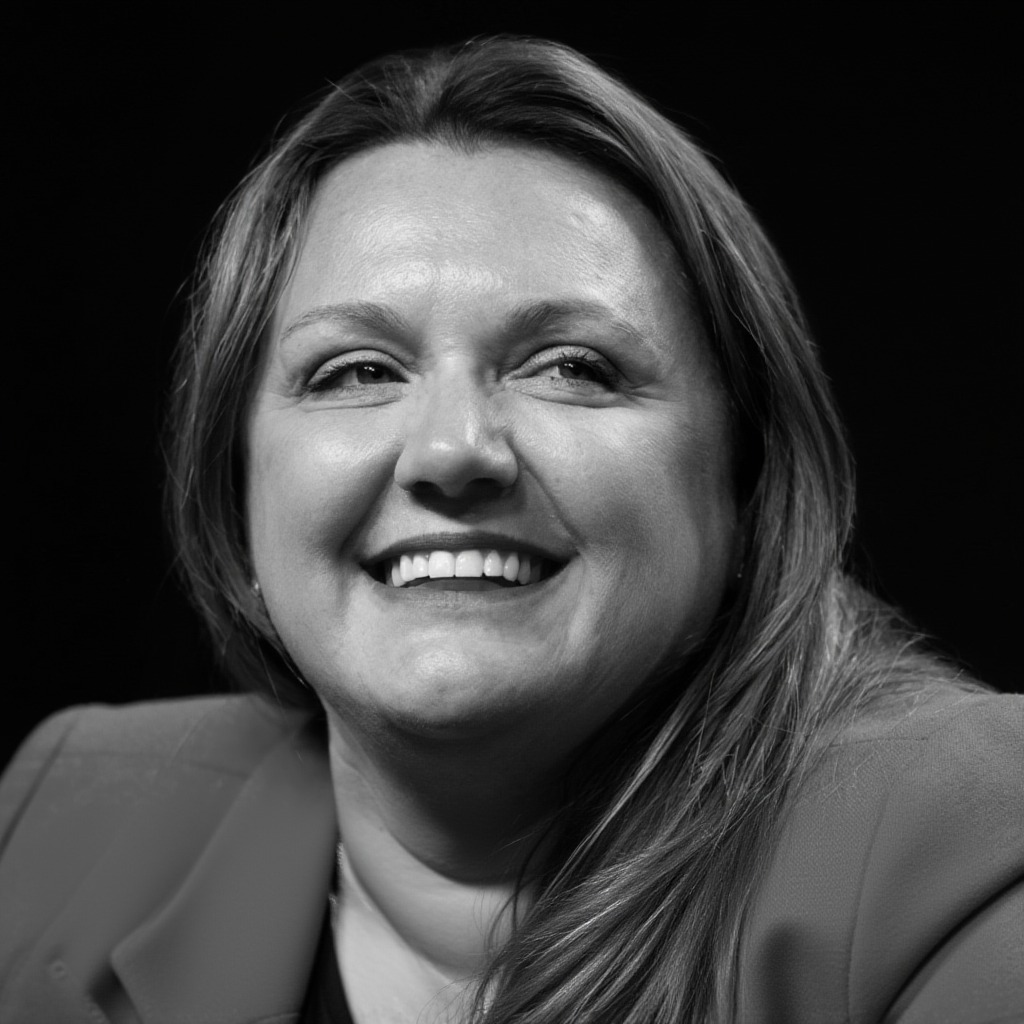
Source