Photography, a medium born of science and light, finds itself at a pivotal nexus, one that challenges its foundational principles more profoundly than the transition from chemical film to digital sensor. The coming five years promise not a slow evolution, but a rapid, multi-front revolution that is reshaping the visual economy, redefining creative roles, and forcing a critical reckoning with the ethics of truth in the digital age. This transformation is fueled by the twin engines of Artificial Intelligence (AI) and computational photography, yet paradoxically balanced by a powerful cultural yearning for authenticity and the tangible.
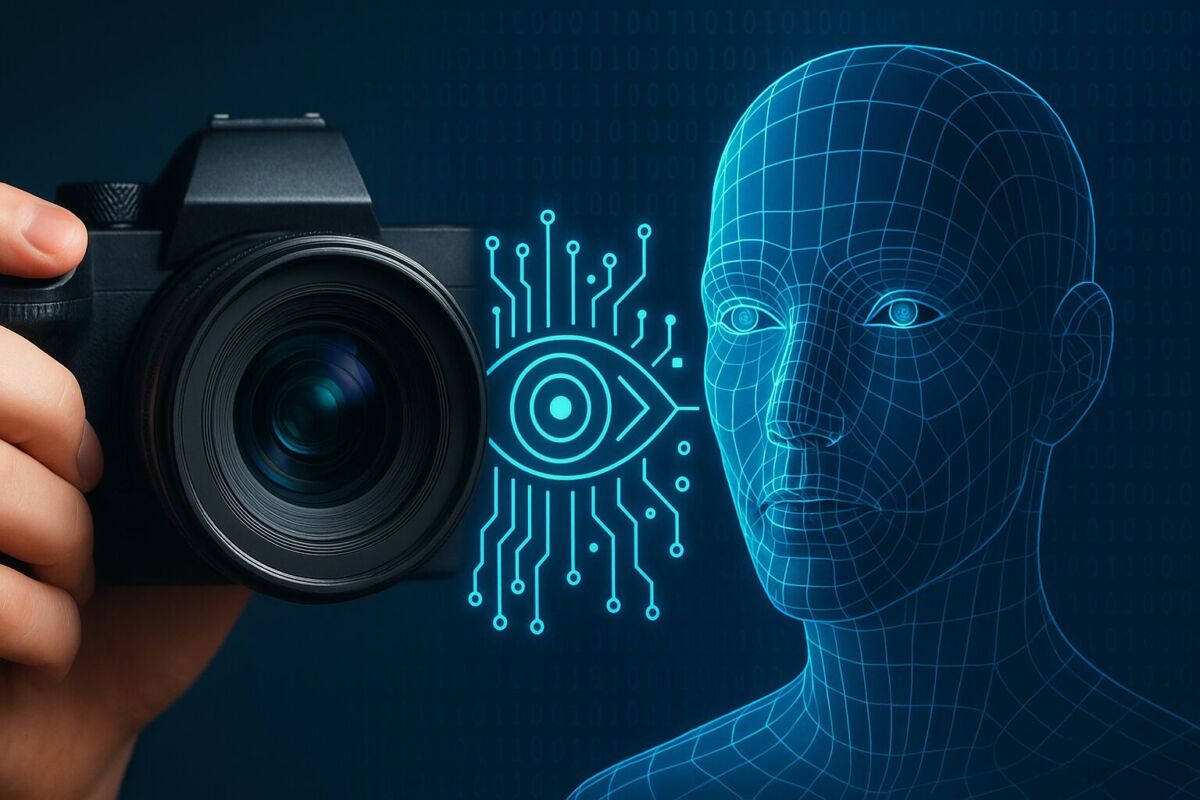
The single most disruptive and ascendant force is the complete integration of AI into the image pipeline. This is not the simple autofill or auto-correction of years past; AI is moving from hidden utility to outright creative partner and, in some contexts, competitor. The maturation of computational photography (CP) is the mechanism by which this is achieved. CP is no longer a niche feature; it is the fundamental operating principle of modern digital cameras, spanning high-end mirrorless systems to pocket-sized mobile devices. The resulting “photograph” is increasingly a synthesized construct—an engineered amalgam of multiple data points, optimized and assembled by processor algorithms, rather than a single, fixed recording of light. Over the next five years, CP will enable widespread features such as light-field capture, which records both the intensity and directionality of light rays. This seemingly technical capability has radical creative consequences, allowing the photographer or editor to manipulate focus, depth-of-field, and even minor perspective shifts long after the shutter has closed. This capability fundamentally alters the concept of the “decisive moment,” transferring the finality of the creative decision into the post-capture realm of algorithmic rendering. Furthermore, the commercial viability of quantum image sensors will increase, pushing the physical limits of dynamic range and low-light performance by capturing light at the photon level, essentially eliminating noise and allowing for detailed capture in near-total darkness, a feat previously reserved for highly specialized, non-commercial scientific instruments. The photographer’s role is thus mutating into that of a data director and post-capture visualization expert.
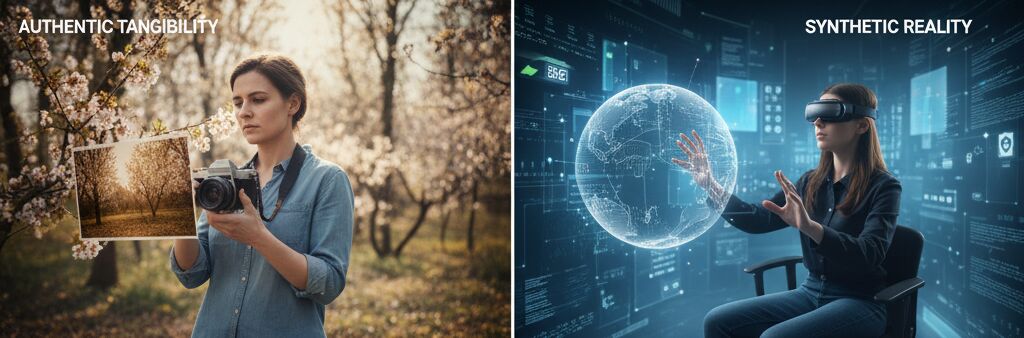
The philosophical challenge intensifies with the explosion of Generative AI. Tools capable of producing hyper-realistic, photorealistic images from textual descriptions—or from reference images—are decoupling the image from the physical act of capture altogether. This development is not merely an advanced form of editing; it is the creation of synthetic reality, instantly and at scale. This poses an existential threat and a profound commercial disruption to sectors like commercial stock photography and basic visual content creation, where the time and expense of a physical shoot can now be replaced by a matter of seconds and a carefully crafted prompt. The emergence of the AI Prompt Director as a critical creative position signifies that the ability to articulate a complex visual idea is becoming as valuable as the technical expertise required to operate a lens and lighting setup. For professionals, the response is a strategic pivot: mastering generative tools for rapid concepting, mood boards, and virtual set design, while simultaneously emphasizing the unique, non-replicable value and verifiable authenticity of human-captured, original content. The debate is no longer whether AI will replace photographers, but how photographers will redefine their unique human value proposition in a world saturated with technically perfect, but synthetic, imagery.
This abundance of easily manipulated and fabricated images has triggered a necessary crisis of trust, making authenticity the paramount commodity in the visual economy. The industry is responding with a coordinated effort to create a visual safety net, spearheaded by initiatives like the Content Authenticity Initiative (CAI). This movement is establishing technical standards to embed cryptographic metadata—a provenance record—within the image file itself. This record functions as an immutable, transparent ledger, documenting the image’s origin (camera model, GPS coordinates, time) and providing a sequential history of every edit or modification applied after capture. This is a critical technological defense mechanism against deepfakes and manipulated photojournalism. Reinforcing this is the application of blockchain technology, which provides the necessary underlying infrastructure. By registering the unique digital fingerprint (or hash) of an original, unaltered image on a decentralized, unchangeable public ledger at the moment of capture, blockchain establishes a tamper-proof certificate of originality. For documentary makers, news agencies, and artists seeking to assert copyright, this record provides definitive, time-stamped, and verifiable proof, transforming the image’s metadata into a legally sound declaration of truth. This systemic move shifts the burden from proving an image is fake to declaring and verifying its truth.
In a fascinating counterpoint to this technological acceleration, a significant resurgence of analog film photography is flourishing. This is not simply a wave of pure nostalgia; it is a cultural assertion of tangibility and process. In an era where digital output is sterile, instantaneous, and infinitely reproducible, the inherent friction, delay, and imperfections of film—the grain structure, the unpredictable light leaks, the physical development ritual—are highly prized as markers of visual honesty. For many younger creators, the act of using film is a deliberate slowdown, an artistic choice that emphasizes the intentionality and human labor behind the final image, providing a necessary and valued anchor against the potentially sterile flawlessness of computational and synthetic output. The aesthetic tension between the hyper-perfect digital file and the organic, flawed film print will continue to define the visual zeitgeist.
Beyond the medium itself, the physical boundaries of the photograph are dissolving. Driven by mobile dominance, the vertical format has been cemented as the standard for visual communication. Platforms demanding continuous scrolling have prioritized immediate, high-impact visuals, compelling photographers to abandon the traditional cinematic landscape for a more compressed, vertically-oriented compositional discipline that maximizes screen real estate and visual density. This requires a new mastery of subject framing for instantaneous narrative delivery. Moving further, the realm of Immersive Photography through Virtual Reality (VR) and Augmented Reality (AR) is transitioning from novelty to a critical storytelling dimension. Photographers are increasingly becoming Spatial Storytellers, utilizing 360-degree capture and advanced sensors to acquire volumetric data—recording a scene’s full three-dimensional depth and geometry. This technology enables the creation of fully explorable environments where viewers can virtually “step into” the photograph, changing perspective and engaging spatially with the scene. AR extends this capability by layering dynamic digital information, animations, or data onto real-world scenes when viewed through a mobile lens or AR glasses. This move will revolutionize fields from real estate and e-commerce to art curation, transforming the photograph from a static display into an active, exploratory, and interactive experience, demanding that creators think in terms of environments and data layers, not just fixed frames.
Finally, these technological shifts necessitate a dramatic evolution in the professional and ethical responsibilities of the photographer. The growth of global environmental awareness is compelling the industry toward comprehensive eco-conscious photography. This includes pushing for manufacturer transparency and the use of recycled, non-toxic materials in equipment, adopting energy-efficient practices (like using renewable energy for charging and LED lighting), and prioritizing fully paperless, digital workflows to mitigate the environmental impact of chemical processing and excessive printing. Professionally, the traditional specialization of “still photographer” is obsolescent. The successful visual communicator of the next five years will be a multimedia architect, expected to fluently blend still imagery, cinematic video, sound design, and interactive data layers. This requires a profound expansion of the technical skillset, necessitating collaboration with software developers, data scientists, and ethical compliance specialists to navigate the complex new landscape of generative media, content verification, and immersive experience design. The creative mind must be capable of conceptualizing for both the single, perfect quantum-captured file and the entire, explorable 360-degree environment. The future of photography is defined by those who can master the most advanced algorithmic frameworks while maintaining an unshakeable, verifiably honest commitment to the light, the subject, and the essential, human impulse of authentic storytelling. The next frame is complex, but its value will ultimately be measured not by its technical perfection, but by its trustworthiness and its capacity for genuine human connection.