
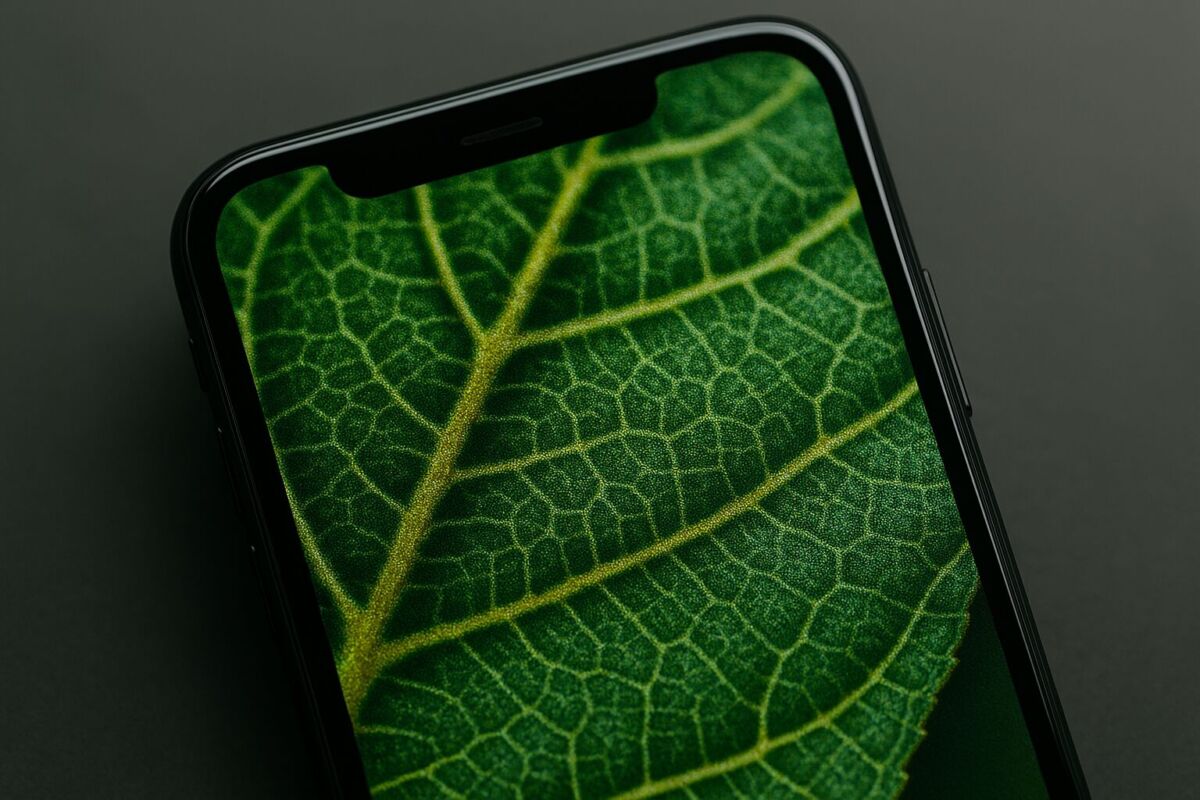
Every year smartphone companies announce new camera improvements. They promise sharper images, cleaner night shots, brighter colours and more detail. The language sounds familiar. It sounds confident. It sounds like progress. But behind these promises is a quiet truth that many people have not yet noticed. Much of the detail in smartphone photos today is created by software, not by the sensor. It is artificial texture produced by aggressive AI sharpening. At first glance it looks impressive. But the more you look at it, the more you see the gap between what is real and what is manufactured.
The idea behind AI sharpening is simple. Small sensors cannot capture enough real detail. To hide this limitation, phones use algorithms that analyse edges, patterns and textures, then create extra detail that never existed. This trick fools the eye in the first few seconds. The image looks crisp. It looks clean. It looks like a high quality photo. But it is not. It is a simulation of detail placed on top of an image that is much softer underneath.
You notice this most clearly when you zoom in. Hair strands turn into crunchy lines. Skin texture becomes gritty. Leaves on trees look like painted patterns. Building edges look unnaturally sharp. Shadows lose smoothness and become noisy. The entire image carries a strange bite that feels digital. People often call it overprocessed, but the real issue is deeper. The phone is not enhancing detail. It is creating fake detail that changes the true appearance of the scene.
This is becoming one of the biggest smartphone photo processing issues today. Phone makers push AI sharpening because it performs well on social media. When a picture is seen on a small screen, people do not zoom in. They see the strong sharpness and think the camera is powerful. They compare it to older phones and feel impressed. This creates a cycle where manufacturers increase sharpening every year to create stronger visual impact. The result is a generation of photos that look detailed in the moment but do not hold up under closer viewing.
Another quiet problem is how AI sharpening affects skin. Real skin has soft transitions, tiny pores and natural imperfections. AI sharpening exaggerates these elements until they become distracting. Some phones then try to fix this by adding skin smoothing on top, which creates a confusing combination of fake detail and fake softness. The result does not look natural. It looks like an edited image even before the user touches the photo.
This problem becomes even more visible in low light. In darker scenes, phone sensors struggle. They capture noise and soft detail. To hide this, the phone applies aggressive sharpening and noise reduction. These two processes fight each other. Noise reduction blurs details. Sharpening tries to artificially add detail back. The final image looks neither real nor natural. It looks polished in a way that disconnects the viewer from the scene.
Artificial detail also changes how colours behave. When texture is fake, edges begin to carry halos. Colour borders become harsh. Subtle gradient areas like sky, walls or clothing lose their smooth look and begin to appear rough. This breaks the emotional quality of a photo. It removes the softness that natural scenes carry. Many people do not notice this because they have grown used to phone images. But once they start using a real camera, the difference becomes obvious in seconds.
Another issue is that AI sharpening creates false expectations. People believe their phone takes extremely detailed photos. But when they print the image or view it on a large screen, the illusion collapses. The fake detail cannot stretch. It breaks. It becomes muddy, grainy or rough. This disappoints many first time printers who expected the same clarity they saw on their phone display.
The artificial detail problem also affects videographers. Video shots become overly sharp, especially in daylight. Grass looks like static noise. Hair shimmers unnaturally. Small textures flicker. Movement exposes the artificial layers of sharpening. The viewer may not understand why the video feels uneasy, but the reason is simple. The motion reveals the fake detail that looked acceptable in still images.
Many smartphone makers do not talk about this openly because the processing is part of their selling strategy. They want to prove that their small sensors can compete with bigger cameras. They want to show performance without mentioning the software tricks behind it. Some brands even increase sharpening and contrast after detecting faces or popular subjects, thinking this will make the photo feel more impressive.
This shift has an emotional impact on young photographers who start their journey with phones. They begin to think photography is about strong clarity and extreme crispness. They learn to chase detail that does not exist. They struggle when they first use a real camera because the natural softness feels strange to them. They do not realise that real cameras capture authentic detail without artificial texture. Their eyes get trained to expect something fake.
The artificial detail problem also affects the understanding of light. Phone images often look sharp even in poor light because the AI forces texture onto shadows. This creates a misunderstanding about how light behaves on real sensors. A real camera shows softness in low light because softness is natural. It shows smooth transitions because that is how real scenes behave. Phone images replace this with a gritty texture that feels more dramatic but less honest.
This problem grows when combined with social media expectations. People judge images quickly. They compare them side by side on screens that hide flaws. The sharper image wins attention. But attention does not equal quality. The phone image gets more likes. The natural image gets labelled as boring. This creates pressure for photographers who start editing their camera images to match phone sharpness, which leads to overprocessing. A loop begins where natural detail disappears from the visual culture.
Another overlooked issue is how AI sharpening creates inconsistency. Different parts of the same image receive different levels of artificial detail. The phone analyses patterns and guesses where detail should be. Sometimes it guesses wrong. Water becomes too sharp. Clouds develop strange textures. Distant objects become cartoon like. Grass becomes a repeated pattern instead of natural blades. Stones look like painted surfaces. The viewer may not see this instantly, but the image carries an artificial character that removes depth.
The artificial detail also affects long term archiving. When people revisit these phone images years later, they may not feel the same connection. Fake sharpness ages poorly. Trends in processing change quickly. What looks impressive today looks overdone tomorrow. Natural images age gracefully. Artificial ones do not.
This does not mean phone photography is bad. Phones are powerful tools. They allow millions of people to experiment with creativity. They are perfect for daily use, memories and quick moments. But the issue is the illusion created by fake detail. Understanding this illusion helps photographers make better decisions. It helps them see beyond the surface.
The solution is not to avoid phones. It is to understand their processing. Most phones offer ways to reduce sharpening through manual modes or RAW formats. Shooting RAW on a phone gives a cleaner, more natural look. It removes the layer of artificial detail and allows real editing. It teaches young photographers how light really behaves. It gives them control instead of letting the phone shape the image.
Photographers who understand this difference start appreciating real cameras more. They notice the smoothness of shadows, the natural falloff, the gentle details and the depth that bigger sensors capture. They see that detail does not need to scream. It needs to feel real.
The future of photography will involve even more AI. But the responsibility now is to recognise the difference between enhancement and distortion. Not every sharp line is a detail. Not every crisp texture is true. Real detail carries weight, depth and softness that cannot be created by algorithms alone.
Understanding this truth helps both creators and viewers appreciate photography in a more honest way. The world does not need more artificial detail. It needs images that carry the real character of the moment, not the version invented by software.
FAQ
Why do smartphones add fake detail through AI sharpening
Because small sensors lack real detail, and AI sharpening creates artificial texture that looks impressive on small screens.
Why do phone photos look gritty when zoomed in
Because the detail is artificially created, not captured by the sensor.
Does AI sharpening affect skin tones
Yes. It exaggerates texture and creates an unnatural look, often followed by artificial smoothing.
Is it better to shoot RAW on a phone
Yes. RAW removes the artificial sharpening and gives more natural detail and cleaner editing control.
Why do printed phone photos look worse
Because the fake detail collapses when enlarged, exposing the softness underneath.
