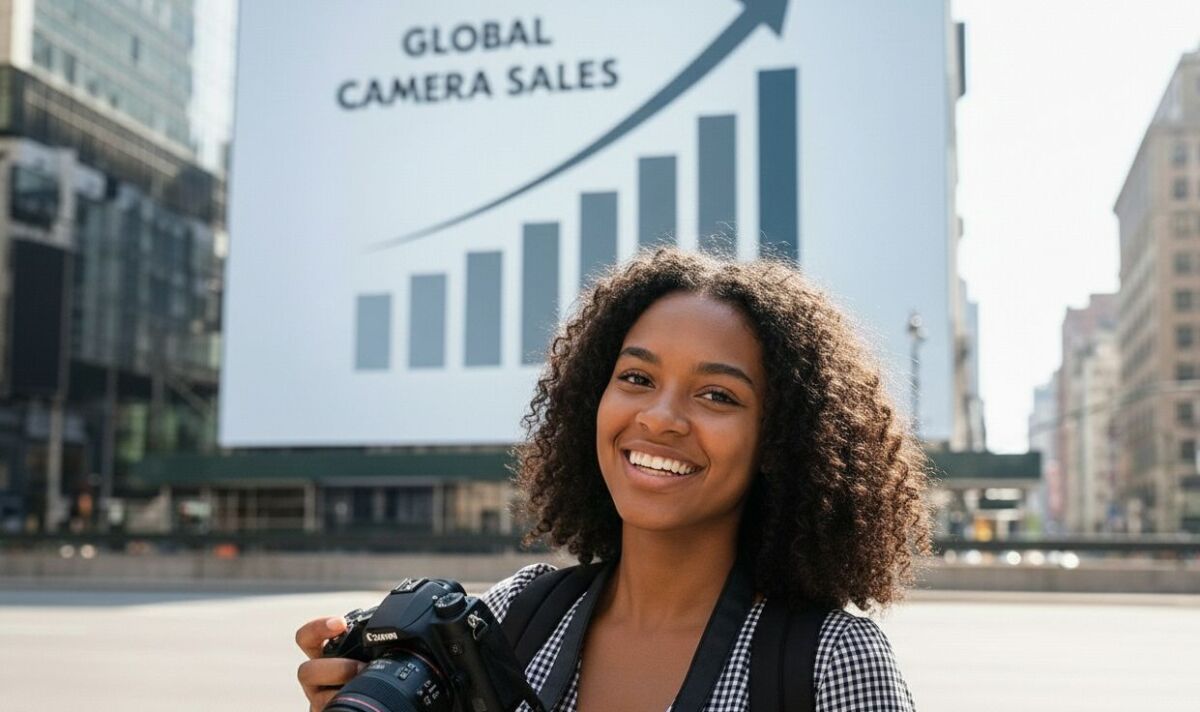
For almost a decade people believed the dedicated camera market was falling with no sign of recovery. Smartphone cameras became stronger every year, and many thought they would replace real cameras forever. But something unexpected is happening today. The global camera sales rise is becoming visible, and the people responsible for this change are not the older photographers who once kept the industry alive. It is the younger creators who grew up with phones but are now discovering the difference a real camera makes. This shift is not loud, but it is steady. It carries a different kind of energy, and the industry is beginning to feel it.
Many young creators began their journey through mobile photography. It was simple, always available and easy to share. But over time they started to notice the limits. They saw how phones flatten depth, smooth details and compress colours. They saw how night shots looked artificial and how bright scenes lost texture. They saw how every phone picture looked similar because the software decided the result. The more they learned about their own style, the more they realised they needed a tool that let them grow. That tool was not a new phone. It was a camera.
This return to cameras is not driven by nostalgia. It is driven by the desire for control. Young creators want to choose their own exposure. They want to decide their own colour. They want real depth instead of computational blur. They want lenses that change perspective instead of filters that imitate it. They want to learn the craft instead of letting software decide everything. This desire is pushing them toward mirrorless cameras, compact cameras and even old DSLRs that still hold value.
Another reason for the global camera sales rise is the growing culture of storytelling. People want their photos and videos to feel personal. They want texture. They want emotion. They want moments that carry weight. Phones give quick results, but they also create sameness. Cameras give uniqueness. They give a voice to the photographer. As young creators explore visual identity, they begin to understand that the tool matters.
Social media also plays a surprising role in this trend. Although social platforms promote fast and easy content, many creators now want to stand out with better quality. They watch travel videos, street films, documentaries and portraits that carry a richer look. They realise that real cameras bring a sense of presence that phones cannot. This realisation grows every time they see a picture taken with a proper sensor and lens. It becomes clear that the difference cannot be faked.
The rise is also connected to the growth of platforms that appreciate quality. More people are sharing their photography on dedicated communities where viewers understand light, composition and atmosphere. Young creators feel encouraged to improve. They want to experiment. They want to push limits. A phone cannot teach ISO, shutter, aperture or lens behaviour. A camera does. Once they begin learning these skills, they discover the joy of creating images with intention.
Another part of this change comes from compact cameras becoming popular again. For years compact cameras seemed obsolete because phones replaced them. But modern compacts with larger sensors and fast lenses are attracting creators who want simplicity without carrying heavy gear. These cameras offer a look that stands apart from phone images. They create a sense of identity. This is especially appealing to street photographers and travel creators who want portability without sacrificing quality.
Mirrorless cameras also play a major role in the global camera sales rise. They are lighter, faster and packed with features that help beginners learn quickly. Their autofocus systems are advanced and intuitive. Their screens flip for video work. Their colours are cleaner. Their low light performance is strong. This combination creates confidence for new users. They feel supported by the tool instead of overwhelmed by it.
But the strongest force behind this rise is curiosity. Young creators want to understand how images work. They want to know why some pictures feel alive and others feel flat. They want to feel the weight of the camera, the click of the shutter, the shift of the lens. They want the process to feel real. Photography becomes more meaningful when the photographer builds a relationship with the tool.
The global camera sales rise is also influenced by a growing interest in film photography. Many young creators began shooting film because they liked the look. Film cameras teach patience. They teach careful framing. They teach waiting for the right moment instead of taking dozens of pictures and picking one. Film may be expensive, but it teaches something valuable. It teaches discipline. This discipline pushes creators to appreciate digital cameras more deeply because they now understand the importance of intention.
Camera companies noticed this shift. They are releasing models that appeal directly to young shooters. Simple controls, strong battery life, attractive colours, compact bodies and good connectivity. They understand that the next generation wants tools that feel personal and practical at the same time. This focus is helping rebuild interest in photography as a craft rather than just an instant activity.
Another important part of this change is affordability. Used cameras have become a gateway for new photographers. Many young creators buy older mirrorless bodies or DSLRs to learn the basics. They discover that old cameras can still produce beautiful results. They realise they do not need the newest model to create strong images. This removes the fear of entry and makes the craft accessible again.
Once they begin shooting, they notice how a camera changes their relationship with the world. They pay attention to light. They observe people. They look for shadows, details, colours and stories. They walk slower. They notice things they ignored before. This awareness becomes addictive. It becomes a habit. It becomes part of who they are. A phone cannot give this feeling. A camera can.
The rise in camera sales is not just about numbers. It is about a cultural shift. It is about young people discovering the joy of creating something intentional. It is about breaking away from the fast and polished look of algorithm driven images. It is about exploring personal vision. It is about choosing craft over convenience.
As more young creators enter photography seriously, the community grows stronger. New ideas emerge. New styles appear. New collaborations form. The industry begins to breathe again. Camera companies feel encouraged to innovate. Photographers feel encouraged to explore. The energy is different from before. It feels hopeful. It feels new.
The global camera sales rise is not a temporary trend. It is the beginning of a cycle where people rediscover the value of real tools. Phones will continue to improve, but they cannot replace the feeling a camera gives. They cannot replace the freedom of lenses. They cannot replace the depth of dedicated sensors. They cannot replace the emotional connection between photographer and moment.
When young creators choose a camera, they choose a different relationship with photography. They choose growth. They choose intention. They choose craft. This choice is shaping the future of visual storytelling in a way the industry did not expect. The rise is slow, but it is steady. It is not driven by marketing. It is driven by desire. And that desire is strong enough to bring cameras back into the hands of a new generation that wants to see the world differently.
FAQ
Why are young creators buying cameras again
Because they want more control, better quality and a different creative experience than phones provide.
Are compact cameras becoming popular again
Yes. Their portability and clean image quality attract creators who want something simple yet powerful.
Do mirrorless cameras influence this rise
Yes. They are lighter, fast and user friendly, which encourages beginners to learn.
Why are used cameras part of this trend
They make photography accessible, affordable and easy to explore without fear.
Is the camera market recovering for the long term
Yes. The shift toward dedicated cameras is steady and driven by genuine creative interest.