
There was a time when calling yourself a photographer was enough. It defined your role, your responsibility, and your place in a newsroom or creative project. That certainty is beginning to fade.
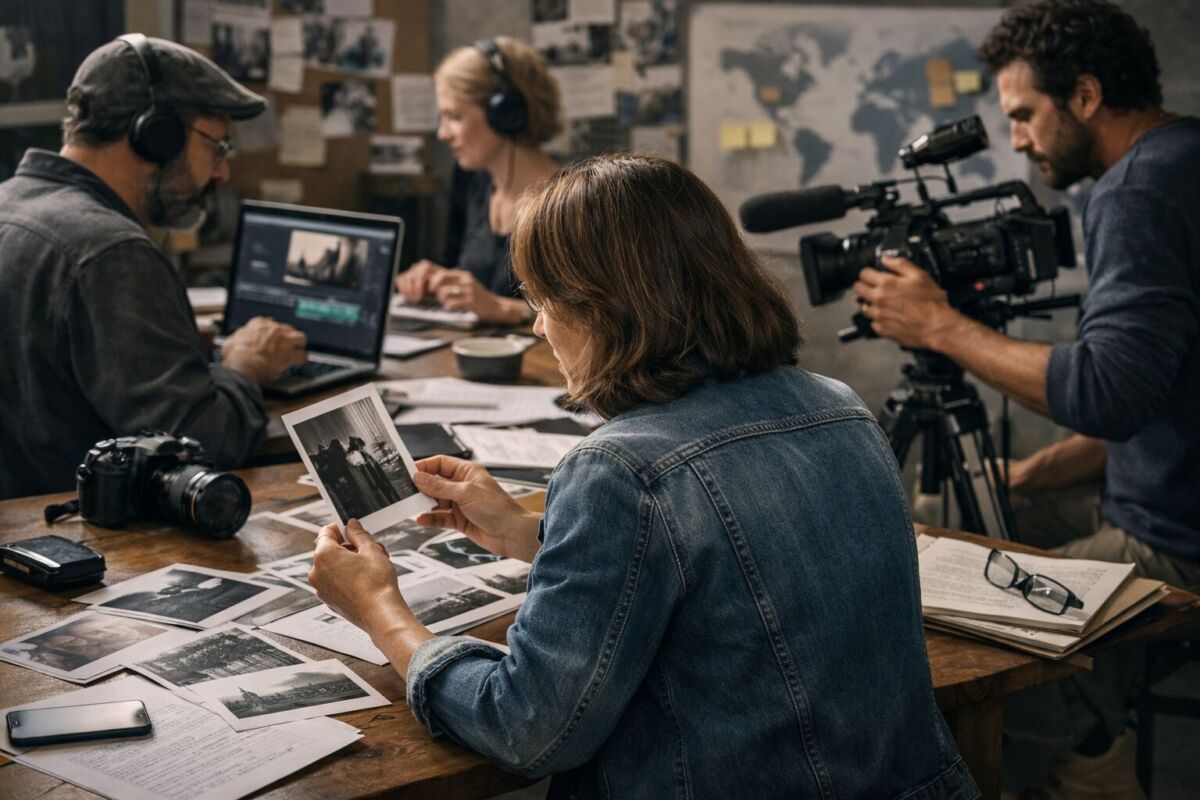
Across editorial spaces, independent documentaries, and long form reporting, photography is quietly shifting into a secondary skill. Writers are carrying cameras. Researchers are learning visual documentation. Filmmakers are pulling still frames with intent rather than treating photography as a separate discipline. The story no longer begins with the image alone. It begins with context.
This change is not about photography losing value. It is about photography being absorbed into a wider storytelling process. In many projects today, still images exist alongside writing, audio, video, and archival material as part of a single narrative structure. The photograph supports the story rather than standing apart from it.
Editors are noticing this shift. Assignments are increasingly framed around outcomes instead of formats. Instead of asking for photographs, publications ask for coverage. That coverage might include images, notes, interviews, background visuals, or reference frames that help build a fuller picture of the subject.
For photographers, this creates a quiet tension. Technical skill is still expected. Visual literacy still matters. But identity is changing. Being only a photographer is no longer the default role in many editorial environments.
This does not mean photographers are becoming irrelevant. It means the boundaries are dissolving. Those who understand writing, research, and narrative flow are finding their images carry more weight. Those who rely only on visual strength without context are finding fewer spaces that can support isolated photographs.
The audience has changed as well. Readers no longer encounter photographs in isolation. Images arrive embedded in stories, scrolled past alongside text, video, and sound. Meaning is constructed collectively. A photograph now often needs explanation, positioning, or sequence to fully land.
This evolution raises an uncomfortable question for the industry. If photography becomes a shared language rather than a single profession, where does authorship sit? Who owns the story when everyone contributes visually?
There is no clear answer yet. What is clear is that photography is not disappearing. It is being redistributed. It is becoming part of a larger grammar of storytelling where presence, understanding, and intention matter as much as composition.
The camera is still powerful. It is just no longer standing alone.
