I learned this lesson long before I could explain it. It came on a street where nothing seemed to be happening, the kind of place editors would dismiss as visually weak and beginners would abandon after a few restless minutes. There was no dramatic light, no decisive action, no obvious subject announcing itself. Just a narrow road, a shuttered shop, a man repairing a cycle, and the steady sound of footsteps passing through the frame and out again. I stood there longer than logic allowed, longer than comfort suggested. At first, it felt like wasting time. Later, it felt like learning a language.
Most people think photography is about speed. Fast cameras. Faster reflexes. Being quicker than the moment so you can trap it before it escapes. That idea is repeated so often that it becomes accepted truth. But on the street, in real life, speed is rarely what gives a photograph its weight. Presence does. Waiting does.
Nothing happened for a long time. People came and went. Light shifted almost invisibly. My hands rested on the camera without urgency. I watched without recording. Then, in a moment so ordinary it would have vanished unnoticed, everything aligned. A child paused. The cycle repairman looked up. A shadow cut across the wall behind them. It lasted less than a second. The shutter followed without thought. The photograph existed because I stayed.
Waiting is the part no camera manual talks about. There is no dial for it. No setting to turn on. You cannot buy it, upgrade it, or download it. It is built slowly, often painfully, through boredom, doubt, and the quiet fear that you are missing something better somewhere else.
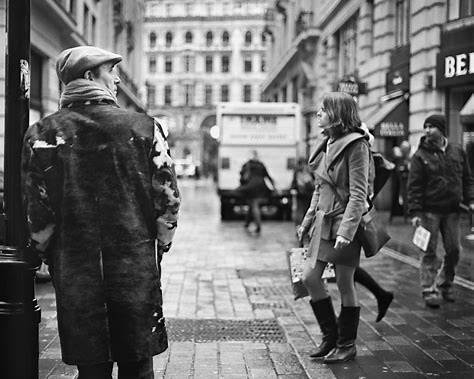
Early in my career, I made the same mistake many photographers make. I moved too much. I chased moments instead of allowing them to come to me. I thought productivity meant constant movement, constant shooting, constant proof that I was working. The result was predictable. Frames filled with activity but empty of meaning. Images that looked busy but felt thin.
Waiting teaches restraint. It forces you to confront your own impatience. It exposes how uncomfortable silence can be, especially in a world that rewards noise. Standing in one place with a camera, not shooting, feels wrong at first. People notice. Some stare. Some ask questions. Some assume you do not know what you are doing. Learning to stay anyway is part of the work.
On the street, waiting changes how you see. The first few minutes are superficial. You notice obvious gestures, bold movements, surface details. As time stretches, your attention sharpens. You begin to see rhythms. Repeated actions. Subtle exchanges. The way someone hesitates before crossing the road. The way two strangers mirror each other’s posture without knowing it. These things do not announce themselves. They require patience.
There is a myth that good photographers are always lucky. That they stumble into moments others miss by chance. Luck plays a role, but it favors those who are present when it arrives. Waiting is how you increase the odds without forcing the outcome. You are not creating the moment. You are allowing it.
In newsrooms and fast paced media environments, waiting is often treated as inefficiency. There is pressure to return with something, anything, that can justify the assignment. This pressure trains photographers to shoot constantly, to value quantity over depth. But the strongest images I have made did not come from chasing deadlines. They came from staying longer than required, from resisting the urge to move on.
Waiting also teaches humility. You realize quickly that the world does not perform on demand. You are not in control. The scene owes you nothing. This understanding strips away ego and replaces it with attentiveness. You stop imposing narratives and start listening.
I remember another afternoon, different street, same stillness. I waited through heat, through boredom, through the quiet frustration of self doubt. My mind wandered. I questioned the point of it all. Then, without warning, a woman stepped into the frame carrying something fragile in her hands. She paused, adjusted her grip, and looked up directly into the light. The photograph was simple. No drama. No spectacle. But it carried the weight of that waiting. You could feel the stillness behind it.
This is why waiting matters. It leaves a trace in the image. Viewers may not consciously identify it, but they sense it. Photographs made in haste often feel rushed. Those made with patience feel grounded. They breathe.
Waiting also protects you from over shooting. When you wait, every frame costs more. Not in money, but in intention. You become selective. You press the shutter because something is happening, not because you are anxious. This discipline sharpens your visual language. It teaches you to trust your judgment.
Technology has made waiting seem unnecessary. Cameras can now shoot endlessly, focus instantly, correct mistakes automatically. But none of these tools replace the act of staying still and watching. In fact, they often encourage the opposite. More speed. More frames. Less thought.
There is a difference between being busy and being present. Waiting moves you from the first to the second. It asks you to give time without immediate reward. In a culture obsessed with output, this feels radical.
Waiting also changes your relationship with failure. When nothing happens, you learn that this is not wasted time. It is part of the process. You are building familiarity with a place, learning its patterns, earning the right to photograph it. Over time, places begin to recognize you. People relax. Moments unfold more naturally. This cannot be rushed.
Some of the most important lessons I learned as a photographer happened during frames I never shot. They happened while standing still, watching life move around me. These moments shaped how I see far more than any tutorial or workshop ever did.
When everything finally does happen, it feels quiet, not explosive. The photograph arrives almost gently, as if it was waiting for you too. You realize then that the skill was never about reacting fast. It was about staying long enough.
Waiting is not passive. It is active attention. It is commitment without guarantee. It is the willingness to be invisible until the moment requires you to be present.
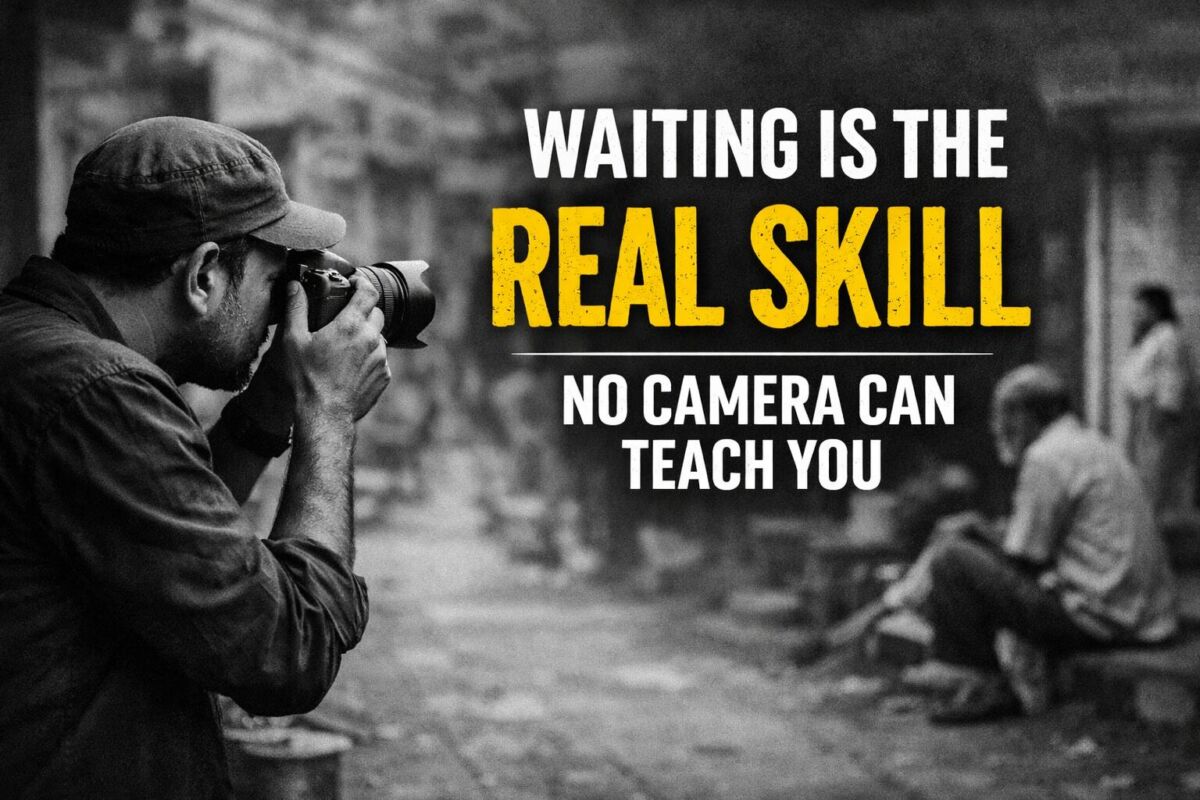
No camera can teach this. No setting can replace it. You learn it only by standing there, uncertain, patient, open. By accepting that sometimes nothing happens, and trusting that this is exactly where the photograph begins.