
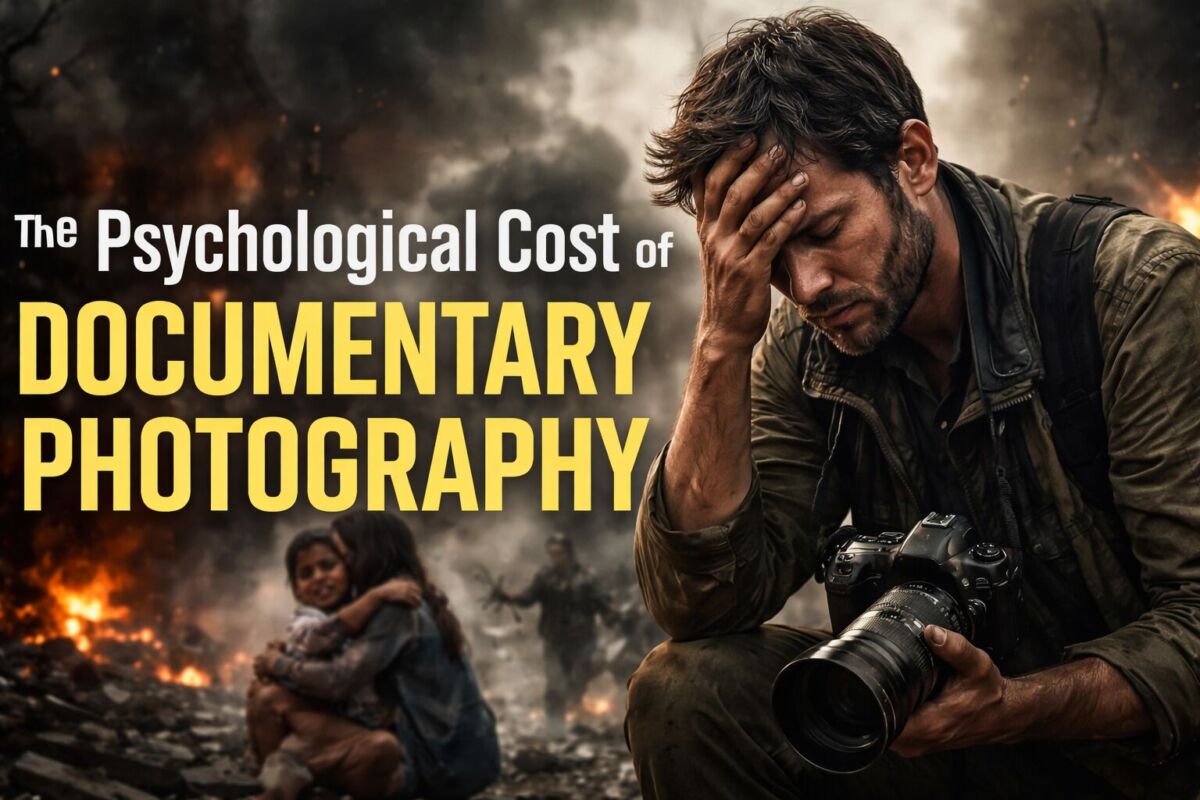
Documentary photography asks for time. Not weeks. Not months. Often years. Long term projects require a photographer to return to the same place repeatedly. To observe the same streets in different seasons. To witness the same faces under shifting circumstances. On the surface, this repetition appears disciplined. Beneath it, the repetition can become psychologically heavy.
When you commit to documentary photography, you commit to being present even when nothing spectacular happens. You learn to sit in silence. You wait. You observe small changes. That waiting can feel meditative at first. Over time, it can feel isolating.
Creative isolation is not dramatic. It is gradual. Friends move on to quicker assignments. Peers produce diverse portfolios. Meanwhile, you return to the same subject. The same village. The same factory floor. The same community meeting. Long term projects narrow your world intentionally. That narrowing can strengthen focus. It can also reduce your social and p rofessional variety.
There are evenings when you question whether anyone else cares about what you are documenting. Documentary photography often unfolds without immediate recognition. The rewards are delayed. Sometimes they never arrive. That delay intensifies doubt.
Doubt is a constant companion in long term projects. It enters quietly. Are you repeating yourself. Are you seeing clearly. Are you exploiting your subjects without realizing it. Ethical fatigue builds when you are embedded in real lives and real struggles for extended periods.
Ethical fatigue is rarely visible in the final image. It appears in private conversations and internal hesitation. You begin to question your role. Are you witnessing responsibly. Are you intervening too little or too much. Documentary photography places you in situations where neutrality feels complicated.
Long term projects demand visual persistence. Visual persistence means returning again and again, even when inspiration feels thin. It means photographing the same corridor of light for the hundredth time because something in that corridor still matters to you.
Repetition can feel both grounding and suffocating. In documentary photography, repetition sharpens perception. You begin to notice subtle gestures. Slight shifts in posture. Small changes in routine. At the same time, repetition can blur enthusiasm. You may feel as though you are circling the same idea without progress.
The invisible labour behind documentary photography is substantial. Archiving. Transcribing notes. Maintaining contact with subjects. Earning trust repeatedly. Editing thousands of frames. Revising sequences. Applying for grants. Facing rejection. These tasks accumulate quietly.
Garry Winogrand photographed relentlessly. He left behind thousands of undeveloped rolls of film. His visual persistence extended beyond public recognition. Much of his documentary photography was processed and examined after his death. He worked without certainty that every frame would be seen.
Vivian Maier offers another example. She documented daily life extensively, yet much of her work remained unseen during her lifetime. Her long term projects were personal, consistent, and private. Recognition arrived late. Documentary photography for her was practice and compulsion, not public performance.
These examples reveal something essential. Visual persistence does not guarantee acknowledgment. Documentary photography often demands commitment without assurance of reward.
Creative isolation deepens when you feel misunderstood. Friends may not understand why you return to the same story for years. Family may question the financial logic. The photography community may shift its focus to trends and novelty. Long term projects resist novelty by design.
Ethical fatigue intensifies in sensitive environments. If you are documenting poverty, conflict, illness, or ritual, you carry emotional weight home with you. Documentary photography requires empathy. Sustained empathy can be exhausting. You absorb fragments of other people’s experiences. You replay conversations in your mind. You question your editing decisions.
Isolation also emerges during the editing process. Documentary photography is not only fieldwork. It is selection. You sit alone with contact sheets. You confront your own inconsistencies. You discard images you once believed were strong. Long term projects require ruthless editing. That process can feel like erasing parts of your own journey.
There are periods when the work feels stagnant. Visual persistence becomes discipline rather than passion. You show up because you promised yourself you would. Doubt grows louder during these phases. You compare your progress to others. You wonder if you should pivot to something more commercially viable.
The psychological cost lies partly in that tension between survival and commitment. Documentary photography rarely pays consistently, especially during early stages. Long term projects may require part time jobs or unrelated assignments to sustain them. Balancing financial necessity with artistic commitment strains mental energy.
At the same time, documentary photography reshapes your perception. After years embedded in a subject, you cannot easily detach. Creative isolation becomes intertwined with identity. The project influences how you see the world outside it. You begin to filter unrelated experiences through the lens of your ongoing work.
Ethical fatigue sometimes leads to temporary withdrawal. You step back from the project. You question whether continuing is fair to yourself or to your subjects. Yet visual persistence often pulls you back. Not because of ambition. Because of unfinished understanding.
The invisible labour extends beyond photography itself. Maintaining relationships with subjects requires emotional consistency. Trust can erode if you disappear for too long. Long term projects demand reliability not only in image making but in human presence.
There is also the strain of public expectation once documentary photography gains attention. Audiences may freeze your subjects in a specific narrative. They may expect dramatic progression. Reality rarely follows a dramatic arc. Ethical fatigue increases when you feel pressure to produce images that align with audience expectations rather than lived truth.
The psychological cost includes loneliness. Hours spent alone observing. Editing alone. Writing alone. Applying for support alone. Documentary photography can be socially immersive yet personally solitary. You interact deeply with subjects, but the responsibility of shaping their representation rests on you.
Garry Winogrand’s prolific shooting suggests a form of compulsion. Vivian Maier’s private archives suggest dedication without audience validation. Their examples highlight that visual persistence often exists independent of applause. Documentary photography continues because the photographer cannot abandon it, not because it guarantees recognition.
Long term projects change your sense of time. You measure years not by calendar events but by phases within the project. A child grows taller. A building is demolished. A festival shifts format. Documentary photography ties your memory to your subject’s timeline. That entanglement carries emotional weight.
Doubt is not a sign of weakness in this context. It is evidence of seriousness. If documentary photography did not generate doubt, it might indicate superficial engagement. Ethical fatigue and uncertainty signal that you understand the complexity of what you are doing.
The psychological cost, then, is not only burden. It is also proof of depth. Creative isolation, repetition, and doubt refine perception. They slow you down. They force you to question easy narratives.
Yet this cost must be acknowledged honestly. Romanticizing long term projects ignores the toll. Documentary photography can strain relationships. It can delay financial stability. It can create cycles of anxiety during funding gaps. It can intensify self criticism.
Visual persistence demands resilience. Not dramatic resilience. Quiet resilience. The kind that returns to the same street even when motivation is thin. The kind that edits another thousand frames despite exhaustion.
Meaningful documentary photography often emerges from this sustained, invisible labour. It is shaped by years of showing up without certainty. It is shaped by ethical questioning rather than certainty. It is shaped by isolation that clarifies purpose.
The psychological cost of documentary photography is not a reason to abandon long term projects. It is a reminder that meaningful work carries weight. Acknowledging that weight allows photographers to approach their commitments with awareness rather than illusion.
Documentary photography is slow. It is repetitive. It is uncertain. It is emotionally demanding. It is often invisible until much later. And that invisibility is part of its integrity.
What makes documentary photography psychologically demanding?
Documentary photography involves long term projects, creative isolation, ethical fatigue, and constant doubt, all of which require sustained emotional energy.
Why do long term projects create isolation?
Long term projects narrow focus over years, which can reduce professional variety and increase creative isolation.
What is ethical fatigue in documentary photography?
Ethical fatigue refers to the emotional strain of repeatedly navigating responsibility, representation, and empathy in documentary photography.
Did photographers like Vivian Maier experience recognition during their lifetime?
Vivian Maier’s documentary photography gained major recognition after her death, illustrating visual persistence beyond public validation.
How can photographers manage the psychological cost?
Acknowledging doubt, seeking dialogue, pacing long term projects, and balancing work with rest can help sustain documentary photography over time.
