In 1979, Richard Avedon left behind the polished studios and couture gowns that had defined much of his career and set out on a very different journey. Known for photographing figures such as Marilyn Monroe and Audrey Hepburn with sharp elegance and psychological intensity, Avedon packed his large Deardorff camera into a Chevy Suburban and began driving across the American West, moving through Texas, Montana, New Mexico, North Dakota, Colorado, California and beyond. He visited rodeos, oil fields, slaughterhouses and county fairs, often stopping simply because a face caught his attention, and over the next five years he conducted more than one thousand sittings that would eventually form the series In the American West.
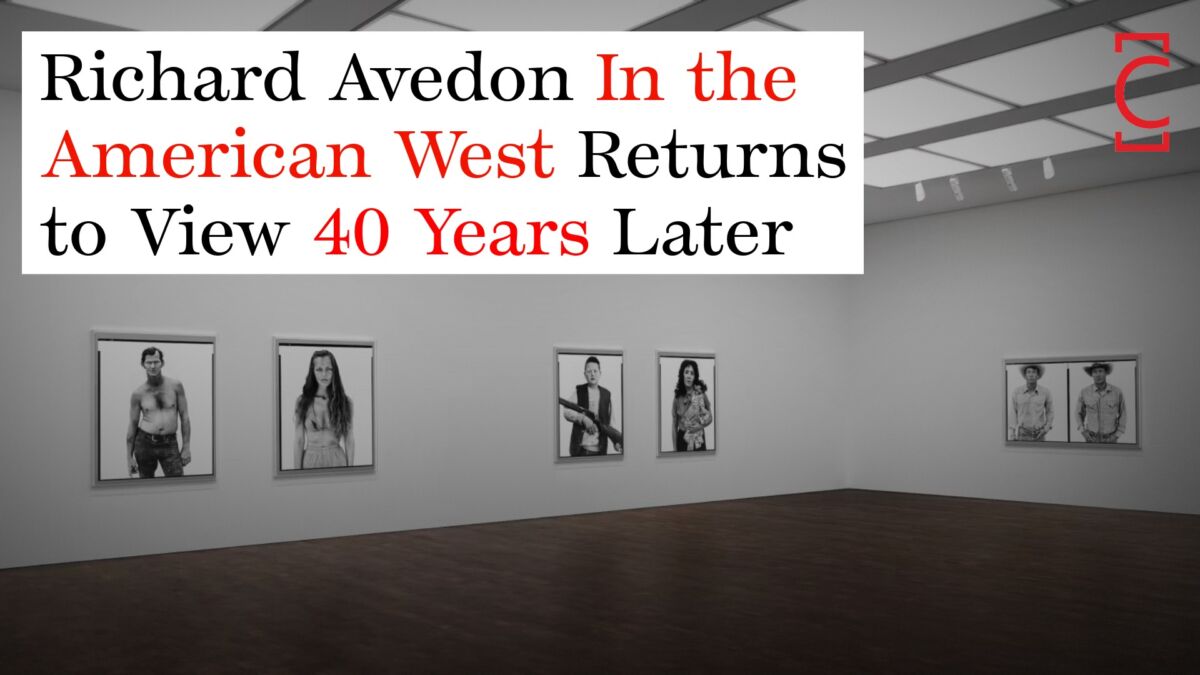
When the project debuted in 1985 at the Amon Carter Museum of American Art in Fort Worth, it unsettled expectations. Instead of sweeping landscapes or mythic cowboys framed against golden horizons, Avedon presented 126 large scale portraits of miners, drifters, ranch hands, meat packers, prisoners, truckers and undocumented migrant workers, each isolated against a stark white background. The effect was confrontational and intimate at the same time. Without environmental context, the viewer was left with nothing but the person standing in front of the lens, every freckle, smudge of dirt and crease in clothing rendered in meticulous detail.
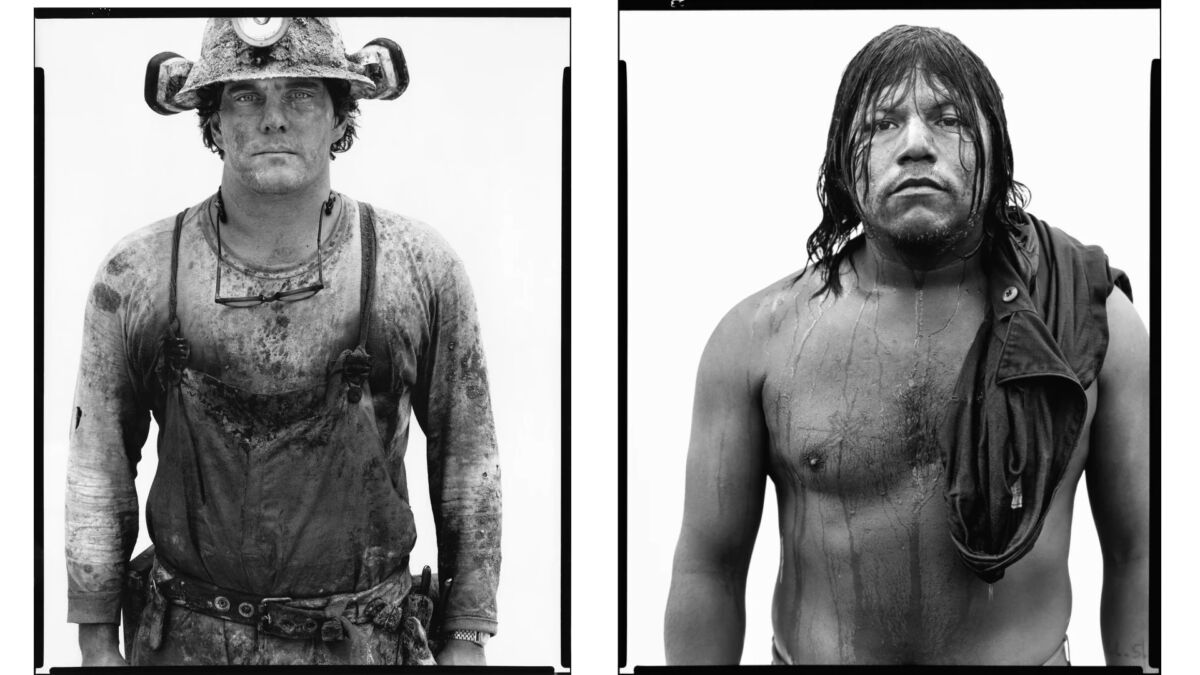
Now, forty years later, a selection of those original portraits is on view again, this time at Gagosian in London, in an exhibition titled Facing West. The show has been curated by Caroline Avedon, the photographer’s granddaughter, who has worked as an archivist at The Avedon Foundation since 2021. At twenty six, she represents a generation far removed from the political and economic climate in which the series was first made, and her aim is not simply to commemorate the project but to reopen it for viewers who may encounter these faces for the first time.
Caroline Avedon has deliberately shifted the emphasis of the exhibition away from only the most frequently reproduced images and toward portraits of children, teenagers and young adults. While iconic works such as Ronald Fischer, the so called bee man, remain part of the conversation, the London presentation highlights figures like Teresa Waldron, photographed at fourteen with a gaze that feels older than her years, and Tracey Featherston, a motel maid whose smoky eyes and direct stare collapse any comfortable distance between subject and viewer. In doing so, the curator hopes to create points of entry for younger audiences who might recognize something of themselves in these expressions, regardless of geographical or economic difference.
From the beginning, In the American West provoked debate. Critics questioned whether Avedon’s use of a seamless white backdrop stripped the subjects of context and turned them into spectacles for art world consumption. By removing landscape and workplace, some argued, he risked flattening complex lives into aesthetic objects. Supporters countered that the white background did not erase context so much as intensify the encounter, forcing viewers to look without distraction and to confront the physical toll of labor etched into skin and posture. The absence of scenery meant there was no romantic escape into sunset imagery; there was only the worker standing upright, meeting the camera.
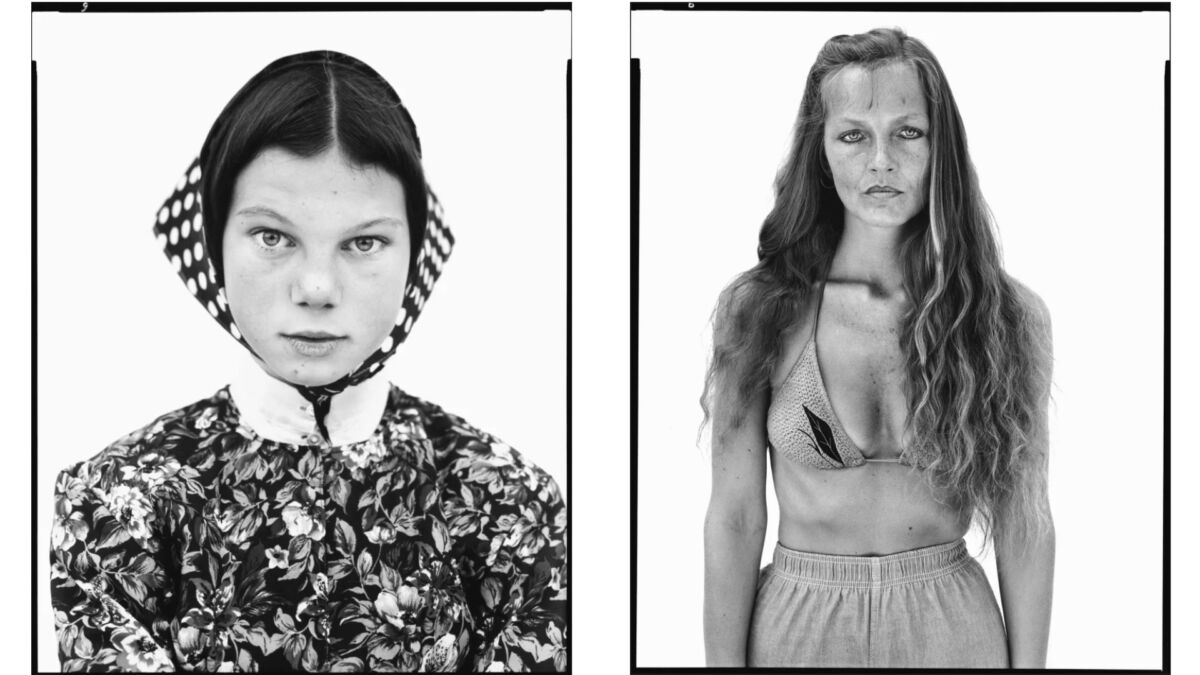
Looking at the portraits today, the economic undertones feel less historical than ongoing. When Avedon began his journey, Jimmy Carter occupied the Oval Office, and within a year Ronald Reagan’s election would signal a shift in national priorities. Industrial decline, widening inequality and rural hardship formed the backdrop to the series, even if those themes were not explicitly staged within each frame. The people Avedon photographed were part of an industrial and agricultural backbone that rarely appeared in glossy magazines, yet their labor sustained the country’s infrastructure. Forty years later, conversations about the treatment and visibility of America’s workforce remain unresolved, and the images resonate with an uncomfortable familiarity.
One of the most arresting portraits in the London exhibition is that of B.J. Van Fleet, a nine year old boy holding a shotgun with a composure that unsettles as much as it fascinates. The photograph compresses questions about childhood, regional culture and inherited identity into a single frame, and its power lies in the ambiguity of the boy’s expression. Is it pride, performance, defiance or simple normalcy within his environment? Avedon does not provide answers; he provides proximity. Caroline Avedon has spoken of her attachment to such subjects, describing them almost as extended family members whose lives she feels compelled to trace decades later.
That impulse to reconnect is part of what gives Facing West emotional depth beyond art historical interest. The younger Avedon has searched for information about many of the individuals her grandfather photographed, discovering obituaries, descendants and fragments of biography online. In some cases, she has been able to exchange messages with family members, learning how the subjects’ lives unfolded after the camera was packed away. This act of looking backward becomes a way of looking sideways as well, bridging generations through shared curiosity about where these faces belong in the present.
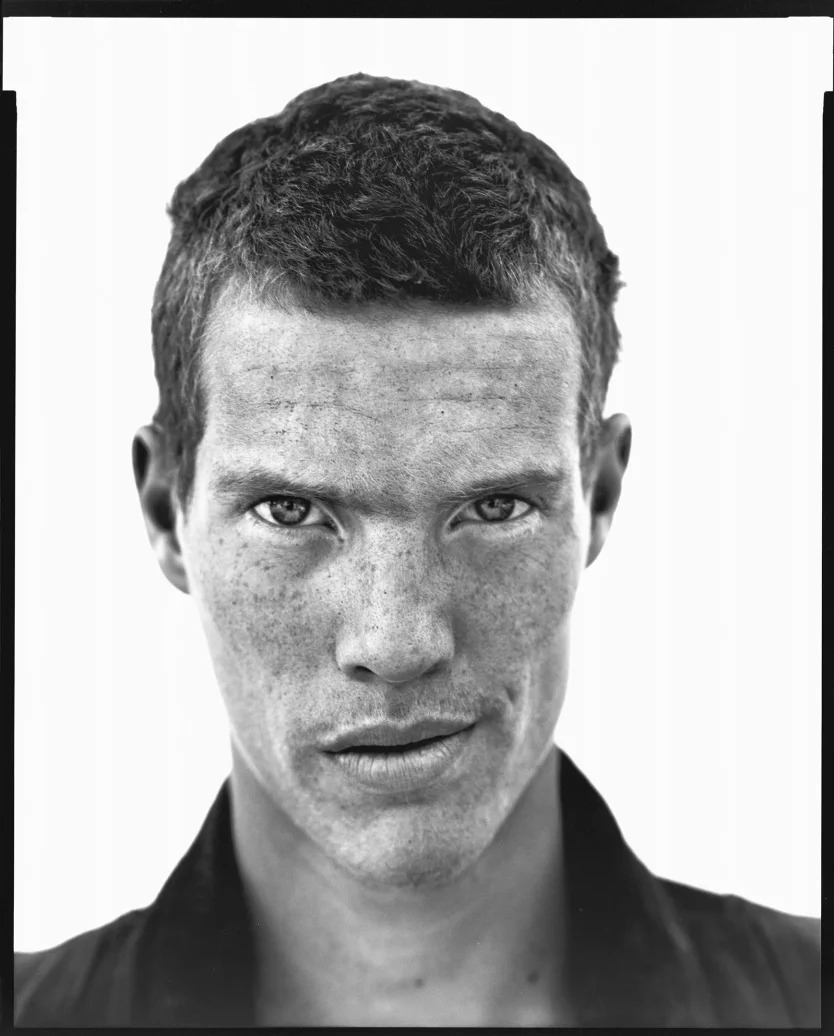
The aesthetic strategy of In the American West also feels newly relevant in an era saturated with imagery. Against today’s backdrop of filtered portraits and curated self presentation, Avedon’s stark white ground reads as both severe and honest. There are no props to signal status, no scenic cues to soften reality, and no attempt to beautify labor worn clothing. Yet the images are not devoid of dignity. The scale of the prints, often larger than life, grants the sitters a monumentality usually reserved for political leaders or celebrities, subtly equalizing their presence within the canon of portraiture.
It is impossible to ignore the irony that a photographer celebrated for fashion imagery became one of the most incisive chroniclers of America’s industrial workforce. Perhaps it was precisely Avedon’s experience with high profile subjects that enabled him to approach miners and ranchers with the same seriousness he once applied to movie stars. In both cases, he sought psychological revelation through sustained attention. The difference lay not in the depth of engagement but in the cultural visibility of those standing before the lens.
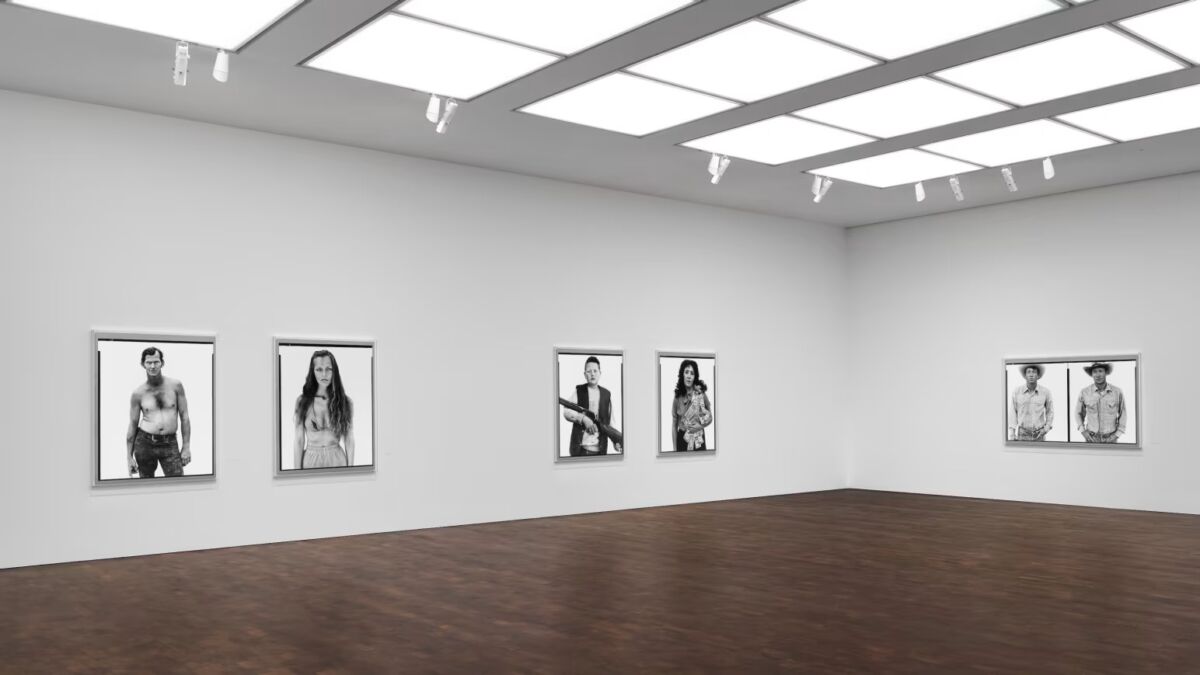
As the portraits hang once more on white gallery walls in London, they carry with them the weight of four decades of interpretation, criticism and admiration. Facing West does not attempt to resolve the debates that have followed the series since 1985, nor does it sentimentalize its subjects. Instead, it asks viewers to look again and to consider what has, and has not, changed. The faces remain steady. The economic structures surrounding them feel stubbornly familiar. The distance between fashion photographer and uranium miner seems narrower when viewed through Avedon’s disciplined frame.
Forty years on, In the American West endures not because it offers easy answers about exploitation or heroism, but because it insists on presence. Each portrait demands recognition of an individual who might otherwise pass unseen in national narratives. In bringing these works back into view, Caroline Avedon extends her grandfather’s project into the present tense, inviting a new generation to stand eye to eye with America’s overlooked workforce and to decide for themselves what they see reflected there.
FAQ
What is In the American West?
It is a photography series created between 1979 and 1984 by Richard Avedon, featuring 126 large scale portraits of workers and residents across the American West.
Where is the series currently on view?
A selection of the original portraits is being exhibited at Gagosian in London under the title Facing West.
Why was the series controversial?
Some critics argued that Avedon’s white background removed social context and risked objectifying his subjects, while supporters viewed it as a powerful documentary strategy.
Who curated the new exhibition?
The London exhibition was curated by Caroline Avedon, Richard Avedon’s granddaughter and an archivist at The Avedon Foundation.