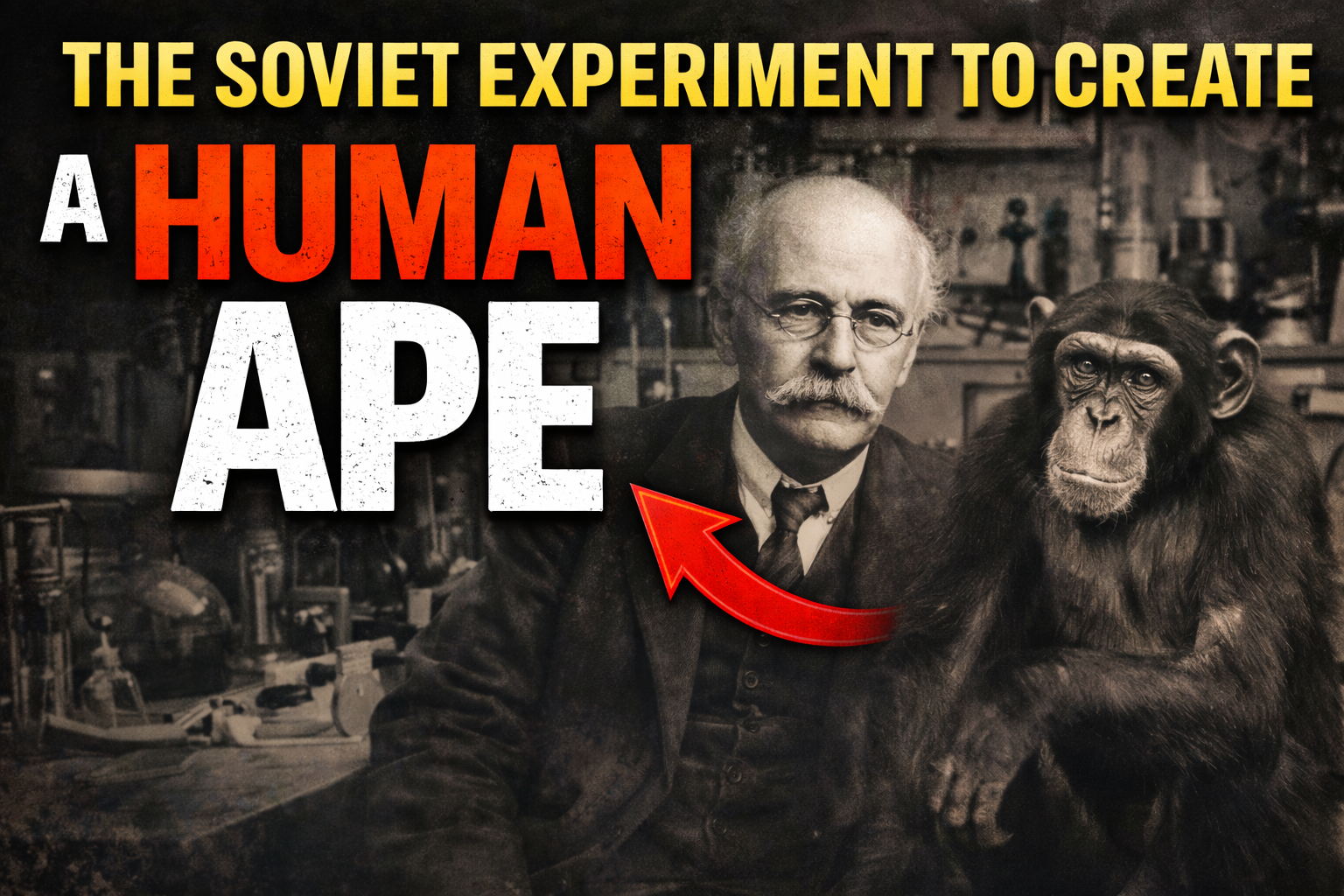
During the 1920s, the Soviet Union invested heavily in scientific research, particularly in fields that might demonstrate new discoveries about biology and evolution. Among the researchers working during this period was Ilya Ivanov, a respected biologist known for his work in artificial insemination and animal breeding.
Ivanov had already achieved success breeding hybrid animals. Earlier in his career he conducted experiments that crossed different species of horses and zebras, producing hybrid offspring. These results convinced him that similar techniques might reveal deeper insights into how closely related species could reproduce.
Inspired by these earlier experiments, Ivanov began proposing a far more controversial idea.
He suggested attempting to create a hybrid between humans and great apes.
At the time, evolutionary theory was still relatively new and widely debated. Some scientists believed that studying such a hybrid might offer evidence about the evolutionary relationship between humans and other primates. Ivanov argued that a carefully controlled experiment might demonstrate whether biological barriers between species were as absolute as many believed.
His proposal quickly attracted both curiosity and concern within scientific circles.
With support from certain Soviet scientific institutions, Ivanov traveled to West Africa in 1926 to conduct part of the experiment. The region was home to chimpanzees and other primates that could potentially be used in his research.
The plan involved using artificial insemination techniques in an attempt to fertilize female chimpanzees with human genetic material. Several attempts were reportedly made, although none produced a pregnancy.
Despite the lack of success, the project continued to draw attention and controversy. Some critics at the time questioned the scientific value of the experiment, while others objected on ethical grounds.
Biologists familiar with the project later noted that the experiment raised serious moral concerns.
One scientist commenting on the case years later summarized the reaction bluntly.
“The idea of crossing humans with apes crossed a boundary that many people believed science should never attempt.”
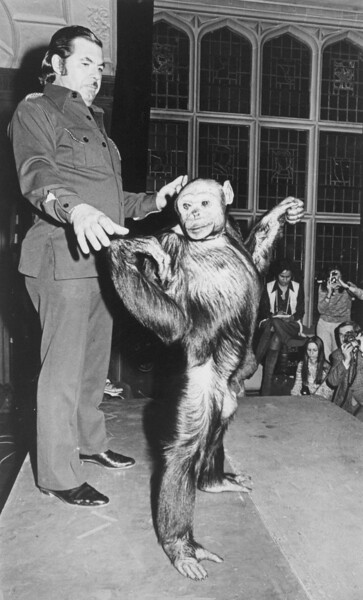
After the African experiments failed to produce results, Ivanov returned to the Soviet Union and reportedly explored the possibility of conducting further experiments involving human volunteers. However, the project soon encountered increasing resistance from both scientists and political authorities.
By the early 1930s Ivanov’s research career had collapsed amid political changes in the Soviet Union. He was eventually arrested during a period of political repression and later died in exile.
Although the experiments never succeeded, the story of Ivanov’s research remained part of scientific history. The episode is often cited as an example of how scientific curiosity can sometimes push research toward controversial ethical territory.
Modern genetics has since clarified why such experiments would almost certainly fail. Humans and chimpanzees share a significant amount of DNA, but differences in chromosome structure and reproductive biology make viable hybrids extremely unlikely.
Today the story is often discussed in academic studies about the history of science and research ethics. It reflects a period when rapid scientific exploration sometimes advanced faster than ethical guidelines could keep pace.
Looking back, the attempt to create a human ape hybrid stands as one of the most unusual and controversial biological experiments ever proposed. It serves as a reminder that scientific ambition must always be balanced with careful consideration of ethical boundaries.