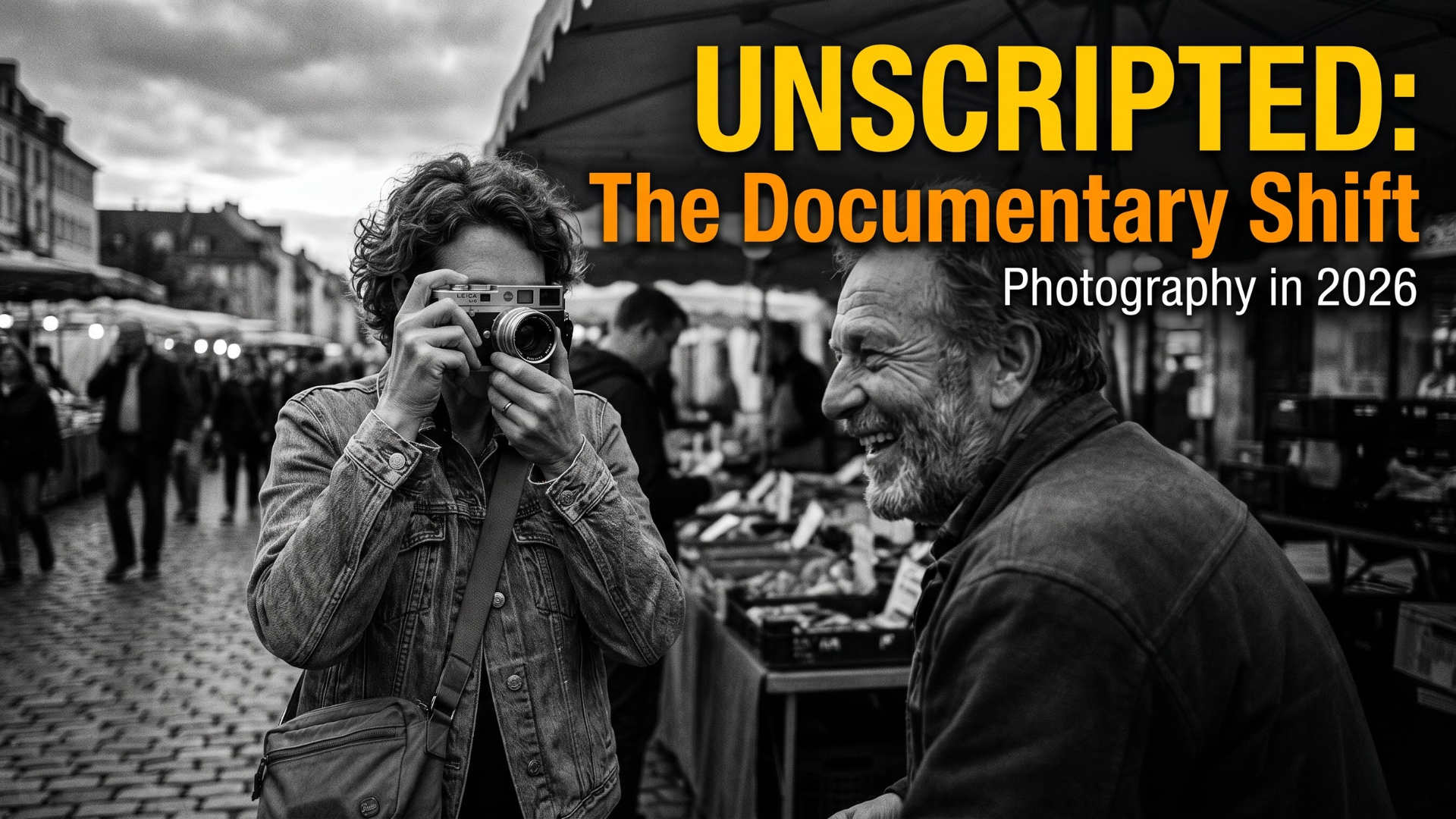
The visual landscape is currently experiencing a profound fatigue with perfection. For years, digital media favored the hyper-polished and the heavily manufactured. Audiences were trained to expect pristine lighting and meticulously arranged subjects. Yet, a clear shift is defining the industry in 2026. Viewers and publishers are turning their backs on staged reality, seeking out imagery that actually breathes. The mainstream demand has decisively pivoted toward documentary style storytelling.
This transition is not merely a passing aesthetic trend. It represents a fundamental change in how we assign value to an image. People no longer want a rigid script. They are actively looking for the unposed, the slightly messy, and the profoundly human. Whether in high-end editorial campaigns or intimate portraiture, the expectation is moving away from the engineered setup toward the patient observation of life as it unfolds.
The Weight of the Unseen Moment
Documentary photography relies on a different kind of discipline. It is the practice of becoming invisible and waiting for the narrative to reveal itself. While the camera industry relentlessly pushes high-speed hybrid technology, AI-driven autofocus, and computational perfection, the essence of the craft remains grounded in slow observation. There is an inherent friction between the frantic pace of modern content creation and the quiet patience required to capture a truly resonant frame.
A camera can process light at blinding speeds, but it cannot anticipate the emotional weight of a fleeting glance or the quiet tension in a room. The photographer must cultivate a cinematic eye. This means looking beyond the obvious subject to understand the geometry of the scene, the quality of the ambient light, and the subtle interactions that tell a larger story. It is about distilling a complex environment into a single, cohesive frame that feels like a still pulled from a motion picture.
The Enduring Power of Monochrome
As the demand for unscripted reality grows, there is a parallel resurgence in the appreciation for black and white imagery. Stripping away the distraction of color forces the viewer to engage directly with the structural integrity of the photograph. The contrast, the texture, and the raw emotion become the undisputed focal points.
Monochrome is not a filter applied after the fact; it is a distinct way of seeing the world. It requires the photographer to think purely in terms of luminosity and form. When the narrative demands it, color can be a powerful tool for conveying atmosphere. However, there is an undeniable permanence to black and white storytelling. It removes the image from a specific timeline, granting it a timeless quality that resonates deeply with audiences seeking authenticity over spectacle.
Building a Narrative Brand
This shift toward documentary aesthetics is fundamentally changing how photographers establish their visual identity. Clients are no longer buying a simple service; they are investing in a unique perspective. They want a cohesive series of images that convey a distinct mood and atmosphere. This literary approach to visual media requires thinking in sequences, where the transition between scenes is just as important as the individual shots.
The demand for authenticity extends beyond the digital screen. There is a renewed appreciation for the physical print. An unscripted, honest photograph carries a tangible weight that deserves to be experienced in the real world. Selling photographic prints is becoming a vital component of establishing a recognized visual brand. It allows the storyteller to control the final presentation of their work, ensuring that the subtle nuances and the warmth of the atmosphere are faithfully reproduced on paper.