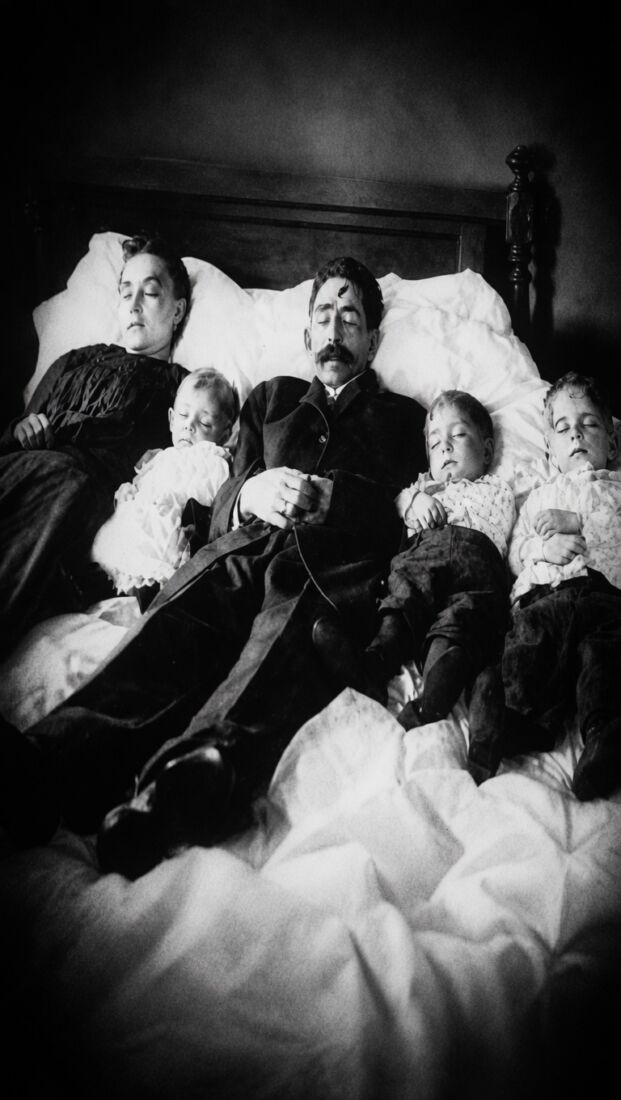
As a child, I was fascinated by a photograph my grandfather kept hidden inside an old tin with other family pictures. I called it “the dead people picture,” not really understanding why it unsettled me—only that it felt different from every other image in the box. Years later, I finally learned the story behind it.
The photograph showed members of my own family who were murdered on October 12, 1906. The wife in the image was my grandfather’s cousin. The killings were so shocking they made national headlines, even appearing in The New York Times, spreading the story far beyond the small Missouri community where it happened.
Authorities quickly identified the killer, and fear of mob violence became so intense that officials moved him between locations to prevent a lynching before trial. Justice came quickly. On December 23, 1906, he was sentenced to death.
But even the execution became part of local legend. Nearly 3,000 people gathered in Missouri to witness the hanging. When the trapdoor opened, something failed, sending the condemned man crashing to the ground alive. Guards lifted him back onto the scaffold, and a second attempt was carried out minutes later.
Today, that photograph no longer feels like a childhood curiosity. It feels like a doorway into grief, memory, and a tragedy my family never truly escaped.
Source