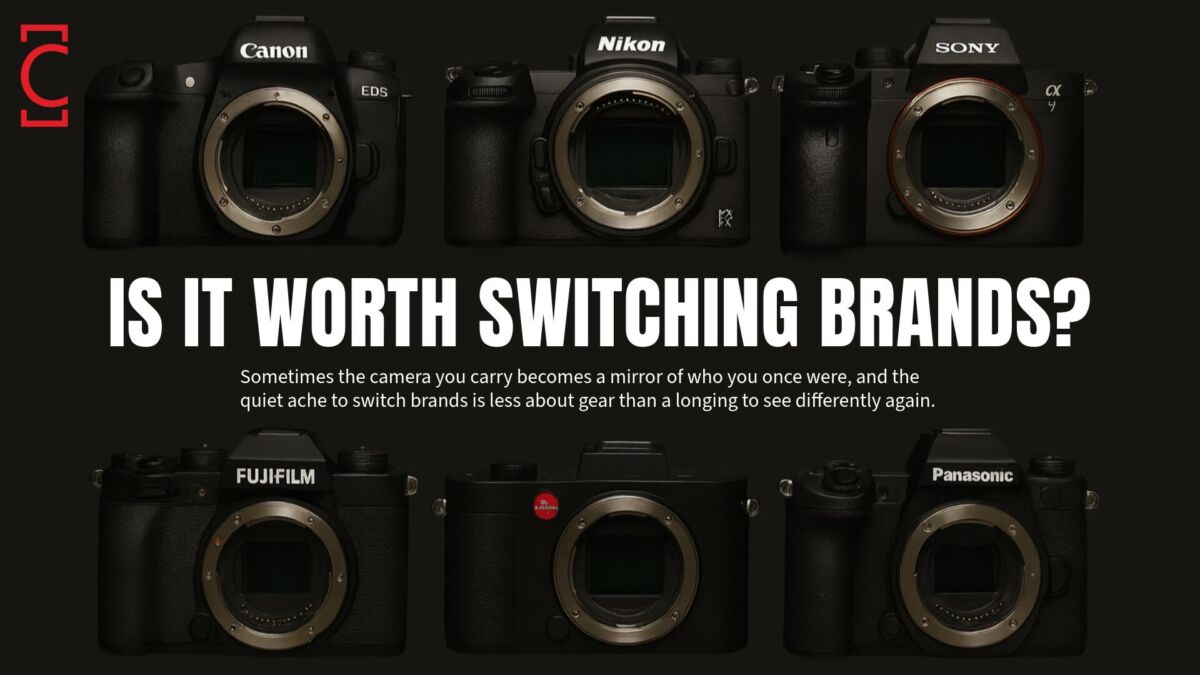
I didn’t realize how heavy my camera had become until the morning I almost left it behind. Not for lack of love — I had carried that body across borders, into storms, through weddings and funerals, into rooms where the light moved like a whisper. It had witnessed things with me, and in its weight I once felt certainty. But on that morning, as the sun pushed a muted orange through the window, I hesitated at the door with a feeling I had never expected: I didn’t want to pick it up. I didn’t want its familiar buttons under my fingers, or the muscle memory that made everything predictable. I didn’t want to see the world through the same glass I had used for years. And that is how the question began, not with specs or rumors or new releases, but with a subtle, almost imperceptible shift deep inside — Is it worth switching brands?
Most people imagine the question as a technical one, born from sensor comparisons, autofocus shootouts, and the endless, exhausting churn of online debates. But the truth is quieter, more human. You don’t consider changing systems because a chart tells you to. You consider it because something inside you is asking for a different kind of seeing. Because every artist, at some point, meets a moment when the familiar becomes too familiar — when perfection becomes predictable, when the camera that once felt like an extension of the body starts to feel like a repetition of the past.
The photographers who message me late at night about switching brands rarely talk about megapixels first. They talk about fatigue. About wanting to feel inspired again. About wondering whether another camera might break the invisible rut they’ve fallen into. They talk about landscapes that no longer feel alive through their current lens, about portraits that feel too controlled, about autofocus modes that pinch them into the same safe choices. And though they rarely say it outright, what they’re really asking is: Can a new tool make me a new version of myself?
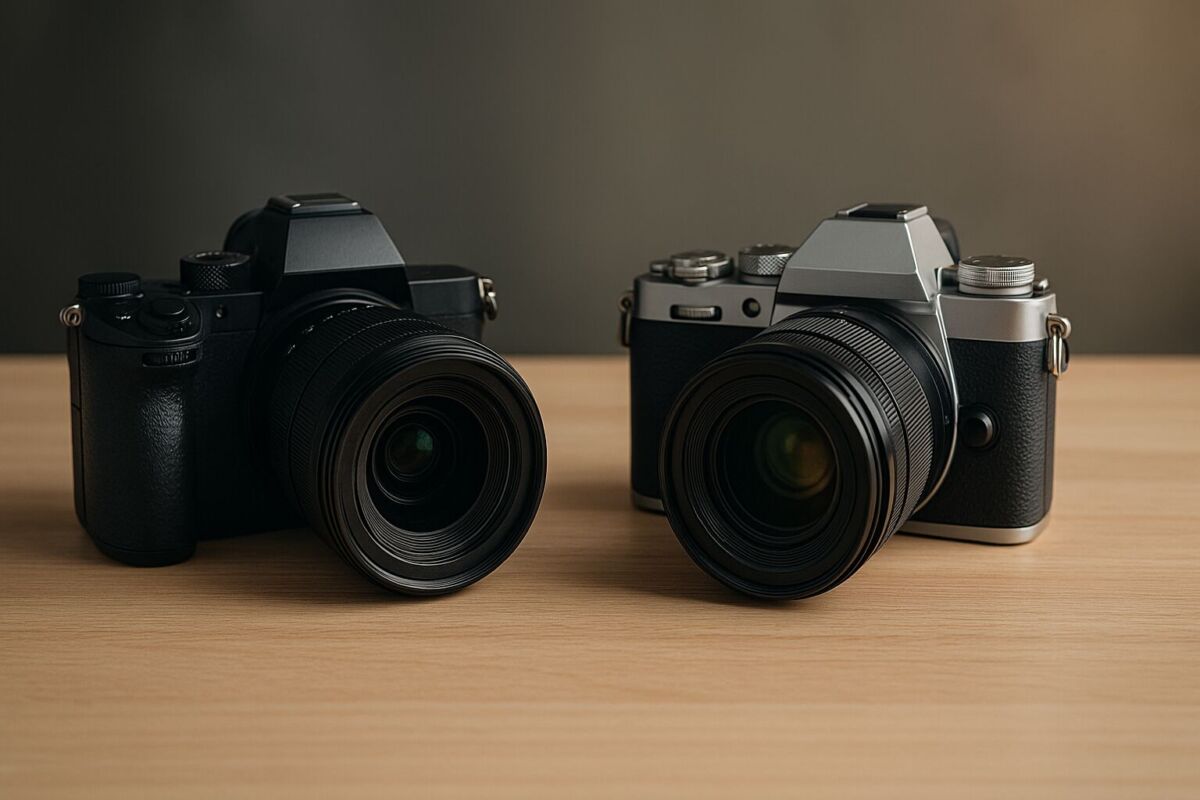
Every camera brand has a personality, a pulse, a particular way of interpreting the world. Some lean toward warmth, others toward clarity, others toward depth or contrast or dreamlike softness. When you spend years within one ecosystem, its visual tendencies become part of your own. You edit to its strengths, compensate for its weaknesses, shape your style subconsciously around its palette and behavior. You adapt to its ergonomics until your fingers know the dials better than they know your own pockets. It becomes familiar — deeply, intimately familiar — which is both a blessing and a quiet danger. Familiarity breeds comfort, and comfort, in art, can slowly dull the edges of curiosity.
The first time I held a camera from another brand — one I had quietly admired from afar but never dared to switch to — I remember pressing the shutter and feeling something I hadn’t felt in years: a small, electric surprise. The sound was different. The color on the rear screen felt different. The weight pulled differently against my palm. Suddenly the world that had felt routine opened a little, and I saw a hint of possibility in that unfamiliarity, a reminder that photography is not just about capturing; it’s about becoming porous to new ways of seeing.
But before romance takes over, there is the other side — the heaviness of consequence. Switching brands is not a simple gesture. It’s selling lenses that once felt like companions, rewriting years of muscle memory, recalibrating trust in a tool you no longer know. It’s losing features you relied on and gaining ones you’re not sure you need. It is stepping into new menus, new firmware quirks, new batteries, new everything. It means letting go of the camera that shaped your early instincts, even if you’ve outgrown some of them.
Every photographer wrestles with this tension: the desire for change, and the cost of change. The question stretches far beyond rationality. It touches identity. Because whether we admit it or not, photographers become attached to brands in ways that resemble loyalty to a language. To change systems is to change dialects — the way you phrase your choices, the way you navigate uncertainty, the place where your eye finds rest in the frame. It is not just about technology; it is about rhythm.
For some, the rhythm of their current brand remains perfect. They know where everything lives, how it reacts, how far they can push it before it breaks. They don’t need the spark of unfamiliarity because they already hold the freedom to create without thinking. For them, switching brands is less a rebirth and more a disruption — a costly, unnecessary detour from a tool that still answers their deepest creative needs.
But for others, the familiarity becomes a barrier. They feel boxed in by predictability. They sense that the camera has begun telling them what to shoot, and not the other way around. These are the photographers who wake up one day knowing, quietly, that the way they see is changing faster than the tool they carry. And in that moment, switching brands becomes not a technical decision, but an emotional necessity — a way to reclaim the spark that first drew them to photography.
I’ve spoken with documentary photographers who switched systems because they needed a body that disappeared more easily into a crowd, something quieter, something smaller, something less aggressive. I’ve met wedding photographers who moved to a new brand because they needed better low-light confidence — not for the spec sheet, but for the way it allowed them to stay inside a dance floor without breaking the atmosphere with flash. I’ve watched sports shooters switch because they needed autofocus that felt like intuition rather than correction. And I’ve seen landscape artists change brands because one sensor rendered sunrise tones in a way that felt truer to how they carried those colors in their memory.
Each of them switched not to chase technology, but to chase truth — the one that made sense to them.
And yet, every time someone asks me whether they should switch brands, I always return to the same question: What is the real reason you want to change?
Because hidden beneath the surface are two very different motives.
There is the switch born from longing — the kind that emerges when your artistic voice is evolving, when you feel a quiet tug toward a new way of seeing that your current system doesn’t quite echo. This kind of switch is powerful and transformative. It is rarely regretted.
And then there is the switch born from noise — comparison, peer pressure, marketing cycles, spec envy, the endless online chorus insisting that you’re falling behind. This kind of switch often leaves a hollow taste because the camera did not change the way you see; it only changed the object in your hand.
If a photographer switches brands to escape insecurity, they carry the insecurity with them. If they switch to pursue curiosity, the curiosity grows.
A camera brand is not a destiny. It’s a companion. And like all companions, it must match your pace, your temperament, your direction. When artists evolve, their tools sometimes must evolve too. But the bravest thing is not switching or staying — it is being honest about what you need to stay alive inside the craft.
The day I finally switched brands, after months of debate, I remember packing my old lenses into their boxes. There was an unexpected stillness in that moment. Not grief, not excitement — something in-between. A soft understanding that something was ending and something else was opening. I realized that I wasn’t abandoning a brand; I was making space for who I was becoming. And when I stepped outside with my new camera, the world looked slightly unfamiliar again, just enough to make me curious. Just enough to wake me.
So is it worth switching brands?
Only if your reason comes from that quiet place inside where change begins — the place where you’re not chasing perfection, but presence. Only if the camera you hold no longer feels like the one that can help you listen to the world the way you need to hear it. Only if the new system feels less like a purchase and more like a conversation waiting to happen.
Because in the end, a camera brand does not make your art. The way you witness the world does. And if switching brands brings you closer to that witnessing — if it sharpens your awareness, rekindles your curiosity, or softens your guard — then the answer will reveal itself the moment you press the shutter and feel something stir that you thought you had lost.
Sometimes the worth of switching isn’t measured in sharpness or dynamic range.
Sometimes it’s measured in the way your breath catches when the light hits just right, and for the first time in a long time, you feel yourself seeing again.
And that feeling — that small, quiet awakening — is worth more than any brand name stitched into a strap.