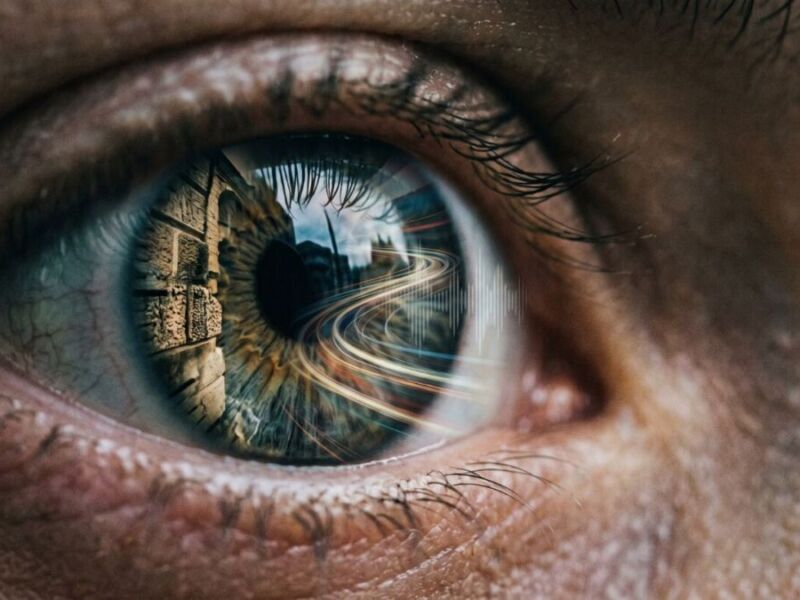
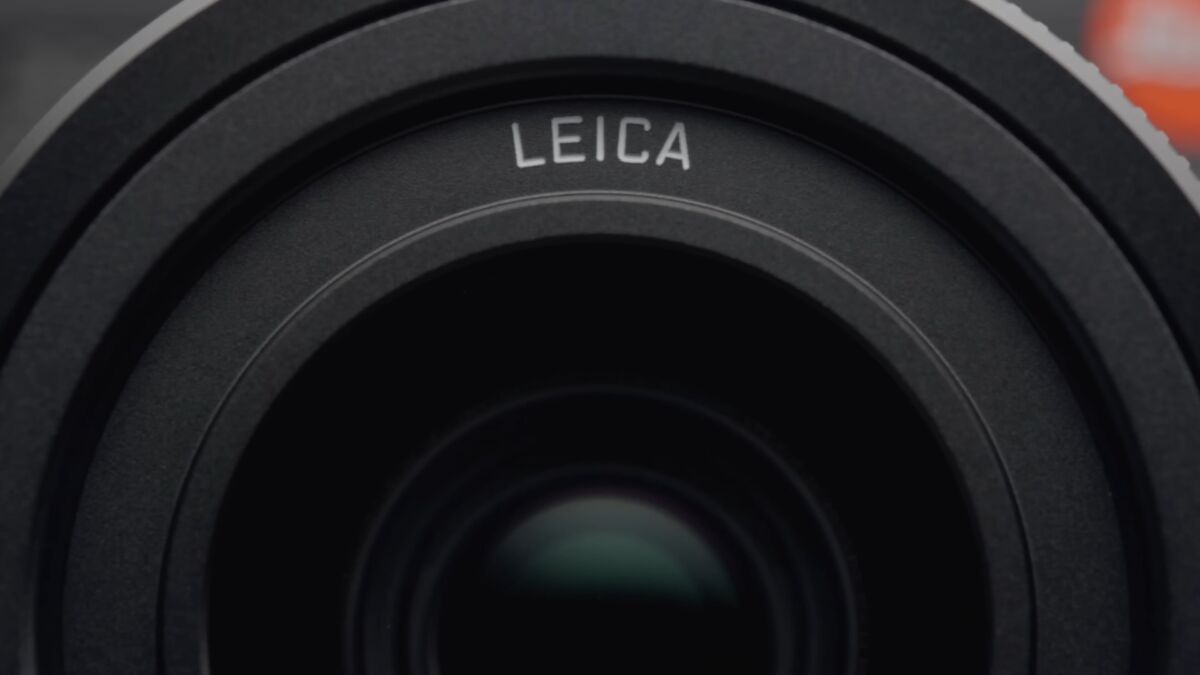
Leica has always been a company that moved with deliberate slowness, trusting in craftsmanship long after the rest of the industry surrendered to automation. That is what makes its newest teaser so arresting: a brief video, all shimmering glass elements and digital light signatures, ending with the phrase “A new way of seeing.” In just fourteen seconds, Leica signaled that it may be ready to take a step it has resisted for years — entering the frontier of hybrid optical and AI-assisted imaging. The video shows nothing definitive, only fragments: macro shots of lens elements, flickering overlays that resemble algorithmic patterns, a subtle hum that evokes machine intelligence. Leica has not offered any explanation or companion statement, leaving photographers around the world to assemble meaning from absence. But the clues, when combined with the company’s recent patent activity, paint a picture of something more ambitious than a firmware update or a smartphone partnership.
Rumors within the industry suggest that Leica may be developing a new imaging pipeline that blends traditional lens design with computational enhancement. Patent filings describe terms like “adaptive optical-AI mapping,” “context-reactive rendering,” and “metadata-authenticated capture.” These are not the kind of features associated with cosmetic filters or simple scene recognition. Instead, they suggest a system where AI works hand-in-hand with the physical lens, adjusting parameters in real time to preserve dynamic range, predict highlight roll-off, or subtly adapt the micro-contrast that has long defined Leica’s signature look. Some analysts believe Leica may be engineering a process that emulates analog film response under unpredictable lighting — not by applying a digital overlay but by interpreting the scene the way film once naturally did. If true, this would place Leica at the intersection of history and innovation, preserving the poetic imperfections of analog while giving photographers a new level of stability and reliability in complex environments.
The timing of this shift feels intentional. The camera industry is facing its largest upheaval since the digital transition. Virtually every major brand has integrated AI to some degree, whether through subject recognition, autofocus intelligence, or noise management. Meanwhile, the rise of generative imaging has begun to challenge public trust in photography itself. Leica — known for its emphasis on truth, authenticity, and real-world seeing — may be preparing to enter this new landscape not by competing with synthetic imagery, but by reinforcing the purity of real images through verifiable metadata and careful computational support. Insiders familiar with the company’s research suggest that authenticity verification may become a foundational element of Leica’s new direction, possibly using cryptographic signatures to confirm that an image has not been digitally altered after capture. If implemented, this would serve as a direct countermeasure to the increasing spread of manipulated or AI-generated photographs online, a problem press agencies and governments are urgently trying to address.
Reactions to the teaser have been swift and polarized. Leica enthusiasts — a community known for strong loyalties and equally strong opinions — are divided between excitement and concern. Some believe the company is overdue for an innovation leap that allows it to remain competitive in a market where computational photography is rapidly becoming the norm. Others argue that Leica’s magic lies precisely in its rejection of such tools. One commenter wrote, “I didn’t buy a Leica so the camera could think for me,” while another noted, “If any company can integrate AI without losing its soul, it’s Leica.” Professional photographers have voiced more nuanced opinions. Many acknowledge that a carefully balanced hybrid system could be invaluable for documentary and editorial work, especially under harsh or unpredictable lighting conditions. As one photographer said on a forum, “If it helps me get closer to what I actually saw, not what software thinks I want to see, then I’m open to it.”
What makes this moment especially significant is the potential ripple effect across the high-end camera market. Leica has often set artistic and philosophical standards rather than technical ones, and other brands have followed. If Leica embraces even a subtle form of AI integration, it may mark a cultural turning point, signaling that computational tools are no longer synonymous with automation or inauthenticity but can serve as instruments of fidelity and nuance. For now, the teaser remains just that — a promise without details, an invitation without an explanation. Leica has confirmed only that more information will be released in the coming weeks. Until then, the photography world is left to wonder whether this collaboration represents a gentle evolution or a radical reinvention. Either way, Leica has captured something rare in today’s predictable tech landscape: genuine curiosity.