Cheryle St Onge has spent the past several years balancing the roles of artist and caregiver. When her mothers dementia began to deepen, she moved home to help with daily routines that were becoming harder to manage. She had been teaching before then, but caring for her mother became the focus of her days.
People close to her say she held back from picking up the camera at first because she worried it might feel intrusive. But those same friends reminded her that photography had always been her way of understanding the world. It was a familiar language when so much else was changing.
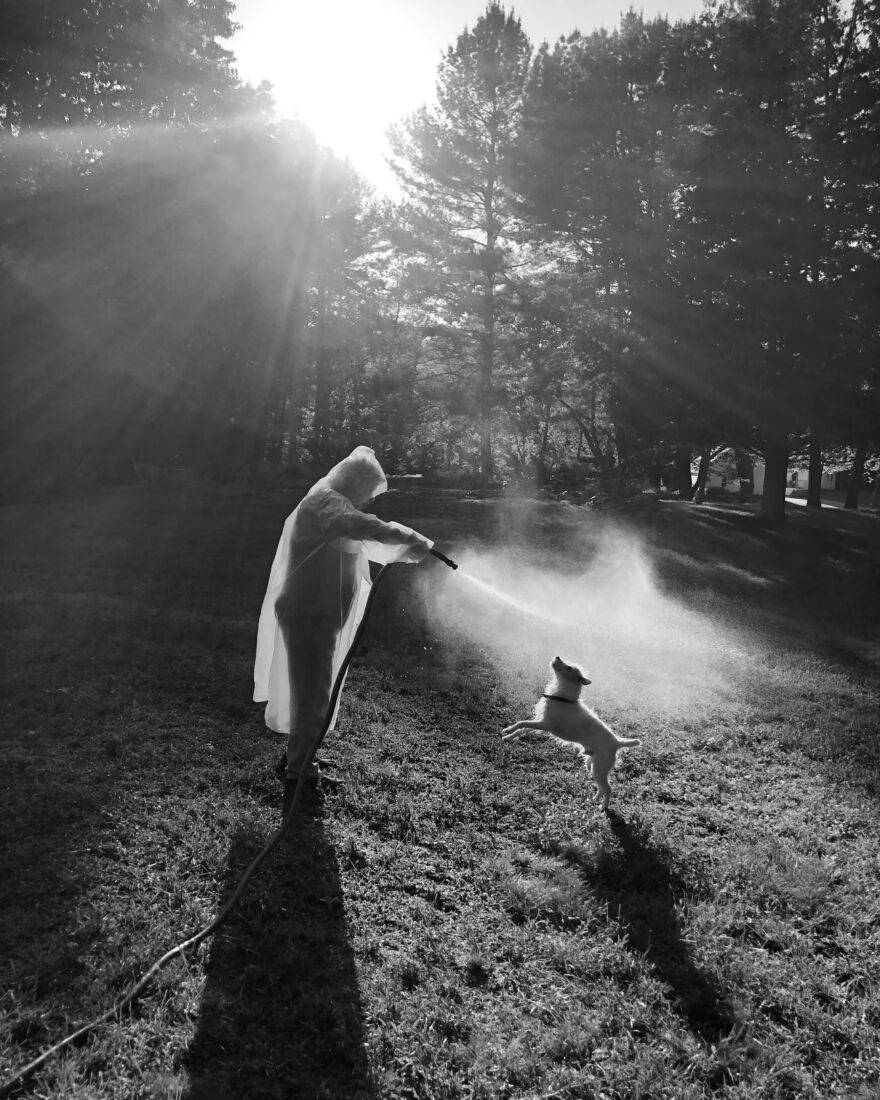
The photograph that has since drawn attention was made on a day that felt ordinary. Sunlight filled the yard and the family dog, Skipper, was darting around trying to catch water from the hose. St Onges mother stepped outside and lingered there for a moment, watching the dog play. Anyone who knew her understood that these pauses had become rare.
Seeing this, St Onge lifted her camera almost on instinct. The picture that followed shows her mother standing quietly in the light while Skipper jumps through a spray of water. The two of them share the frame in a way that feels like the world has slowed down for a breath.
People who have seen the image often describe it as gentle rather than sad. It shows a part of dementia rarely talked about, the flashes of connection that still appear when least expected. A friend of the family said it simply captured the truth that joy does not disappear all at once.
Caring for someone with dementia is layered. There are days filled with confusion and frustration, and others with small wins that feel bigger than they look. St Onge has spoken about how difficult it was to find the balance between supporting her mother and respecting the moments her mother wanted space. Photographing became a quiet bridge between them. Sometimes her mother played along, standing a little taller or offering a small smile that felt like it came from the past.
Over time the pictures began forming a larger body of work. They were not just portraits but scenes from inside the house and around the garden. Light through a window, a chair moved slightly out of place, the everyday signs of a home shaped by memory loss. Together these images built a picture of life that was both tender and honest.
Many of those photographs later became part of St Onges book Calling the Birds Home. She has described the project as a way of staying connected to her mother at a point when words were failing her. The book holds both the difficult days and the small moments of clarity that came without warning.
The photograph with the dog has reached families who understand the journey all too well. Some have written to her saying it helped them feel less alone or reminded them to look for moments of softness in their own homes. For many people navigating dementia, these moments often feel like gifts.
St Onges work is now often referenced when people discuss caregiving and the emotional weight that comes with it. Those who know her say she is grateful for the images she made because they hold a piece of her mother that felt true to who she has always been.
The picture from that afternoon is one she returns to often. It reminds her that even in a life shaped by uncertainty, there were still moments where her mother seemed completely present, watching the dog leap through the water as sunlight warmed the yard.