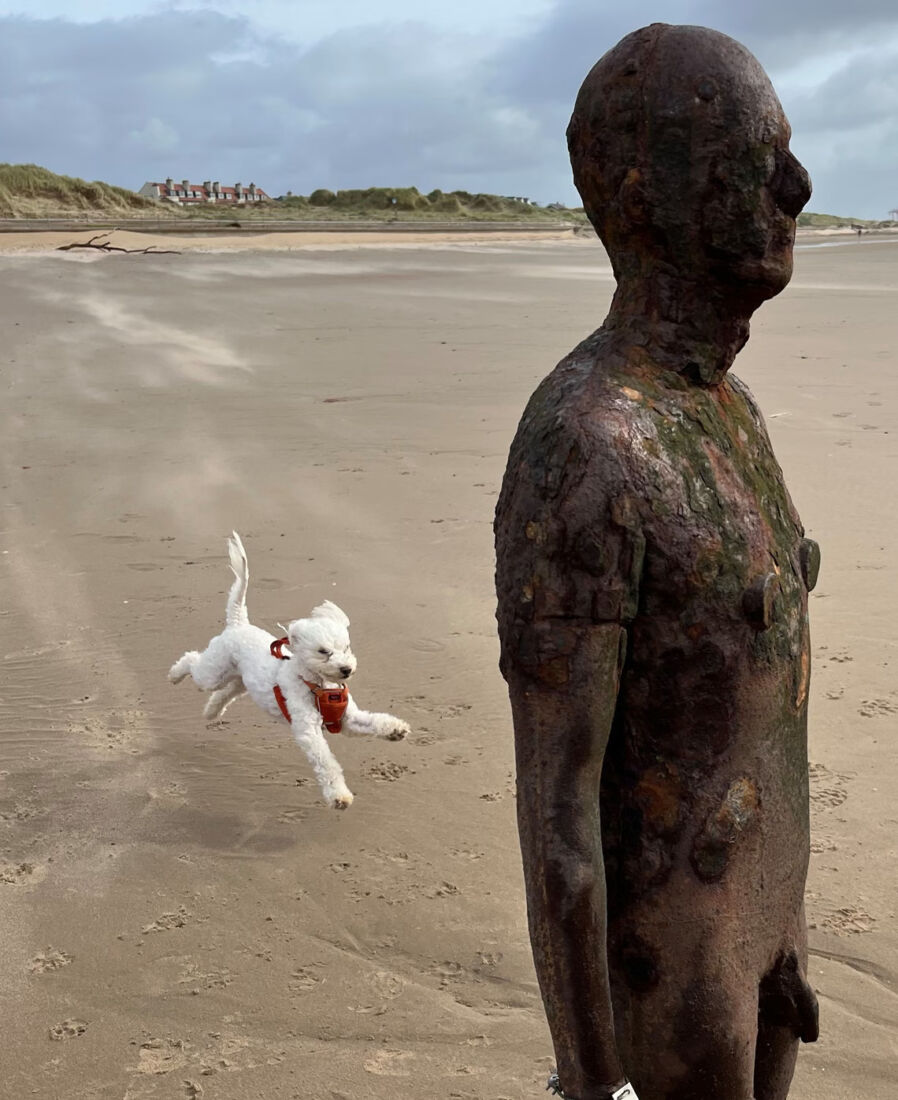
Daniel Whitmore had gone to the coast with a few friends during the early part of autumn. He expected rough light, a restless sea, and the usual stretch of grey that settles over the water at that time of year. What he did not expect was a picture that would keep replaying in his mind long after he put his phone back in his pocket. It was simple. A metal figure facing the waves. Wind shaking the air. And a white dog that suddenly seemed to float for one strange and perfect second.
Whitmore had been meaning to visit that stretch of beach for years. The sculptures along the shoreline are placed far apart from one another, each standing quietly like someone lost in thought. Photographers often travel there only to see how the light settles on those shapes. On the day he finally made it, the weather was loud and restless. Sand lifted in small spirals. The tide looked charged with energy. He liked it immediately. Stormy days change the whole space around you and he has always been drawn to that kind of mood.
He took his time walking from one figure to the next. He kept his main cameras in his bag and simply used his phone. He studied how the light clung to the metal, how the rust softened into the grey of the sky, how the shoreline formed a quiet stage. While he adjusted his frame around one sculpture, a sudden flicker of motion pulled his eyes to the side. A small white dog was racing across the sand with wild excitement. Its ears were back. Its paws were lifted high. It looked as if the storm had given it something to run toward.
Whitmore reacted on instinct. He raised his phone and tapped the shutter once. No planning. No second try. Just a reflex.
When he glanced at the picture, he laughed. The dog had left the ground at the exact moment he pressed the screen. All four legs were suspended in the air. The sculpture stood still like a quiet witness while the dog floated for a heartbeat beside it. The scene looked both playful and strange, almost like a frame from an old experiment in motion, the kind where photographers tried to understand how bodies move through the air.
Whitmore usually leaves his phone pictures unnamed. This time he made an exception. He called the image Saltwind. The name came from the way the storm had blurred the line between sea and sky behind the sculpture. In the frame, the dog almost felt like it belonged there, as if it had stepped into the scene at exactly the right time without knowing anything about it.
What surprised him most was how familiar the feeling was. After working for many years in busy newsrooms surrounded by cameras and deadlines, he had forgotten how refreshing it feels when a picture appears out of nowhere. Phone photography reminds him of that. You see something. You respond. You do not overthink. The picture becomes a direct record of how the moment felt when it passed in front of you.
By the time the storm calmed down, Whitmore and his friends were covered in sand. They brushed themselves off and headed home with a few quick snapshots. It was only later, while sitting on a train and scrolling through the images, that he truly noticed how much he liked that single shot of the sculpture and the airborne dog. It felt natural. Honest. Full of timing that no one could plan.
He knows he will go back to that beach. The sculptures will still be there. The tides will keep shifting. The light will change every time. But he smiles when he thinks about it. Moments like the one with the running dog are gifts that arrive only once. You catch them when you are lucky. And even if he returns many times, he doubts another dog will leap into the frame quite that perfectly again.