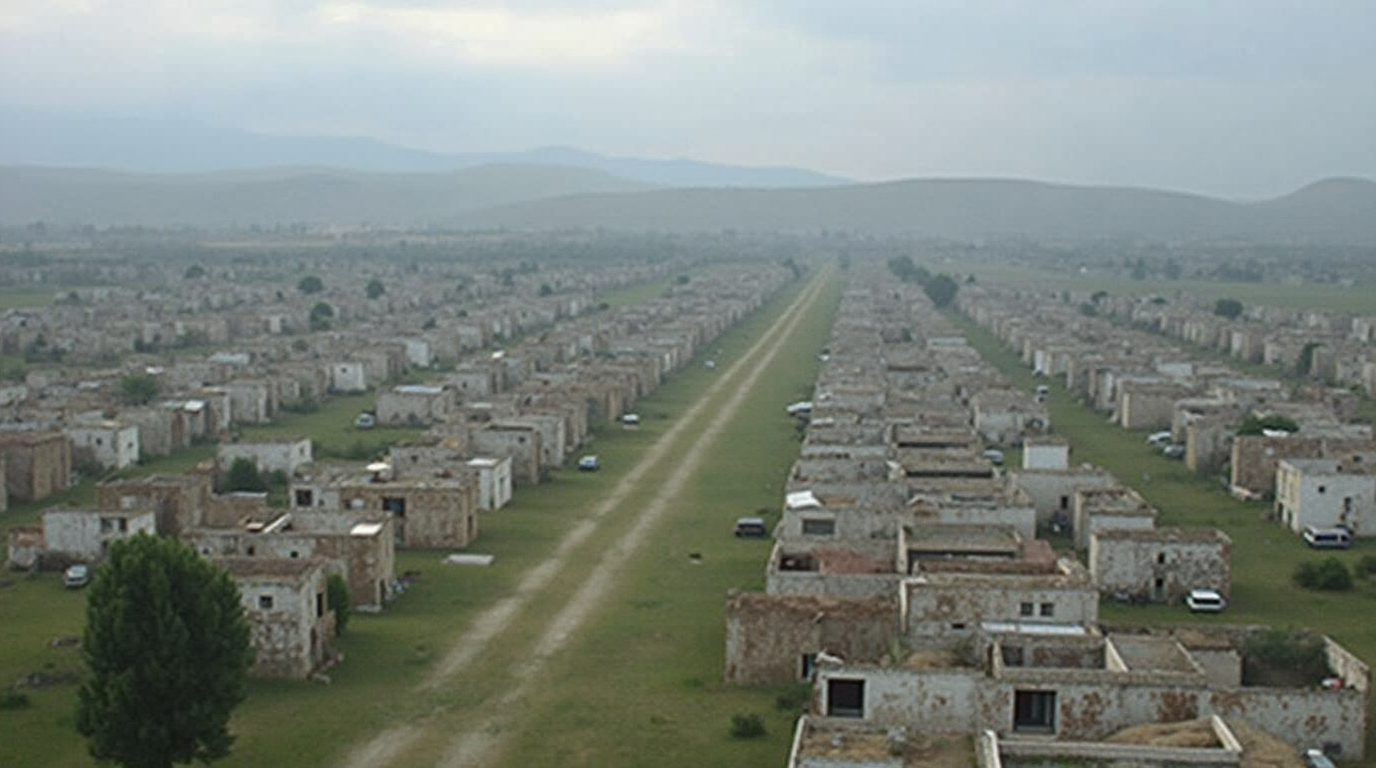
The village of Kalachi sits quietly on the open steppe of northern Kazakhstan, surrounded by flat grasslands and scattered houses that face long winters and short summers. For decades it was an ordinary rural settlement where daily life followed familiar rhythms. Families worked nearby farms, children attended school, and the small population rarely drew attention from the outside world.
That changed around 2010 when residents began experiencing something deeply unsettling. Without warning, people would suddenly fall asleep in the middle of normal activities. Some collapsed while walking down the street. Others fell asleep while talking, working, or even driving.
What made the situation more alarming was how long the sleep episodes lasted. In many cases the affected individuals remained unconscious for several hours. Some people slept for nearly two days before waking.
At first villagers assumed the cases were isolated health problems. But the number of incidents slowly increased. Over time dozens of residents reported similar experiences, and the phenomenon began affecting both adults and children.
Doctors who examined the patients discovered that the condition was not simply ordinary fatigue. When people eventually woke up, many described unusual symptoms including confusion, memory loss, and vivid hallucinations.
One resident later described the strange experience to journalists.
“I fell asleep while walking and woke up in the hospital. I could not remember how I got there.”
Another villager recalled that some patients behaved strangely after waking.
“They would wake up confused and sometimes see things that were not there.”
The unusual pattern of sudden sleep episodes soon attracted attention from medical researchers and government authorities. Specialists traveled to Kalachi to investigate what was happening in the village.
Early theories explored a wide range of possibilities. Some researchers suspected contaminated water or food sources. Others considered infectious diseases or neurological disorders. Environmental factors were also investigated, including chemical exposure or toxins in the air.
The location of the village added another possible clue. Kalachi lies near the abandoned uranium mining town of Krasnogorsk, a settlement that had once operated during the Soviet era. After the mines closed in the 1990s, the area was largely abandoned.
Some researchers wondered whether radiation or gases released from the old mining tunnels could be affecting nearby communities.
Extensive testing was conducted on air quality, water samples, and soil from the surrounding region. Medical examinations were also performed on residents who experienced the sleep episodes. Yet for several years no clear explanation emerged.
As investigations continued, scientists eventually focused on the possibility that underground gases were accumulating in the area. Some studies suggested that carbon monoxide and hydrocarbon gases might occasionally seep from abandoned mine shafts into the atmosphere around the village.
Under certain weather conditions, these gases could concentrate in low-lying areas and affect residents without immediately being noticed. Exposure to such gases can cause symptoms including dizziness, confusion, and sudden loss of consciousness.
Researchers later proposed that a combination of carbon monoxide and oxygen deficiency might explain the strange sleeping episodes observed in Kalachi.
Although this explanation appeared plausible, the phenomenon had already caused widespread concern among residents. Eventually authorities decided to relocate many families to other towns in the region.
As people gradually moved away, the mysterious sleeping incidents began to decline.
Today the story of Kalachi remains one of the most unusual environmental health mysteries of recent decades. While scientists believe underground gases likely played a role, the exact mechanisms behind the episodes were never fully confirmed.
For a brief period in the early twenty-first century, a quiet village on the Kazakh steppe became the center of a medical puzzle that captured global curiosity. The idea that an entire community could suddenly fall asleep without warning sounded almost like something from fiction.
Yet for the people who lived there, the experience was very real. In Kalachi, ordinary days sometimes ended with people waking hours later with no memory of how they had fallen asleep in the first place.