Early in the morning on June 30, 1908, something unusual appeared in the sky over central Siberia. The region was remote and sparsely populated, made up mostly of endless taiga forest and small settlements along winding rivers. People living near the Podkamennaya Tunguska River suddenly noticed a brilliant object moving rapidly across the sky.
Witnesses described it as a bright fireball, far brighter than the sun, streaking across the horizon. Some reported hearing a rushing sound that followed the object as it traveled through the atmosphere. Within moments, the sky erupted in a flash of light.
Then came the explosion.
The blast that followed was so powerful that it knocked people off their feet more than sixty kilometers away. Windows shattered in distant villages. A powerful shockwave rolled across the forest, flattening trees across a massive area of wilderness.
One local witness later described the moment in dramatic terms.
“The sky split in two, and fire appeared high above the forest. There was a loud crash and a powerful wind knocked me off my feet.”
Another account recorded by investigators years later described the force of the explosion in a nearby settlement.
“There was a flash and a sudden heat. The ground trembled. The shock threw people to the ground and broke the windows of houses.”
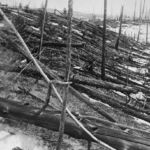
When scientists eventually studied the area decades later, they discovered the scale of the destruction was extraordinary. The explosion had flattened trees across more than two thousand square kilometers of forest. Researchers estimate that roughly eighty million trees were destroyed in the blast.
Yet something about the scene puzzled investigators immediately.
There was no crater.
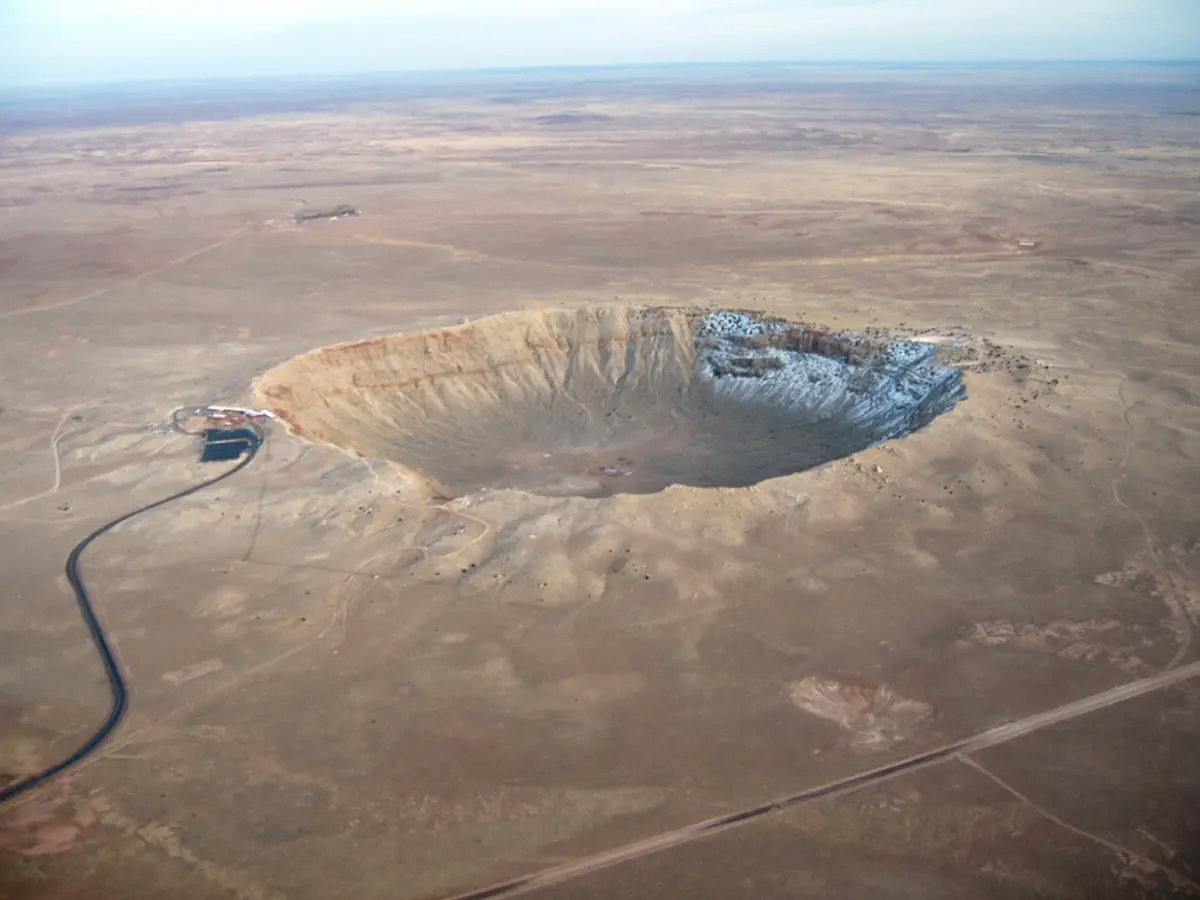
Typically when a meteor strikes the Earth, it leaves behind a large impact crater marking the collision point. But the Tunguska site showed no such crater. Instead the forest had been blown outward in a huge radial pattern, with trees lying on the ground pointing away from a central location.
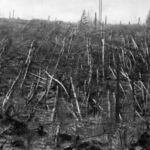
At the very center of the blast area, scientists found something even more unusual. Many trees remained standing upright but had been completely stripped of their branches and bark. These “telegraph pole” trees suggested that the explosion had occurred above the ground rather than at the surface.
For nearly two decades the remote location of the disaster prevented detailed investigation. The region was difficult to reach and political upheaval in Russia delayed scientific expeditions.
Finally, in 1927, Russian mineralogist Leonid Kulik organized the first major scientific expedition to the Tunguska region. Kulik had initially believed the explosion was caused by a meteorite impact and expected to discover a large crater.
Instead he encountered a strange and silent landscape.
Photographs from the expedition show endless rows of fallen trees radiating outward from the center of the explosion. Kulik and his team searched the area carefully but found no large fragments of meteorite material.
The absence of a crater puzzled scientists for many years.
Several theories were proposed during the early decades of research. Some researchers suggested that a small comet might have entered Earth’s atmosphere and exploded before reaching the ground. Others believed a stony asteroid disintegrated in the air.
More unusual explanations also appeared. Some writers speculated about natural gas explosions beneath the Earth’s surface. Others proposed that antimatter collisions or even extraterrestrial spacecraft might explain the event.
Modern scientific analysis has provided a more widely accepted explanation.
Most researchers now believe the Tunguska event was caused by a large asteroid or comet fragment entering Earth’s atmosphere at extremely high speed. As the object plunged through the atmosphere, intense pressure and heat caused it to break apart.
The sudden fragmentation produced an enormous airburst several kilometers above the surface. The explosion released energy equivalent to roughly ten to fifteen megatons of TNT.
Because the object exploded in the air rather than striking the ground, it produced no crater. Instead the shockwave traveled outward through the atmosphere, knocking down the forest below.
Even today the Tunguska event remains the largest impact-related explosion recorded in modern human history.
Scientists estimate the object responsible may have been between fifty and sixty meters in diameter before entering the atmosphere. If it had reached the ground directly, the damage could have been far greater.
The remote location of the explosion likely prevented widespread casualties. Had a similar event occurred above a major city, the consequences would have been catastrophic.
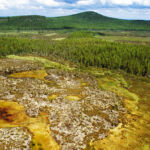
Over the past century the Siberian forest has slowly recovered. New trees have grown where the original forest once stood, though subtle patterns in the landscape still reveal the direction of the blast.
Researchers continue to study the Tunguska region because events like this provide important clues about potential asteroid hazards facing Earth. Small space objects frequently enter the planet’s atmosphere, though most burn up harmlessly before reaching the ground.
The Tunguska event demonstrated that even relatively small cosmic objects can release enormous energy when they collide with Earth’s atmosphere.
In the quiet forests of Siberia, the scars of that explosion have mostly faded. Yet the story remains a powerful reminder of how suddenly the forces of space can reach our planet.