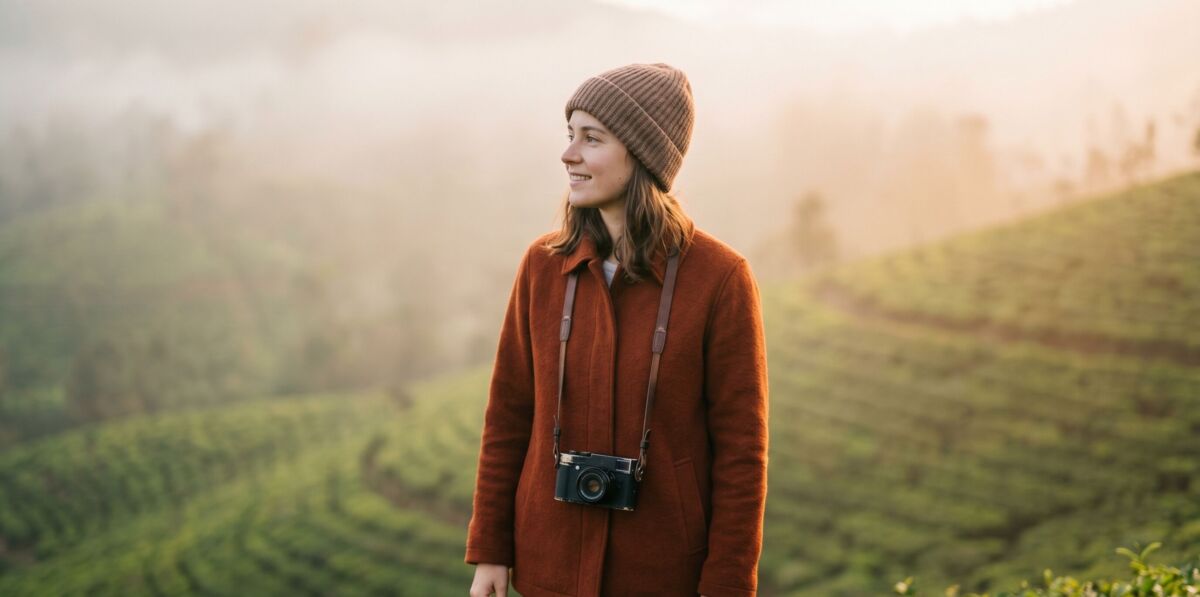
The mist has barely lifted off the tea estates when the day begins. It is cold, and the air is completely still. You can hear the steady rustle of leaves brushing against heavy cotton long before you hear any human voices. If you raise your camera to your eye the second you arrive, you break the spell. You immediately mark yourself as an outsider, someone there to take something rather than understand it.
This tension exists at the core of modern photography. We are so eager to document life, to secure the image and move on to the next, that we often forget to actually live alongside our subjects. In our rush to build a portfolio, we sacrifice the very human connection that makes an image worth looking at in the first place.
To create work that resonates, we have to relearn how to observe. We need to put the camera down.
The Tyranny of the Viewfinder
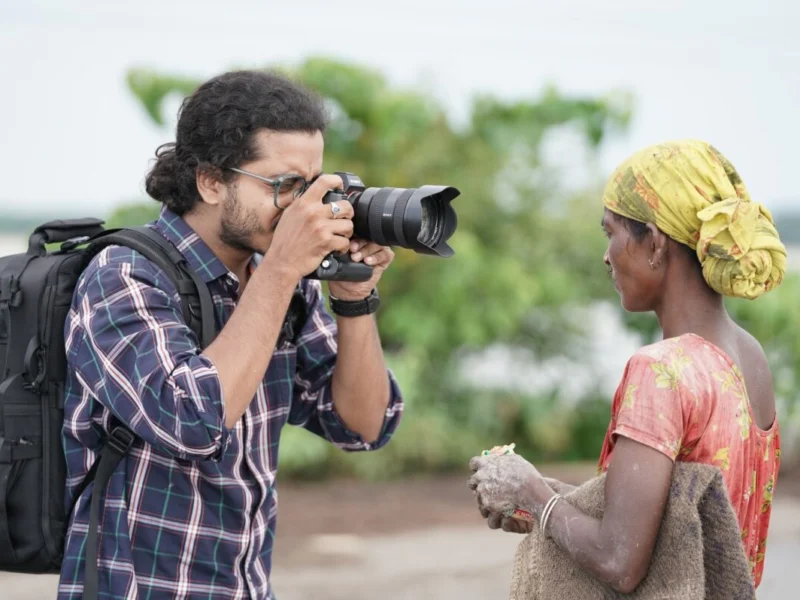
The camera is a physical barrier. The moment you put a piece of glass and machinery between your eye and another person, the dynamic of the room changes. Conversations alter. Posture shifts. People become hyper-aware of being watched.
It is easy to hide behind this barrier. We often use the technical demands of the camera—checking exposure, adjusting white balance, confirming focus—as an excuse to avoid engaging with the environment. We treat the world as a series of technical problems to solve. Are the highlights blown? Is the shutter speed fast enough to freeze motion?
While technical competence is a requirement, it is not the goal. The most memorable images from the last century of photojournalism and documentary work rarely succeed because of corner-to-corner sharpness. They succeed because they convey a specific, unrepeatable emotional truth. If your primary focus is on the histogram, you will miss the subtle tightening of a jaw or the momentary glance between two friends. You cannot photograph a feeling if you are not present enough to feel it yourself.
The Discipline of the “First Look”
There is a distinct difference between scanning a scene and truly seeing it. When we arrive at a location, the impulse is to start working immediately. This hunting mindset is counterproductive. It leads to reactionary photography, where you are simply firing the shutter at whatever moves.
Try a different approach. Leave the camera in the bag for the first twenty minutes. Walk the perimeter of the area. Notice the direction of the light. Watch how the shadows stretch and contract as the sun moves or clouds pass. Listen to the ambient noise.
This period of quiet observation serves two purposes. First, it allows you to build a geographical and emotional map of the space. You learn the rhythm of the location. Second, it allows the people in that space to get used to your presence. Once you stop acting like a hunter, you become part of the background. By the time you eventually pick up your camera, you are responding to a narrative you already understand.
Anticipation Over Reaction
Observation is a muscle that requires consistent training. You can practice this anywhere, on a train platform or sitting at a corner table in a café.
Look for patterns. Notice how people navigate around a puddle on the sidewalk or how they react when the traffic lights change. When you study human behavior without the pressure of taking a photograph, you learn to anticipate action.
If you see a patch of interesting light cutting across an alleyway, don’t just photograph the empty light. Wait. Anticipate that someone will eventually walk through it. Frame your shot, set your exposure, and keep both eyes open. When the subject enters the frame, you are ready. You are no longer reacting to a fleeting moment; you have planned for it.
The Burden of Options
If your work feels disconnected or mechanical, the solution is rarely to buy more gear. In fact, having too many options often paralyzes the creative process. If you are constantly wondering whether you should use a 35mm or an 85mm lens, you are not thinking about the subject.
Simplifying your process removes the friction between seeing an image and capturing it.
- Commit to one lens: Leave the heavy zoom lenses at home. Attach a single prime lens to your camera and do not take it off. This forces you to move your feet. It dictates how close you need to be to your subject and establishes a consistent visual language across your images.
- Shoot less, look more: We live in an era of digital abundance, where it costs nothing to take a thousand photos a day. Treat your memory card like a roll of 36-exposure film. Ask yourself if the image is actually worth taking before you press the shutter.
- Keep the frame clean: Use clear, straightforward composition. If an element in the background does not add context or information to the story, adjust your position to remove it. Clutter dilutes the impact of the photograph.
The Human Element
Photography is a method of witnessing the world. It is a privilege to be let into people’s lives, even for a fraction of a second. But the camera should never become an excuse to detach yourself from the human experience.
Some of the most profound moments you will experience in the field are the ones you deliberately choose not to photograph. You recognize that the moment is too private, too fragile, or simply better experienced with your own two eyes. Those decisions matter. They shape your empathy, inform your perspective, and ultimately give your work its soul.
The next time you see something compelling, take a breath. Look at it fully. The camera can wait.