At 63, she walked into Egypt’s largest garbage dump. And stayed for two decades.
Cairo, 1971. The smell hit you a mile away.
This was the Moqattam slum — the vast, sprawling mountain of trash where Cairo dumped everything its seven million residents threw away. Forty thousand people lived here, sorting through rotting food, broken glass, plastic, metal, and animal waste with their bare hands.
They were known as the zabaleen — “garbage people.” Society treated them as if they didn’t exist. No schools. No hospitals. No clean water. No electricity. Children as young as six worked alongside their parents. Girls gave birth at twelve, thirteen, fourteen. Many died before twenty-five.
Most people looked away.
Sister Emmanuelle, a 63-year-old French nun in a simple gray habit, looked straight at them and walked in.
She had spent the previous forty years teaching literature to the daughters of diplomats in comfortable schools across the Middle East. A safe, respectable life with a quiet retirement waiting. Instead, she asked one simple question: “Where are the poorest people in Egypt?”
Everyone pointed to the dump.
She went there. Asked if she could live among them.
The zabaleen stared in disbelief. No outsider had ever asked to move in.
They built her a tiny concrete room — one bed, a cross, a Bible. She moved in.
What she witnessed shocked even her.
Children dying from infections that could be cured for pennies. Open wounds from sorting glass that never healed. Zero literacy — almost no one could read or write their own name. Families living in huts made of garbage. Pigs rooting through the same waste the people sorted for survival.
Sister Emmanuelle didn’t come to preach. Most zabaleen were already Coptic Christians. She came to stay.
She started small: teaching children to read, writing letters for illiterate mothers, bandaging wounds with whatever supplies she could beg for.
Then she went bigger.
She realized the zabaleen weren’t poor because they were lazy — they were trapped in a system that paid them almost nothing while the city profited from their labor. So she started writing letters to France, to Europe, to anyone who would listen. She became relentless.
By 1980, the money came. She built Egypt’s first free primary school for zabaleen children. Then a medical clinic with nurses and vaccines. Then a women’s center offering literacy classes and skills training.
She found an engineer and built a composting plant that turned mountains of pig manure into sellable fertilizer — giving the zabaleen a new source of income.
She distributed birth control to girls as young as twelve. The Vatican was furious. She refused to stop.
“I am with the poor,” she said. “I will do what the poor need.”
For twenty straight years she lived in that slum. No running water. No electricity. A bucket for a toilet. Brutal Egyptian summers. Disease outbreaks. Political upheaval. She never left.
She aged there. Her hair turned white. Her face weathered. The same gray habit, year after year.
The zabaleen began calling her Om Emmanuelle — “Mother Emmanuelle.”
She wrote books about their lives that became bestsellers in France. Fame found her whether she wanted it or not. She used every interview, every television appearance, every speech to raise more money.
In 1993, at age 84, her religious order finally ordered her to return to France. She had spent twenty-two years in Egypt, most of them in the garbage city.
Even then, she didn’t stop. For the last fifteen years of her life, she lived simply in a modest retirement home and continued fundraising — TV, radio, lectures, books. She raised millions more and expanded her work to Lebanon, Sudan, Burkina Faso, the Philippines, and beyond.
Sister Emmanuelle died peacefully in her sleep on October 20, 2008 — twenty-seven days before her 100th birthday.
Egypt mourned her more deeply than France. The zabaleen held memorials. Hundreds came — former garbage collectors who were now doctors, teachers, nurses, business owners. Children who once sorted trash now read books and dreamed bigger futures.
The schools she built are still standing. The clinics. The women’s center. The composting plant. Thousands of lives transformed across generations.
Here’s what makes her story unforgettable:
She started at 63 — the age when most people retire.
She spent the first forty years of her adult life teaching privileged children. Then she spent the next thirty-seven years serving the most invisible, forgotten people on Earth.
She wasn’t a doctor. She wasn’t a social worker by training. She wasn’t young or strong. She was simply a 63-year-old nun who decided the second half of her life would matter more than the first.
She found the people everyone else ignored and refused to look away. She ate with them. Slept among them. Washed their wounds. Learned their names. Loved them without conditions.
She didn’t try to change their faith. She simply loved them as they were.
Sister Emmanuelle lived 99 years and gave the last 37 of them to people the world wanted to forget.
She walked into a garbage dump at 63 and refused to leave until the world finally saw the people who lived there.
Her legacy isn’t just the buildings or the schools. It’s the quiet, stubborn proof that one person — even starting late in life — can refuse indifference and change everything.
In a world that celebrates youth, power, and comfort, Sister Emmanuelle reminds us that the greatest chapters of a life can begin when most people think the story is already over.
She didn’t just serve the poor.
She saw them. Stayed with them. And loved them until the very end.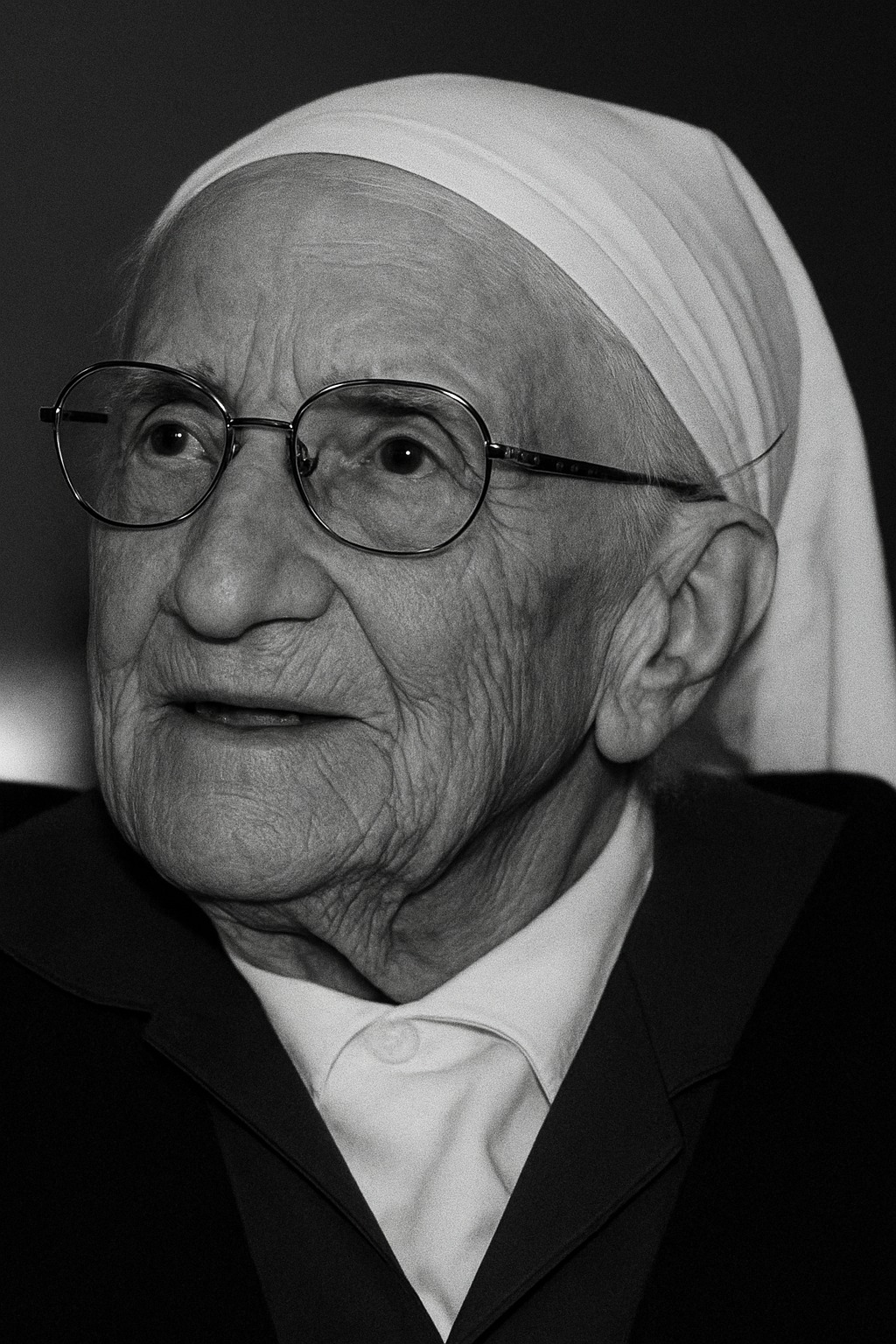
Source