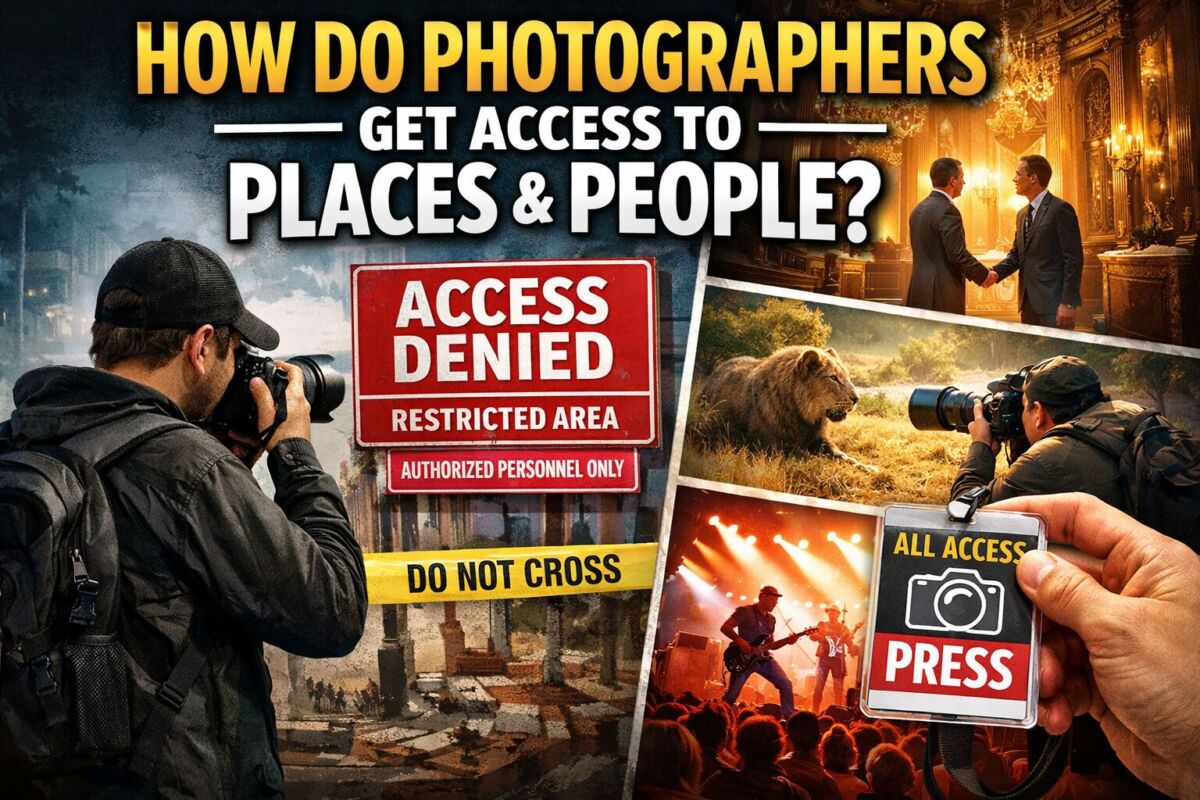
Access in photography is often misunderstood. From the outside, it appears mysterious or privileged. People assume certain photographers are allowed in because of fame, equipment, or connections. In reality, most access is earned long before a photograph is taken. It begins with how a photographer approaches people, not how they present themselves.
The first barrier is expectation. Many photographers believe access is something they request and receive quickly. They expect a yes or no answer. But in real situations, access is negotiated over time. People need to understand why you are there, what you intend to do, and how their lives will be represented. A camera pointed too soon often closes doors permanently.
Permissions are not only legal documents. They are emotional agreements. Even when formal permission exists, genuine access does not. A signed letter does not mean comfort, trust, or openness. Those come from presence. From listening more than talking. From showing patience without pushing for images immediately.
Photographers who consistently gain access understand one thing clearly. People are not subjects waiting to be photographed. They are individuals protecting their space, dignity, and safety. Especially in vulnerable or private environments, hesitation is not resistance. It is self protection.
Trust is built through repetition. Returning without photographing. Spending time without producing images. Explaining your work honestly without exaggeration. Letting people see previous projects without using them as credentials. Trust grows when people feel respected, not impressed.
Many photographers make the mistake of overselling themselves. They promise exposure, impact, or visibility. These promises rarely mean anything to people on the ground. What matters more is how you behave in the moment. Whether you keep your word. Whether you share images when you say you will. Whether you leave when asked.
Access to places often follows similar principles. Institutions, events, and private spaces care about disruption and risk. They want to know if your presence will cause problems. Clear communication matters more than artistic language. Explaining what you will not do is often more reassuring than explaining what you will.
Another overlooked aspect is time. Real access is slow. Photographers who rush often get surface level images. Those who stay longer see deeper realities. Time allows people to forget the camera. It allows the photographer to understand rhythms, boundaries, and moments worth respecting.
Ethical access also means knowing when not to photograph. Some moments should remain undocumented. Choosing restraint builds credibility. People notice when a photographer puts the camera down. That choice often opens more doors than taking another image.
Social media has distorted expectations around access. We see behind the scenes images without context. We assume these photographers walked in easily. We do not see the weeks or months spent negotiating, waiting, or being refused. Access looks instant online, but it rarely is.
It is also important to accept rejection. Not all stories are yours to tell. Not all spaces will open to you. Respecting no is part of ethical practice. Pushing past it damages not only your reputation, but the trust other photographers may seek later.
Photographers who build long term access think beyond individual images. They think in relationships. They return results. They stay in touch. They acknowledge people as collaborators, not resources. Over time, access becomes organic rather than requested.
Access is not a trick. It is not charisma or confidence alone. It is consistency. It is humility. It is showing up without entitlement. Cameras do not grant permission. People do.
Once this is understood, the anxiety around access begins to fade. You stop asking how to get in and start asking how to belong responsibly, even briefly. That shift changes everything.
Do photographers need permission to photograph people?
In many public spaces, permission may not be legally required, but ethical photography often demands consent and respect.
How do documentary photographers gain access to communities?
Through time, trust, honesty, and repeated presence without immediate expectations.
Is having credentials important for access?
Credentials help in institutional spaces, but personal behaviour matters more in real world situations.
What should photographers say when asking for access?
Be clear, honest, and specific. Avoid exaggeration and respect hesitation.
Why is access important in photography?
Access determines depth, authenticity, and ethical responsibility in visual storytelling.