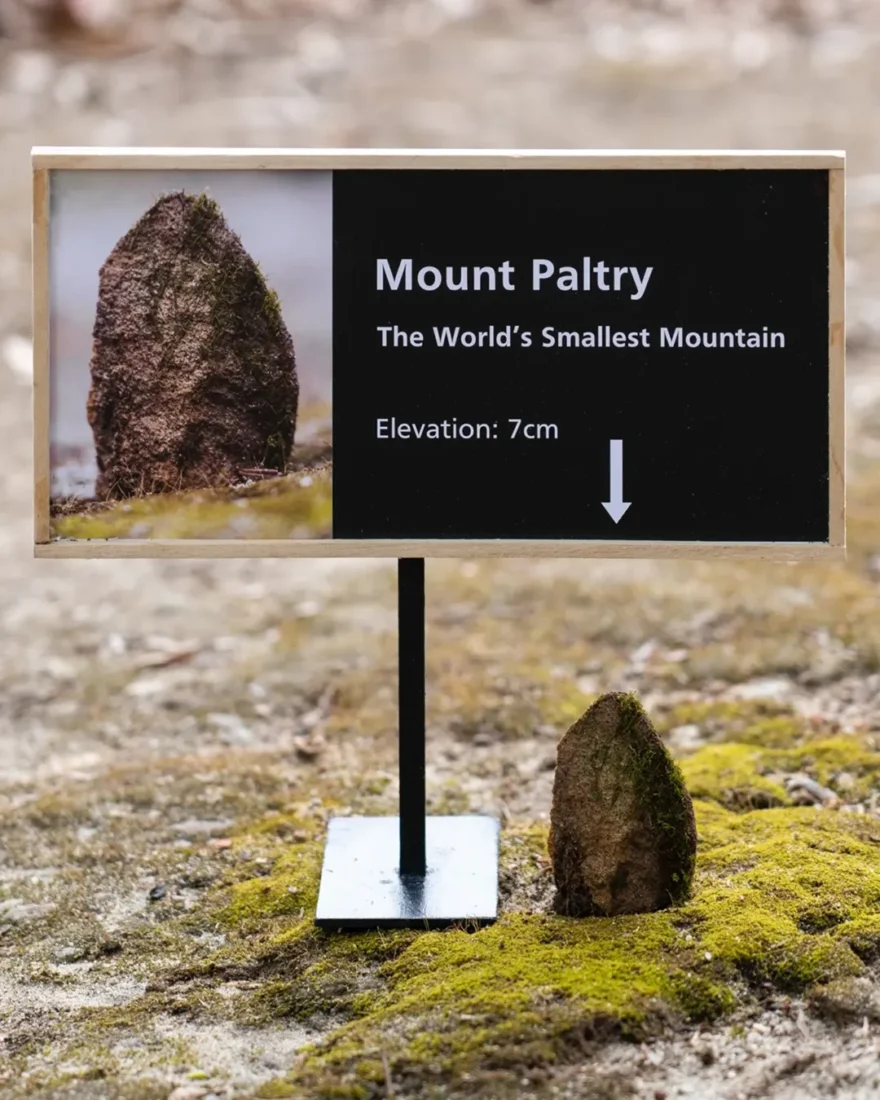
Mount Paltry has become one of those stories that feels harmless, even charming, the kind of fact people enjoy sharing without much hesitation. According to posts circulating online, this tiny feature in Australia measures only seven centimetres in height and has been described as the world’s smallest mountain. In many versions of the story, it is suggested that scientists confirmed its status because it formed through the same geological processes as much larger mountains.
That detail is what gives the claim its weight. By tying Mount Paltry to geology, the story takes on the appearance of something researched and verified. As it spread, it appeared on travel feeds, lifestyle pages, and science themed accounts, often without any additional context.
Yet when the claim is checked against official records, it begins to thin out.
There is no recognised entry for Mount Paltry in Australian geographic databases. It does not appear in government place name registers, national mapping systems, or publicly available geological survey records. No coordinates are listed, and no Australian scientific institution has issued a statement recognising it as a mountain.
Most references to Mount Paltry lead back to social media posts and recycled lifestyle articles that repeat the same wording. These pieces rarely link to original research or expert commentary. The story remains largely self contained, supported by repetition rather than evidence.
In geology, how something forms is only part of how it is classified. Scientists also look at size, elevation, prominence, and how a feature relates to the surrounding landscape. A structure that stands only a few centimetres tall would usually be described as a rock or small outcrop, regardless of its origin. Calling it a mountain stretches the term beyond how it is normally used in scientific or geographic contexts.
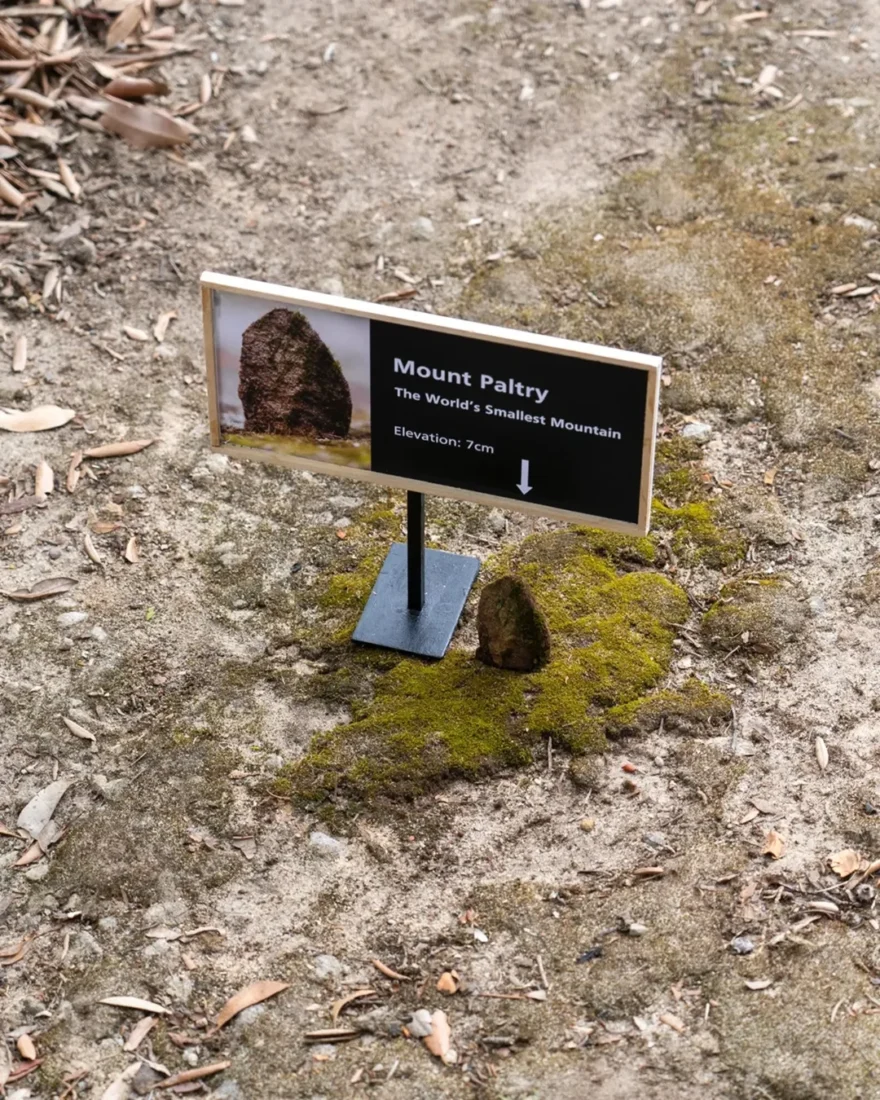
Some geology commentators have suggested that Mount Paltry is best understood as a playful idea that grew larger as it moved online. This is not unusual. The internet often turns curiosities into accepted facts simply through repetition, especially when the claim feels lighthearted and does not appear to cause harm.
Australia does, however, have a genuinely documented example that often enters conversations about small mountains. Mount Wycheproof in Victoria is widely recognised and officially recorded. Rising about 42 metres above the surrounding plains, it is mapped, measured, and included in long standing geographic records. Its status is supported by elevation data and formal recognition, even if its size surprises people.
The contrast between Mount Wycheproof and Mount Paltry shows the difference between documented geography and viral storytelling. One exists in records, surveys, and maps. The other exists mainly in shared posts and captions.
The popularity of Mount Paltry says something about how information moves today. When a claim is neat, surprising, and easy to repeat, it rarely pauses for verification. Over time, familiarity can quietly replace fact checking.
Nature itself does not need exaggeration to remain interesting. Australia’s landscapes already hold countless geological stories shaped slowly over millions of years. Those stories endure because they are grounded in evidence and observation.
As things stand, Mount Paltry does not qualify as the world’s smallest mountain. Instead, it stands as a small example of how easily a curious idea can harden into belief online, even when the evidence never arrives.
Is Mount Paltry officially recognised as a mountain?
No. There is no official geographic or scientific record recognising Mount Paltry as a mountain in Australia.
Why did the Mount Paltry story spread so widely?
Because the idea of a seven centimetre mountain is unusual and appealing, making it easy to share online.
What is the smallest recognised mountain in Australia?
Mount Wycheproof in Victoria is widely recognised as the smallest officially documented mountain in Australia.
How do scientists usually define a mountain?
They consider elevation, prominence, and landscape context, not just how a feature formed.