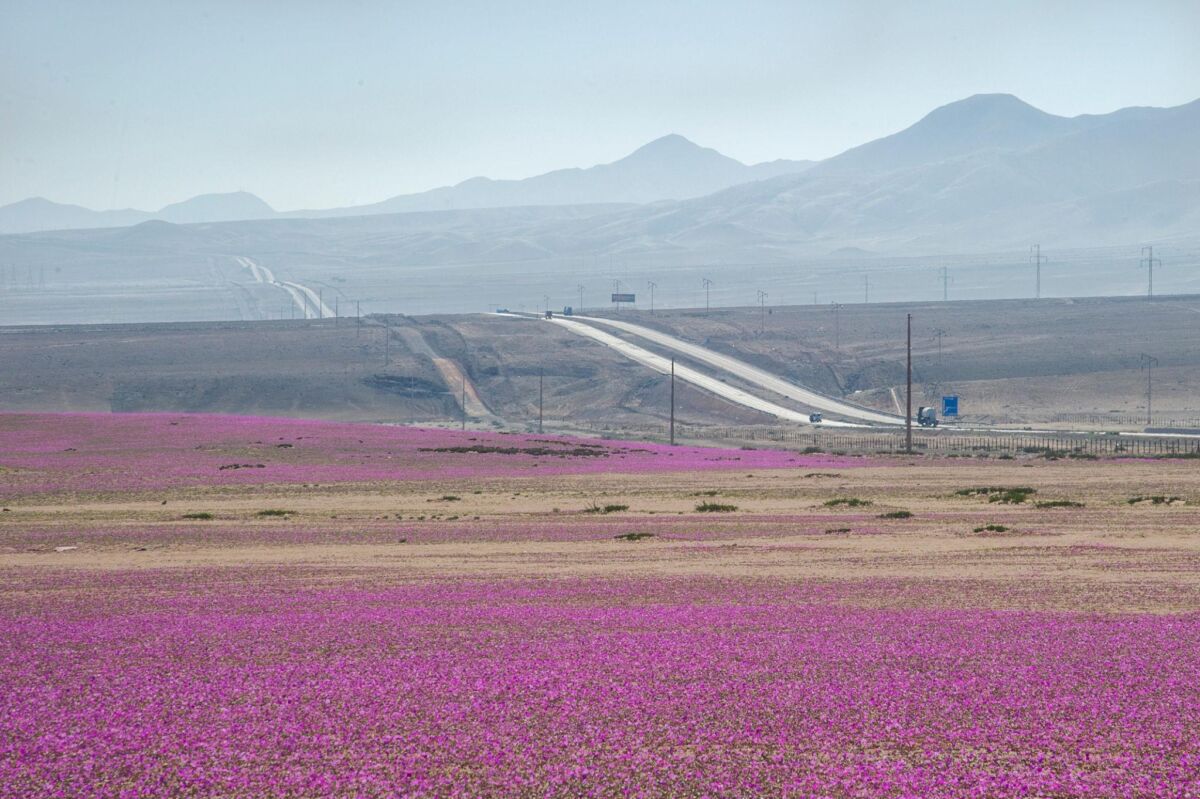
Stretching along the Pacific coast of South America, the Atacama Desert has long been known for its extreme dryness. Some areas of this vast desert have gone decades without measurable rainfall, and its rocky terrain often appears completely barren. For travelers crossing the region, the landscape can feel almost lunar, with dusty plains, salt flats, and distant mountains under an intense sun.
Yet hidden beneath the dry soil of the Atacama lies a quiet biological secret.
Seeds of desert plants remain buried in the ground for years, sometimes even decades, waiting for the rare moment when moisture finally reaches the desert floor. When unusual weather patterns bring rain to the region, something remarkable begins to happen.
Within days of rainfall, tiny green shoots start appearing across the desert surface. The seeds that had remained dormant for years suddenly awaken. As the days pass, the once empty desert slowly fills with color.
This phenomenon is known locally as desierto florido, or the flowering desert.
Fields that normally appear brown and dusty begin to turn pink, purple, yellow, and white as thousands of flowers bloom across the landscape. More than two hundred plant species are capable of emerging during these rare flowering events.
The transformation can be so dramatic that satellite images from space clearly show the sudden spread of color across parts of northern Chile.
Scientists studying the event explain that the seeds remain viable for long periods because of the desert’s extremely dry climate. Without regular moisture, the seeds remain inactive but preserved beneath the soil.
Botanist Ariel Muñoz, who has studied the phenomenon, described how quickly the change can occur.
“Within a few weeks the desert goes from almost lifeless to completely covered in flowers.”
The timing of the flowering desert depends largely on unusual rainfall patterns associated with climate events such as El Niño. These weather cycles occasionally bring heavier rain to parts of the Atacama than would normally occur.
When the rains arrive at the right time of year, the dormant seeds receive the moisture they need to begin growing. In just a short period the desert floor can become a vast natural garden.
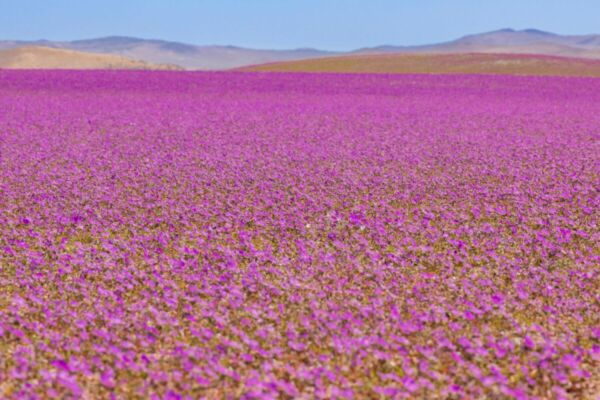
The flowering typically lasts only a few weeks before the desert gradually returns to its dry appearance. As temperatures rise and moisture disappears, the plants complete their life cycle and produce new seeds that fall back into the soil.
Those seeds then wait silently underground, sometimes for years, until another rare rainfall awakens them.
For photographers and travelers, witnessing the Atacama’s flowering desert is an extraordinary experience. The contrast between the region’s usual dryness and the sudden burst of life creates a scene that appears almost impossible.
Standing among thousands of flowers in one of the driest places on Earth, it becomes clear that even the harshest environments can hide remarkable surprises beneath their surface.
In the Atacama Desert, life simply waits patiently for the rare moment when the rain finally returns.