Photography changes every year because culture changes and people respond to what they see most often. In 2025 one of the strongest visual habits on social media is the constant push toward heavy background compression. Telephoto lenses and tight compositions create portraits where the background looks so close that it almost touches the subject. Distant buildings suddenly look inches behind the person. Street scenes collapse into flat layers. Landscapes lose space. The entire world narrows for the sake of a dramatic look. This trend grows because it looks pleasing at first glance, but many new photographers do not understand what creates it. They believe it comes from expensive lenses alone. They believe it is something magical inside the glass. They believe compression itself equals quality. This misunderstanding shapes how they learn and what they expect from their work.
The truth is simpler. Background compression photography comes from distance and focal length working together. It does not come from sharpness alone. It does not come from sensor size alone. It does not come from price. When a photographer stands far away from the subject and uses a longer focal length, the background appears closer to the person. This creates the compressed look that spreads across social media daily. The effect feels strong because it creates intimacy between the subject and the environment. It gives portraits a cinematic tone. It creates drama that hooks attention quickly. Many beginners see this look and assume that only a special lens can create it. They do not understand that the photographer often stands far away from the subject. They do not see the physical space behind the camera. They only see the final frame.
This misunderstanding creates a quiet problem. Many beginners look at compressed portraits and start believing that photography is only successful when the background looks close and blurry. They chase the collapse of distance. They chase the heavy squeeze of perspective. They think the background must be almost touching the subject to be considered good. They start seeing normal distance as a flaw. They start believing that wide images are weak. This thinking pushes them into a narrow understanding of depth. It stops them from learning the full behaviour of lenses. It limits their creative growth before they even begin.
Another issue arises when beginners try to copy this look without the right distance. They stand too close to their subjects and zoom in. The subject becomes distorted. The background refuses to compress. The image feels wrong but they do not know why. They blame the lens. They blame the camera. They blame the settings. They do not realise that perspective comes from where the photographer stands, not from the lens alone. If they do not create the proper space, the effect will never appear. This small misunderstanding slows their progress because they chase the wrong solution. They think a more expensive lens will fix the problem, but the missing element is physical distance.
Social media photography habits make this confusion even stronger. Many creators post portraits with extremely tight backgrounds because they know the look performs well. The viewer sees the dramatic compression and feels impressed. These images get more attention, so the trend continues. The feed becomes filled with compressed distance. The visual culture becomes shaped by one kind of depth. Many young photographers only see this style and believe it is the standard. They rarely see natural distance or storytelling based composition. They rarely see wide work that celebrates space. They rarely see images that breathe. The platform rewards compression, so compression becomes the language.
This creates a deeper issue for beginners who enter photography through phones. Phones often imitate compression with software. Computational photography creates artificial background blur and shapes the look of compression without teaching the behaviour of real lenses. These effects work well for quick images, but they create unrealistic expectations. When a beginner moves from a smartphone to a real camera, they expect the same artificial compression to appear naturally. They become confused when it does not. They think something is wrong with the camera. They do not realise that the phone simulated the effect. They do not understand the difference between optical depth and digital blur.
Telephoto compression issue also changes how people understand story. When the background is compressed too strongly, the viewer loses a sense of environment. The space disappears. The context becomes unclear. A portrait may look beautiful but may not connect with the place it was taken. Strong compression removes the relationship between the subject and the world. It can isolate people in a way that erases the surroundings. This is not always wrong, but many beginners believe it is the only way to create a strong portrait. They do not learn the value of storytelling through space. They miss the emotional strength of a wider frame.
This is why many experienced photographers return to natural perspective. They understand that compression is one tool among many. It is not the definition of quality. It is not superior to other forms of depth. It is simply one style in a larger language. When photographers use compression with intention, it creates powerful images. But when it becomes a default habit driven by online trends, it limits creativity. It replaces real choice with imitation. It creates a pressure to follow rather than explore.
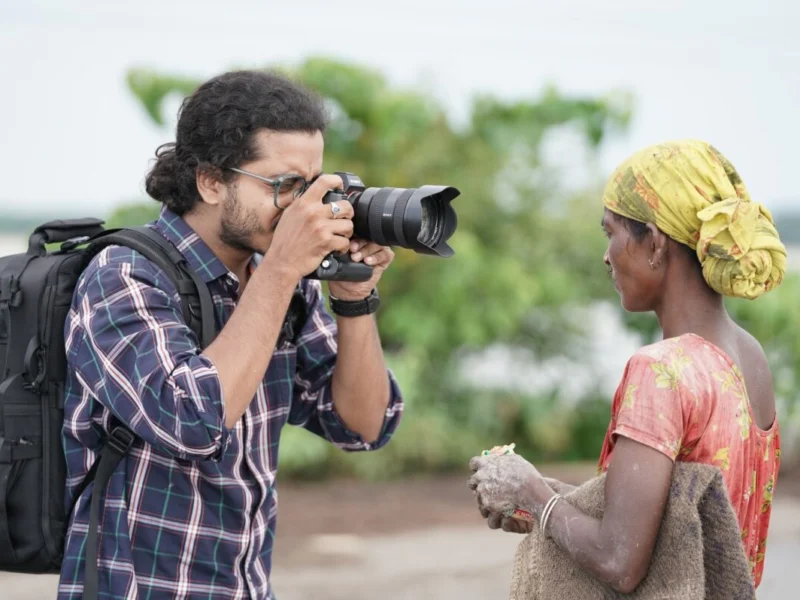
The lens perspective misunderstanding spreads easily because most people do not talk about physical distance. They only talk about focal length. They say a portrait was shot at eighty five millimetres or one hundred and thirty five millimetres. They do not say they stood ten metres away. They do not share the behind the scenes images that show the gap between the photographer and the subject. This missing context misleads beginners. They think buying the lens is enough. They do not see the space required to make the effect work. Many new photographers feel disappointed when their results look different even though they bought the same focal length.
Background compression photography also influences how beginners judge their own work. They compare their images to heavily compressed portraits on social media and feel their photos lack impact. They think their work is weak because the background looks normal. They do not understand that normal is not wrong. Normal is honest. Normal is natural. The wide and mid focal lengths show the world in a way that matches human vision. They show real distance. They show the relationship between subject and environment. They show story, not just effect. When beginners learn to appreciate this, they grow faster and find their own voice rather than chasing trends.
Another issue is the physical separation compression demands. To achieve the effect, the photographer needs space. In small rooms, tight streets or busy environments, the required distance is not always possible. Many beginners do not realise this. They try to force compression in locations that cannot support it. They stand as far back as possible and still do not see the effect. They become frustrated. They blame the lens again. They blame the camera again. They do not know that the location is the limitation, not the equipment. Understanding this helps photographers work smarter and choose focal lengths based on environment, not based on what is trending online.
There is also the emotional misunderstanding. Compression creates a soft, flattering look for portraits. The background becomes creamy. The subject looks polished. Many people love this aesthetic because it hides distractions and creates a dreamy mood. But this dreamlike mood does not fit every story. Street photography often loses honesty when heavily compressed. Documentary work loses context. Travel photography loses atmosphere. The mood becomes too soft. The world feels too smooth. Beginners who only chase compression lose the chance to explore emotions that come from natural perspective.
Photography becomes stronger when the creator understands why each tool exists. Compression is a creative choice, not a rule. It works beautifully when used with intention. It isolates the subject and creates intimacy. It can make a portrait feel quiet and strong. But it should not replace all other ways of seeing. When new photographers understand the physics behind compression, they stop chasing gear and start chasing understanding. They learn to use compression in the right moments and avoid it in others.
Knowledge gives freedom. When a photographer understands how distance shapes perspective, they start moving instinctively. They know when to step forward. They know when to step back. They know when to choose a prime and when to choose something wider. They know how to build a frame that matches the emotion they feel. They no longer rely on trends for guidance. They rely on vision.
Photography grows in this space. The world feels larger again. Scenes breathe. Distance becomes a tool. Compression becomes a choice instead of a habit. The photographer begins to shape images intentionally instead of following what works online. This understanding is what helps creators build style in a world filled with imitations.
The background compression trend will continue because it is visually powerful and easy to recognise. But stronger photographers will rise above the trend by learning depth, movement and space. When they do, their images will carry the honesty that comes from understanding rather than imitation. They will create work that feels personal and rooted in real vision. That is how true style begins.
FAQ
Why does background compression look dramatic
Because long focal lengths magnify the relationship between subject and background and make distant objects appear closer.
Why can I not get compression even with the same lens
You may be standing too close. Compression depends on distance more than focal length.
Do phones create real compression
Phones mostly simulate it using software rather than optical perspective.
Is compression the best way to shoot portraits
It works well for certain moods but wider perspectives often tell stronger stories.
Should beginners rely on compression for style
No. Understanding perspective and distance builds stronger skills than chasing trends.