Every photographer remembers the early days when auto white balance felt safe. You pointed the camera at a scene and let the system decide the colour temperature. Most of the time it did a reasonable job. It was not perfect, but it was predictable. In 2025 that predictable nature has changed. Cameras no longer treat white balance as a simple exposure setting. They treat it as part of their entire scene recognition system. This shift makes auto white balance less stable and less neutral, and it affects both professionals and beginners who depend on colour consistency.
When people open a camera today they are not just opening a sensor. They are opening a computer that studies the scene. It tries to understand what you are shooting before deciding the colour. This might sound useful, but it can create a problem when the camera decides too much. Auto white balance is no longer a simple attempt to remove colour cast. It is a decision shaped by AI trained on millions of images. The camera guesses what the scene should look like and then adjusts the colour to match its own expectations. This takes control away from the photographer.
This becomes clear when shooting skin tones. Many photographers notice that their colours shift between frames even when the light has not changed. This happens because the camera recognises faces and applies different tone decisions depending on the scene. It warms skin in some environments. It cools it in others. It brightens it in low light. It adds slight warmth in daylight. These small adjustments sound helpful, but they create inconsistency. A photographer shoots ten portraits in the same light and finds ten slightly different colour temperatures. Matching them later becomes difficult. The images feel scattered and disconnected.
Another issue appears when shooting mixed lighting. In restaurants, streets, homes and indoor spaces, light comes from different sources. Tungsten, LED, tube lights, screens and natural light all mix together. Auto white balance reads these competing temperatures and tries to balance them in a single direction. The result often becomes a strange midpoint that feels neither warm nor cool. It loses the natural mood of the room. A warm cafe becomes neutral. A cool evening street becomes washed. The emotion of the space disappears.
This matters more than people realise. Colour is emotion. When a photographer loses control of colour, they lose control of mood. Auto white balance in 2025 tries to correct everything into a safe zone. It removes the unique tone of real life. It removes the golden warmth of evening. It removes the soft blue of early morning. It removes the gentle green cast of shade. It replaces the scene with a cleaner but less honest version.
The issue becomes stronger when shooting in changing light. A photographer might stand in the same spot and pan the camera slightly, and auto white balance shifts between frames. Clouds move, backgrounds change, or the camera sees something new in the corner of the frame. These small changes trigger new decisions. The photographer ends up with inconsistent tones that are hard to match in editing. The shoot feels unstable. This never happened at such intensity years ago. It is the direct result of AI driven white balance systems that are too reactive.
The problem becomes greater when shooting video. Video demands consistency more than photography. Even a small colour shift becomes noticeable in motion. Auto white balance changes mid shot when the camera detects a different area of the scene. The footage suddenly becomes warmer or cooler. This breaks the flow of the video. It makes the edit feel unprofessional. It forces the creator to spend extra time fixing colour in post production. A consistent manual white balance setting would avoid all of this.
Another part of the issue is the false sense of security auto white balance creates. New creators believe the camera is correcting accurately. They trust the screen too quickly. But modern cameras apply so much processing that the preview does not always show the true neutral colour. AI adjustments mask small shifts that become visible only on a larger display. Many beginners only notice the inconsistency when they get home and load the files. By then it is too late.
Even professional photographers fall into this trap. They trust that auto white balance is better now because the camera is more advanced. But more advanced does not always mean more accurate. In 2025 accuracy is often sacrificed for aesthetics. Cameras try to make colours pleasant rather than correct. They shape tones based on learned preferences rather than light behaviour. This creates a soft but noticeable drift in colour that professionals cannot always predict.
The influence of auto white balance becomes even more complicated when mixed with brand colour science. Each brand has its own philosophy. Some lean warm. Some lean cool. Some protect skin tones. Some favour blue skies. AI powered white balance emphasises these differences. A photographer shooting the same scene with two different cameras will see wildly different results. The more the cameras rely on AI, the stronger the differences become. This makes collaboration difficult when working with teams or multiple camera bodies.
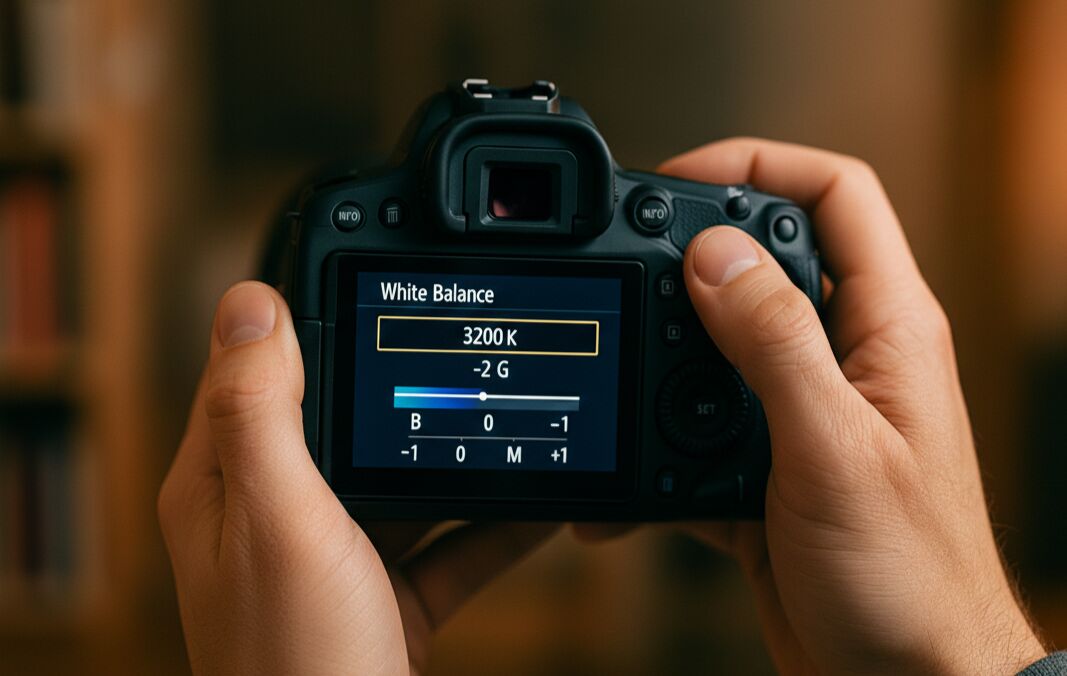
Because of all these changes, photographers are beginning to take control again. Manual white balance is becoming important not just for studio work but for daily shooting. When the photographer sets a fixed temperature the images remain stable. The tone stays honest. The colour remains predictable. Editing becomes easier. The story feels more connected. It frees the photographer from the small distractions created by the camera’s shifting interpretations.
Setting manual white balance is simpler than many people think. A photographer can choose a temperature that reflects the environment. Warm indoor light around three thousand Kelvin. Neutral daylight around five thousand five hundred Kelvin. Shade around seven thousand Kelvin. These numbers do not have to be perfect. They need to be consistent. The small variations can be corrected later with ease because the base tone remains unified.
For travel photographers manual white balance brings back the emotional truth of locations. Warm street lamps feel warm. Cool mountain mornings feel cool. Evening shadows feel gentle. Nothing is washed away by a system that tries to balance everything into a neutral space. The photograph feels more personal because the colour is chosen, not assigned by AI.
For portrait photographers manual white balance restores control over skin tones. It keeps faces stable across frames. It preserves nuance. It avoids the unwanted shifts that happen when auto white balance jumps from warm to cool between shots. This stability is essential for professional work and for maintaining a consistent style.
For documentary and candid photographers manual white balance protects atmosphere. It keeps the world honest. Documentary work is about showing life as it is, not as the camera thinks it should be. Artificial warmth or coolness breaks the authenticity of the scene. Manual settings keep the light true.
For beginners manual white balance teaches them to understand colour. It reveals how light shapes mood. It trains their eye to notice subtle changes. It gives them a stronger sense of control and confidence. It helps them grow faster because they understand the behaviour of real light rather than relying on AI decisions.
Photography trends always reflect the tools people use. Auto white balance in 2025 is shaped by AI. It is powerful but unpredictable. The photographer who understands this can use it when needed but avoids relying on it blindly. The photographer who takes control will build stronger, more consistent images.
Colour is one of the most emotional elements in photography. It deserves intention. It deserves care. It deserves choice. Auto white balance may feel safe, but it is not a creative choice. Manual white balance gives the creator the responsibility and freedom to decide how the world should feel through their lens.
In a time when cameras are trying to think for us, the simplest way to maintain control is to decide the colour ourselves. The light of a moment is part of the story, and stories should belong to the person telling them, not to the machine interpreting them.
FAQ
Why is auto white balance less reliable now
Because cameras use AI scene recognition which changes colour decisions based on what the camera thinks is in the frame.
Why does my camera change colour even when the light stays the same
Because small shifts in the scene trigger new AI decisions, causing inconsistent colour.
Is manual white balance better for portraits
Yes. It keeps skin tones stable across frames and avoids sudden warm or cool shifts.
Should beginners use manual white balance
Yes. It helps them understand real light and maintain consistent colour in their work.
Is auto white balance ever useful
It can be helpful in fast paced situations, but for consistent results manual control is stronger.