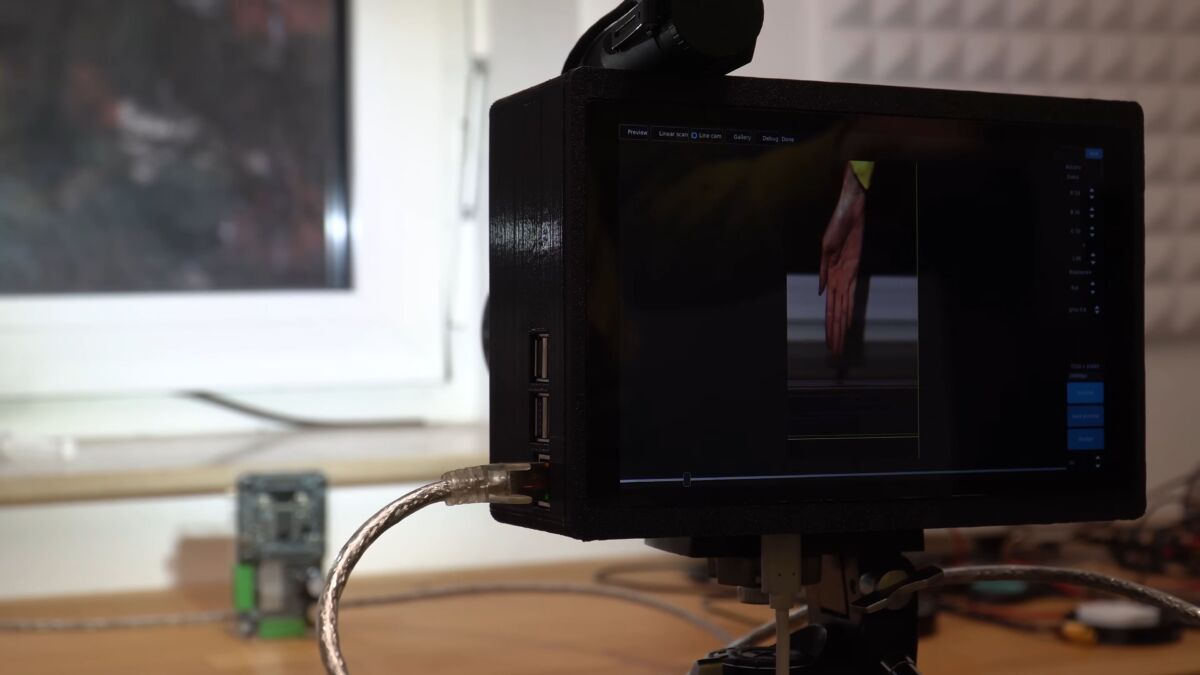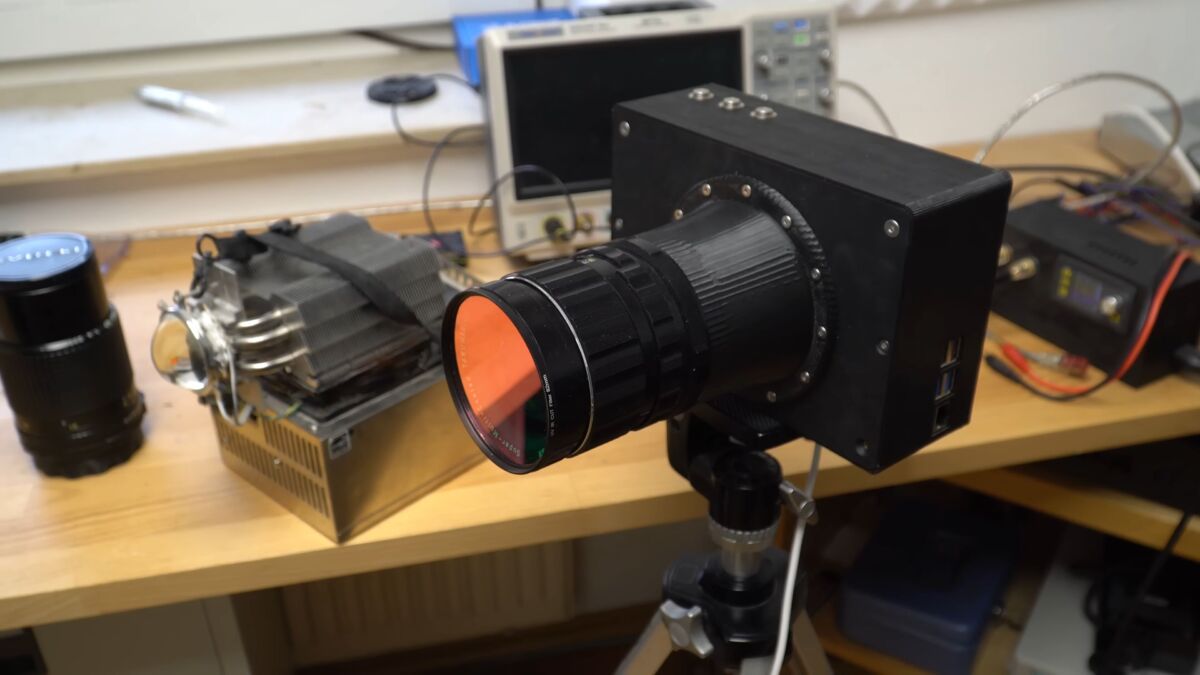
German computer engineer Yannick Richter, known online as “Gigawipf,” has unveiled a homemade medium-format camera capable of producing 3.2-gigapixel photographs—a resolution far beyond even the most advanced commercial systems. The device, which he calls Project Gigapixel, is built around a linear CCD sensor salvaged from an Epson V-series flatbed scanner and housed inside a 3D-printed body.
While other tinkerers have experimented with scanner sensors before, Richter distinguishes his project by rebuilding the system almost entirely from scratch. Rather than transplanting the scanner’s electronics, he stripped the hardware down to the bare CCD, decoded the sensor’s timing protocols, wrote his own control software, and replaced nearly every original component with custom-designed circuitry suited for photographic use.
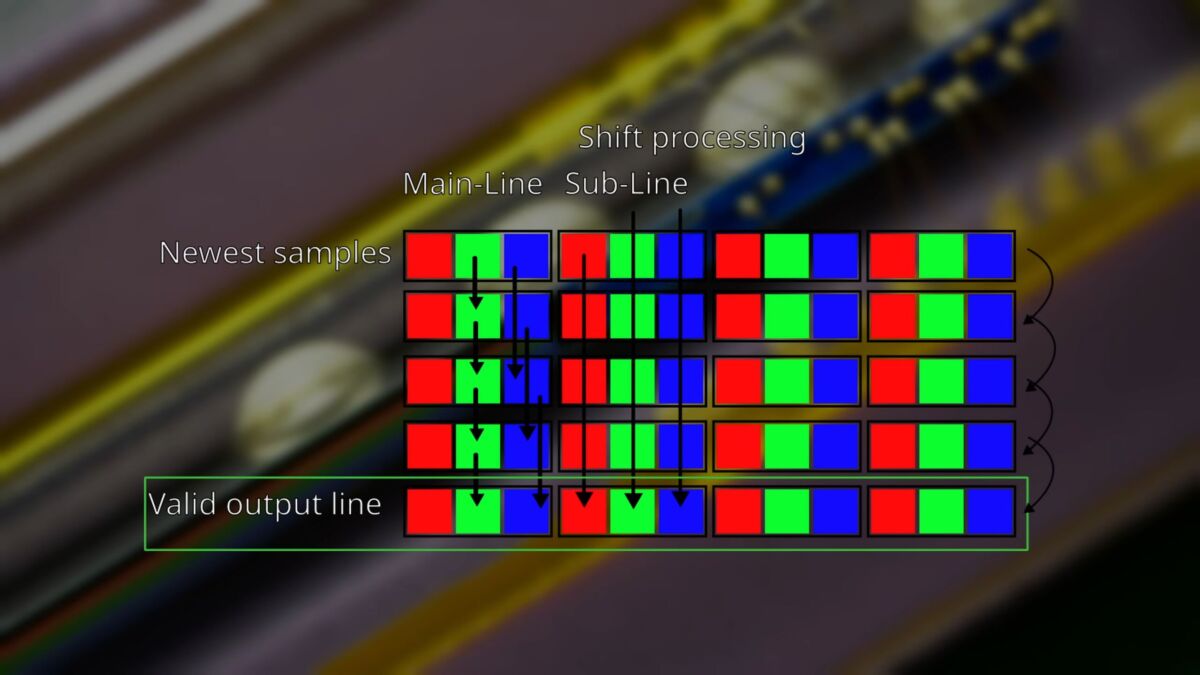
At the core of the camera is a 12-line ILX561K CCD, a sensor designed to create images one row at a time by physically moving across the scan path. In Richter’s version, the movement mechanism has been dramatically miniaturized and integrated into a rigid camera body, allowing the sensor to sweep across the image circle of a medium-format lens. When paired with a 6×7 lens—he typically uses affordable, fully manual Pentax Asahi 6×7 glass—the system can generate files measuring 80,000 × 40,000 pixels.
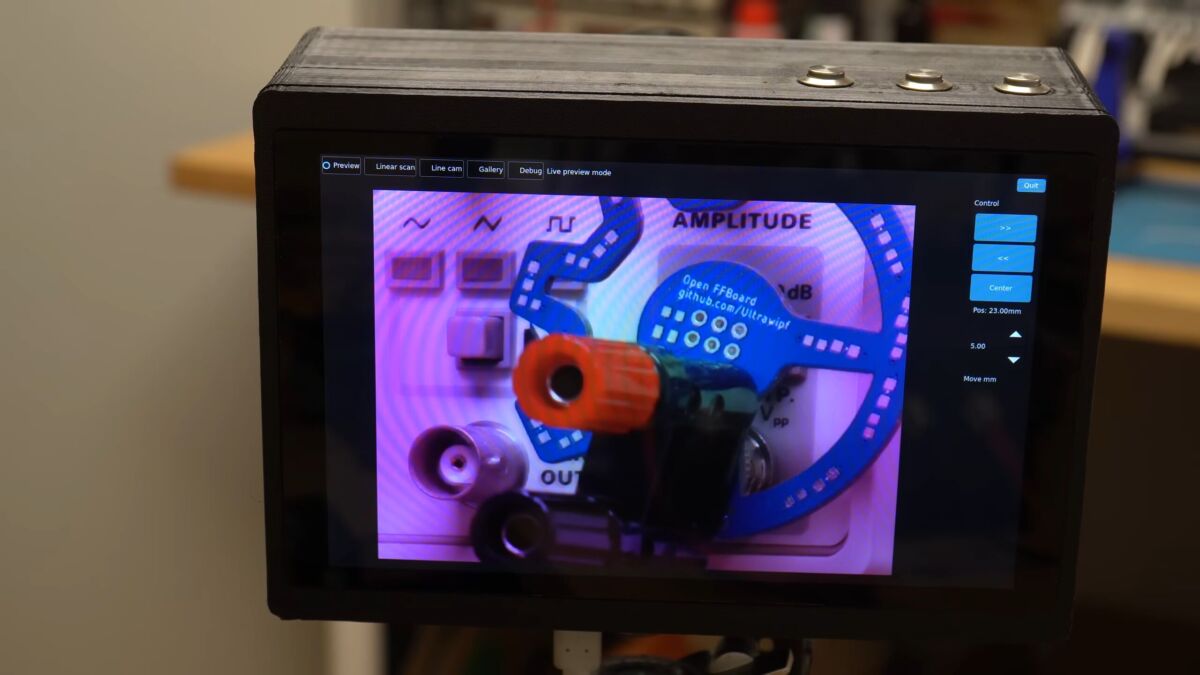
Bringing the scanner sensor into photographic territory required numerous additions: a Raspberry Pi 5 to coordinate the sensor timing, a secondary CSI camera mounted at the same focal plane for live-view focusing, a built-in NVMe SSD for storage, a large touchscreen with a custom UI, and new firmware that lets users set scan width, resolution, and exposure modes. Richter even introduced an experimental “line camera” mode in which the CCD remains stationary while the supporting optics move—an option made possible only because he handles the data pipeline directly.
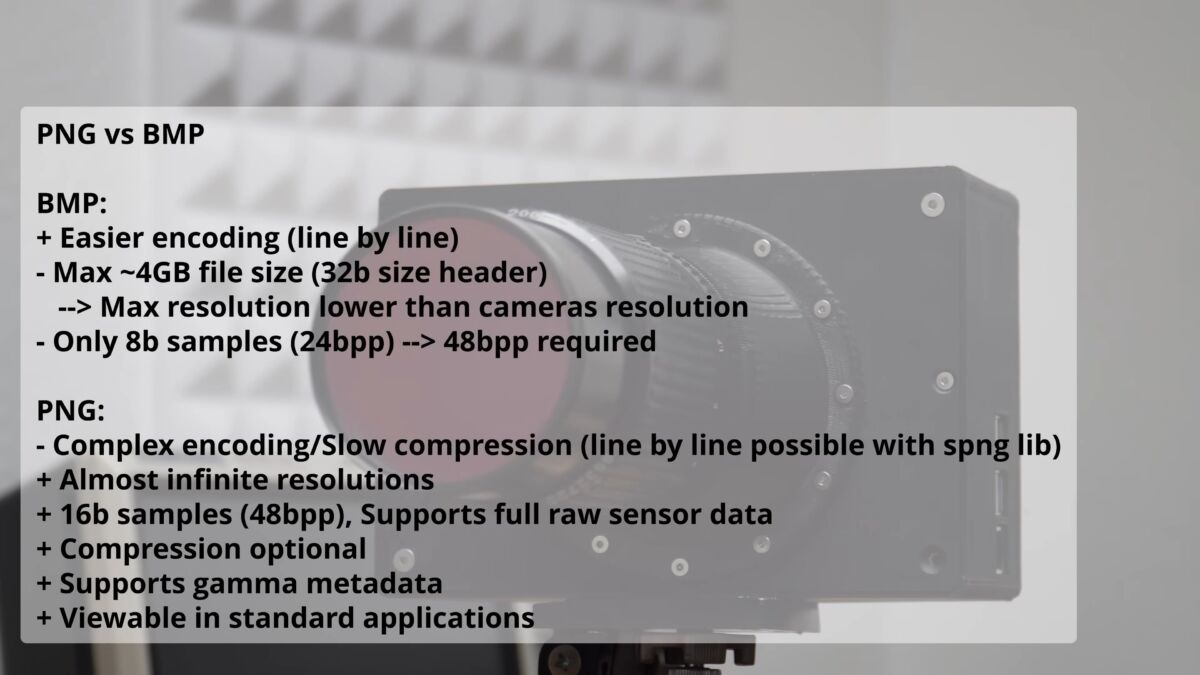
The system’s staggering resolution comes with equally staggering capture times. A full-size image (around 19GB uncompressed) can take more than 30 minutes to record and encode, though Richter believes he can reduce that if he bypasses certain Raspberry Pi limitations. A much smaller preview scan — around 3,500 pixels tall — takes roughly 10 seconds.
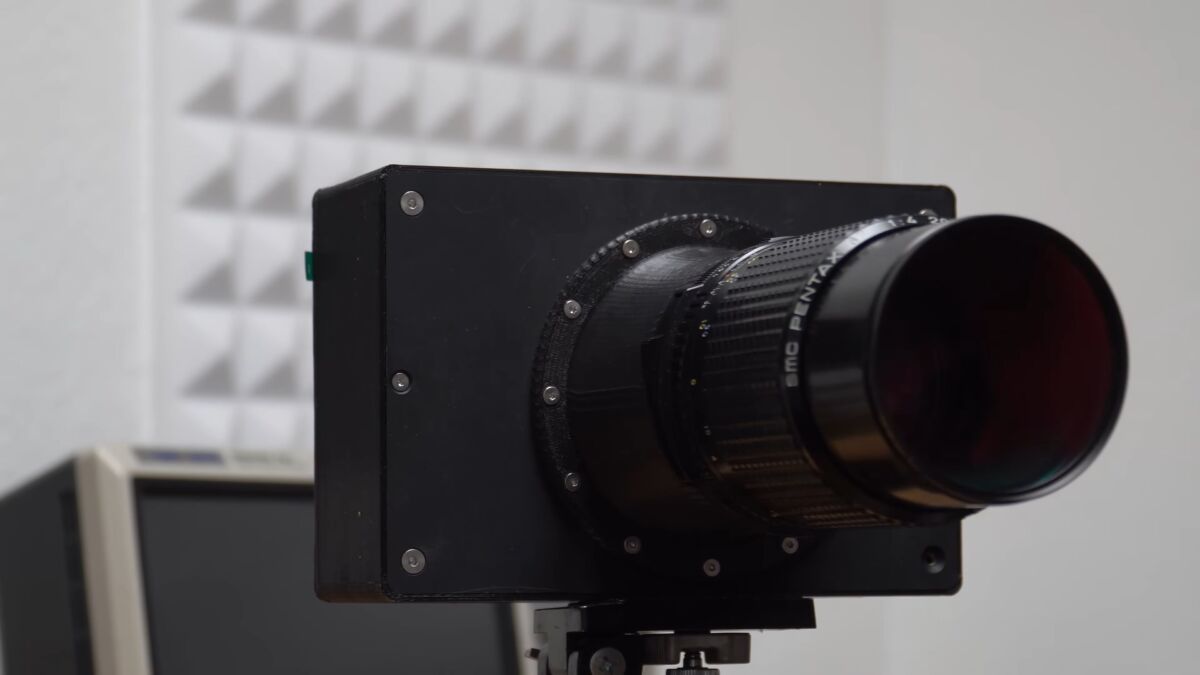
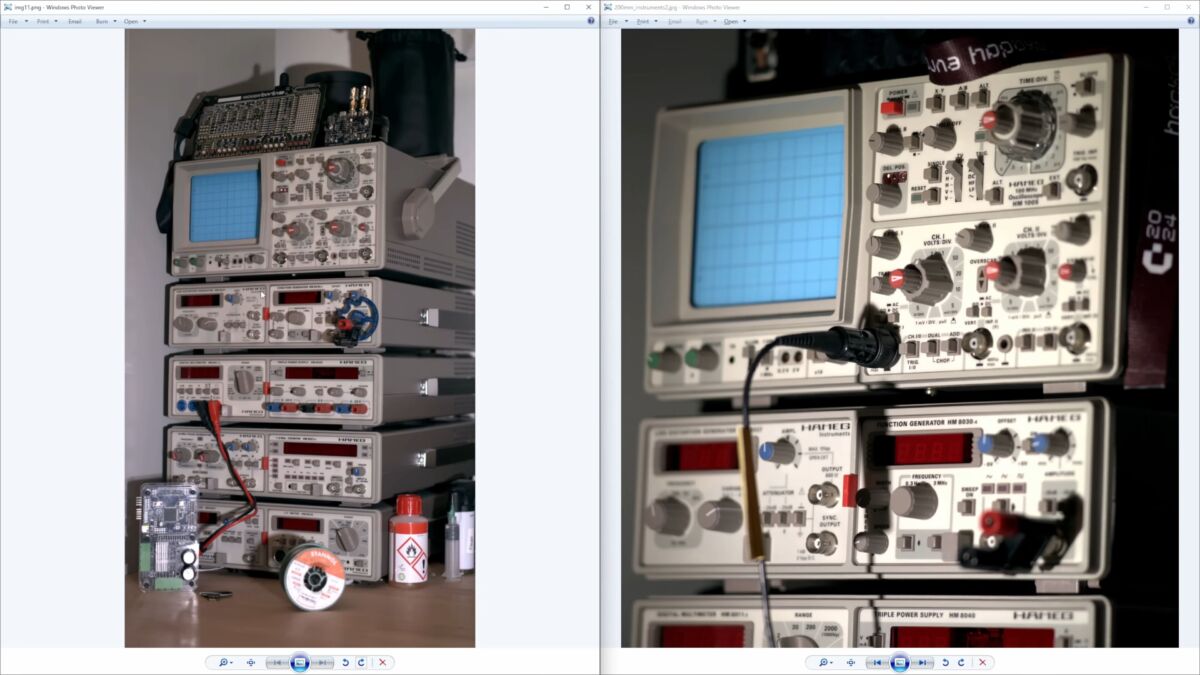
Photos posted alongside Richter’s Reddit write-up (under his other username, Ultrawipf) show the camera mounted behind a Takumar lens, with power supplies, oscilloscopes, and test benches scattered around his workspace. He also shared a 100% crop from one of his first full-resolution images, a sample that demonstrates an extraordinary level of detail.
Reaction from the engineering and Raspberry Pi communities has been enthusiastic. “The level of integration is insane,” one commenter wrote. “Getting a linear CCD to talk to a Pi 5 at this scale is genius.”
The camera is, by design, not universal. The long capture times and mechanical scanning process limit it to non-moving subjects—architecture, still life, artwork reproduction, and highly controlled landscapes. But that limitation is part of what attracted Richter to the project. He describes the camera as a “unique and fun challenge,” emphasizing that he hasn’t seen anyone else rebuild such a system from the ground up.
Perhaps most surprising is the cost: roughly €570 in parts, far below the price of even an entry-level 100-megapixel medium-format camera. As Richter jokes, “And 100 megapixels is nowhere near 3,200.”
He documents the entire build, including schematics, code, and mechanical components, on Hackaday for anyone interested in replicating (or attempting to replicate) the experiment.