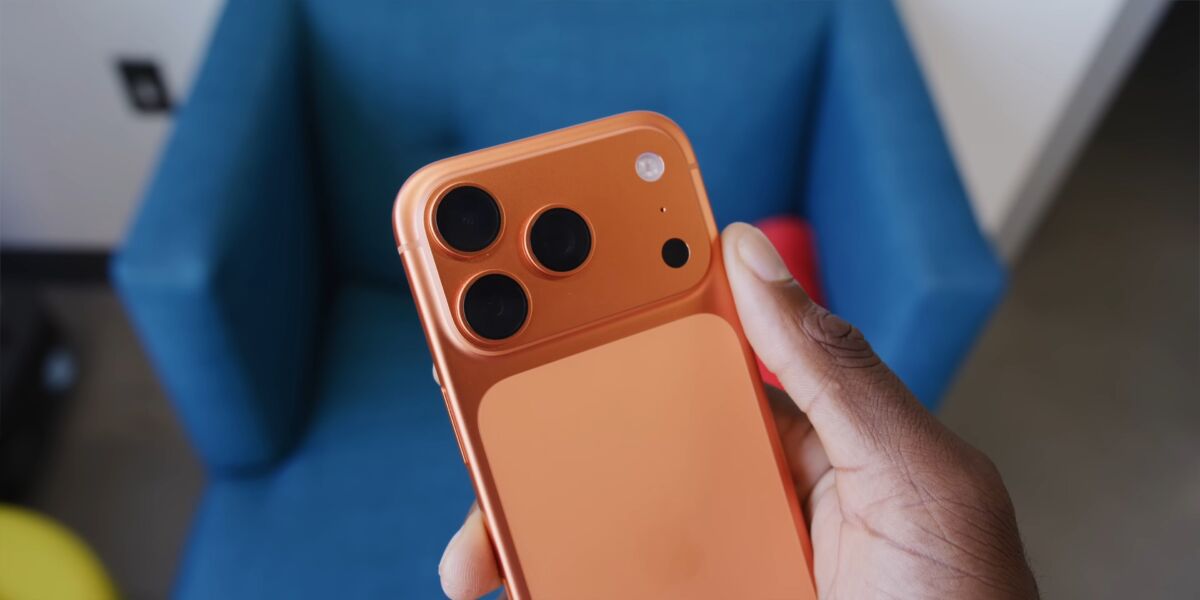
The moment the new iPhone 17 Pro reached customers, a small group of users began comparing the camera features to previous models and quickly spotted something missing. For the first time since the iPhone 12 Pro series, Night mode does not work when shooting in Portrait mode. The discovery was first shared on online forums and Reddit, where some users assumed their phones were faulty before realising the feature was simply gone.
Apple’s support pages later confirmed what people were seeing. In the list of iPhone models that support Night mode inside Portrait mode, the iPhone 17 Pro does not appear. The omission has led to confusion, because every Pro model from the iPhone 12 Pro to the iPhone 16 Pro included the option. For many photographers, low light Portrait mode was one of the easiest ways to capture people at night while keeping backgrounds smooth and atmospheric.
Apple has not given any explanation for the change. Without a clear statement, people have been left to guess. One theory, suggested by some tech writers, is that Night mode can require longer capture times, and many users move the phone too quickly before the photo finishes, leading to frustration and blurry results. The iPhone 17 Pro might simply be avoiding that issue. Others believe it might be connected to depth data or a change in how the camera system gathers information for portrait effects.
That question became louder when people noticed another limitation. While Night mode still works in the standard photo mode, iPhone 17 Pro users cannot convert those shots into Portrait mode afterwards. Older Pro models allowed this, offering much more flexibility. Reports suggest the new phone is missing the depth information needed to create the portrait effect from a normal image. Whether this is a hardware limitation or a decision made in software is not yet clear.
Many users online have expressed surprise that Apple would remove a feature instead of expanding it. Portrait mode itself has long generated mixed opinions among photographers. Some like the separation it creates between subject and background, while others feel the effect can appear soft or artificial. Even so, Night mode Portrait shots on older iPhones offered a useful compromise for people shooting in dim conditions, especially during events or street scenes.
The iPhone 17 Pro still has strong imaging upgrades overall. All three rear cameras can shoot 48 megapixel RAW files and 24 megapixel HEIFs, giving photographers more control over detail and editing. The upgraded sensors and processing pipeline also help with colour accuracy and highlight handling compared to earlier models.
For now, users who rely on Portrait mode at night will need to work around the limitation, either by using the normal camera mode or adjusting lighting when possible. Since Apple has added or restored features through software updates in the past, there is always a chance the option could return. But at the moment, the change marks a noticeable shift for people who have grown used to combining Portrait mode and Night mode on their iPhones.
The reaction online shows how closely users pay attention to photography features every year. As phone cameras become more advanced and more central to everyday life, even a small change can shape how people shoot and what tools they expect to have in their pockets.
Mobile Photography Update
Further reading on smartphone camera trends: https://www.dxomark.com
For more newsroom reports, visit https://camorabug.com/in-focus/news/
FAQ
Does the iPhone 17 Pro support Night mode in Portrait mode?
No, Apple has removed the option from this year’s model.
Which iPhones still support it?
Every Pro model from the iPhone 12 Pro to the iPhone 16 Pro includes the feature.
Can users convert a Night mode photo into a Portrait after shooting?
Not on the iPhone 17 Pro. Earlier models allowed this, but Apple has changed that behaviour.
Has Apple explained the decision?
Not yet. The company has not provided any public comment.
Is the Portrait mode camera otherwise improved?
Yes. The iPhone 17 Pro’s rear cameras can shoot 48 megapixel RAW and 24 megapixel HEIF images, offering strong detail and flexibility.