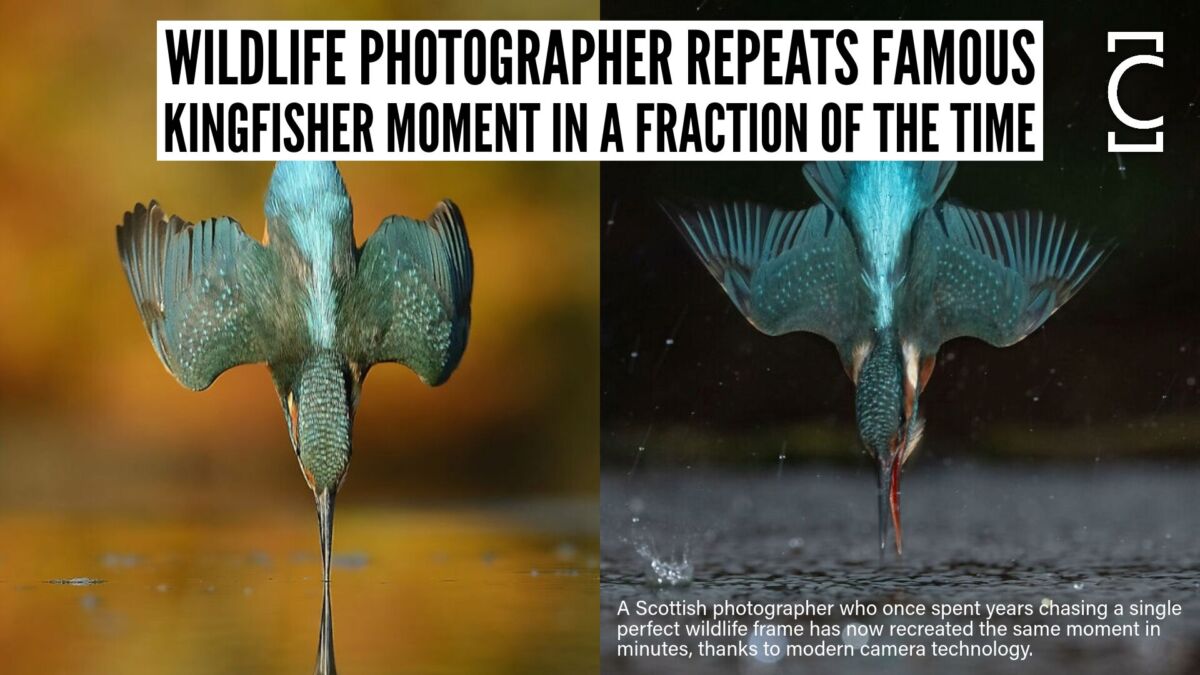
A Scottish wildlife photographer who became widely known a decade ago for a kingfisher photograph that took him years to obtain has repeated the moment — this time in barely more than the length of a coffee break. Alan McFadyen, whose patience and persistence earned global attention in 2015, decided to attempt the same shot this year using newer equipment to see how much the field had changed. The contrast, he says, surprised even him.
McFadyen originally spent countless hours waiting for a kingfisher to dive at precisely the right angle, with the bird’s beak meeting the surface in a clean vertical line. That effort stretched across six years and hundreds of thousands of exposures on a DSLR, a commitment that helped cement the photograph’s reputation as a symbol of dedication in wildlife photography. When he returned to the same hide this year with a modern mirrorless camera, the result came almost instantly. He says the sequence he needed appeared within six minutes.
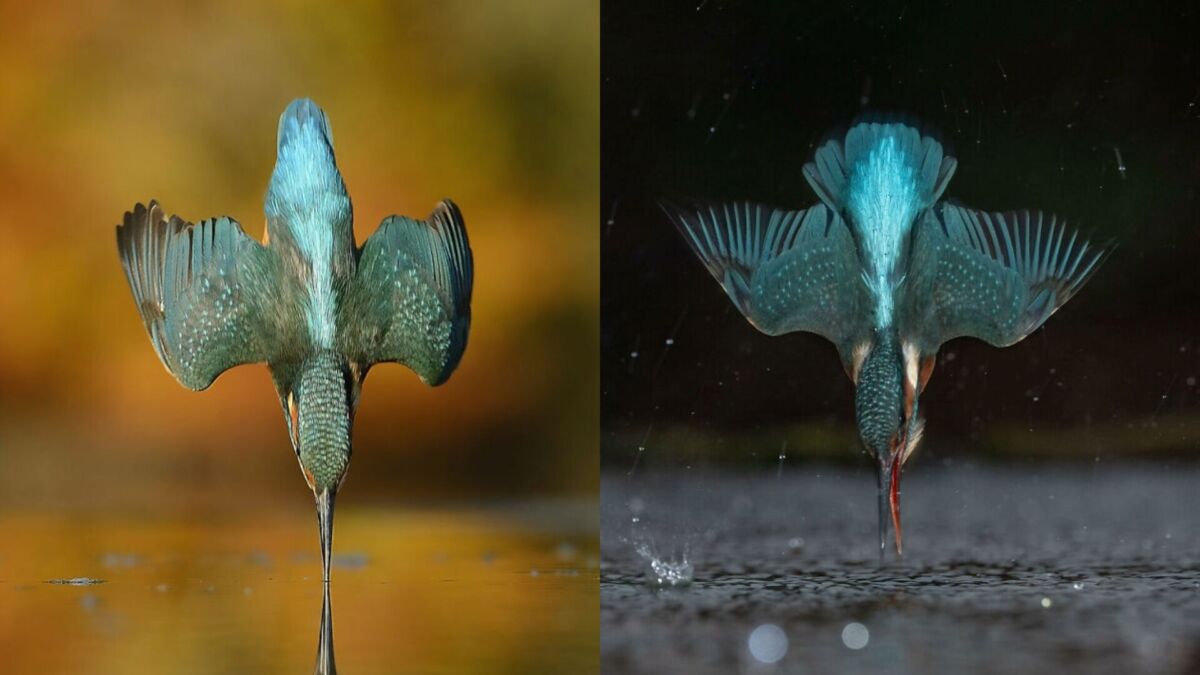
The difference, he explains, is largely technical. Earlier cameras offered limited burst speeds and relied heavily on a photographer’s timing. Newer systems capture dozens of frames each second and track small, fast-moving subjects with a level of precision that would have seemed ambitious a decade ago. For a bird diving at high speed, those improvements drastically increase the chances of catching a clean moment rather than a splash of blurred motion.
McFadyen says that witnessing the improvement firsthand was both impressive and slightly disconcerting. The difficulty of the original photograph was part of its story, and he acknowledges that the 2015 image carries more emotional weight for him. The long nights, the early mornings and the sheer repetition required to record that one decisive frame cannot be replicated by faster technology. Still, he says the newer system reduced the uncertainty that often defines wildlife work, especially when weather and animal behavior refuse to cooperate.
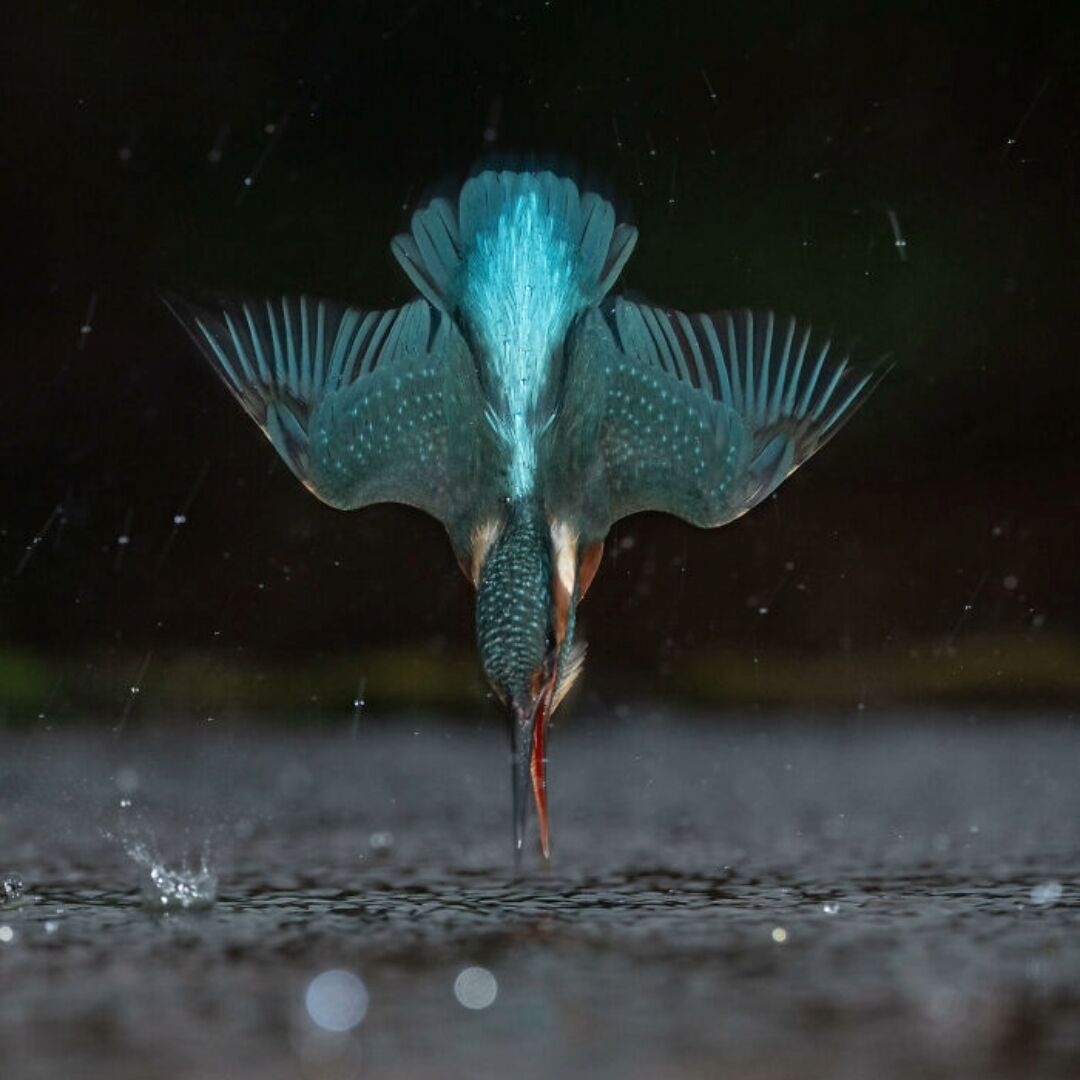
Despite the speed of his new attempt, he remains attached to the original version. He points out that the earlier photograph was taken without flash and under softer ambient light, conditions he believes gave the image a warmer and more natural atmosphere. Heavy rain during the recent shoot forced him to use additional lighting, which he says changed the feel of the scene.
The photographer’s long association with kingfishers has continued to benefit his career. The original image still circulates widely online and remains one of his most recognized pieces. He credits that early success with helping him build a client base and expand his work in wildlife hides and guided shooting sessions.
McFadyen says that while technology has made certain tasks easier, the core of wildlife photography remains the same: patience, observation and an appreciation for the unpredictability of the natural world. Even with faster cameras, he notes, the behavior of a kingfisher is something no one can schedule. Some days, nothing happens at all — and that is still part of the craft.
If you want another version — shorter, more technical, more emotional, or written like a magazine feature — I can create that too.