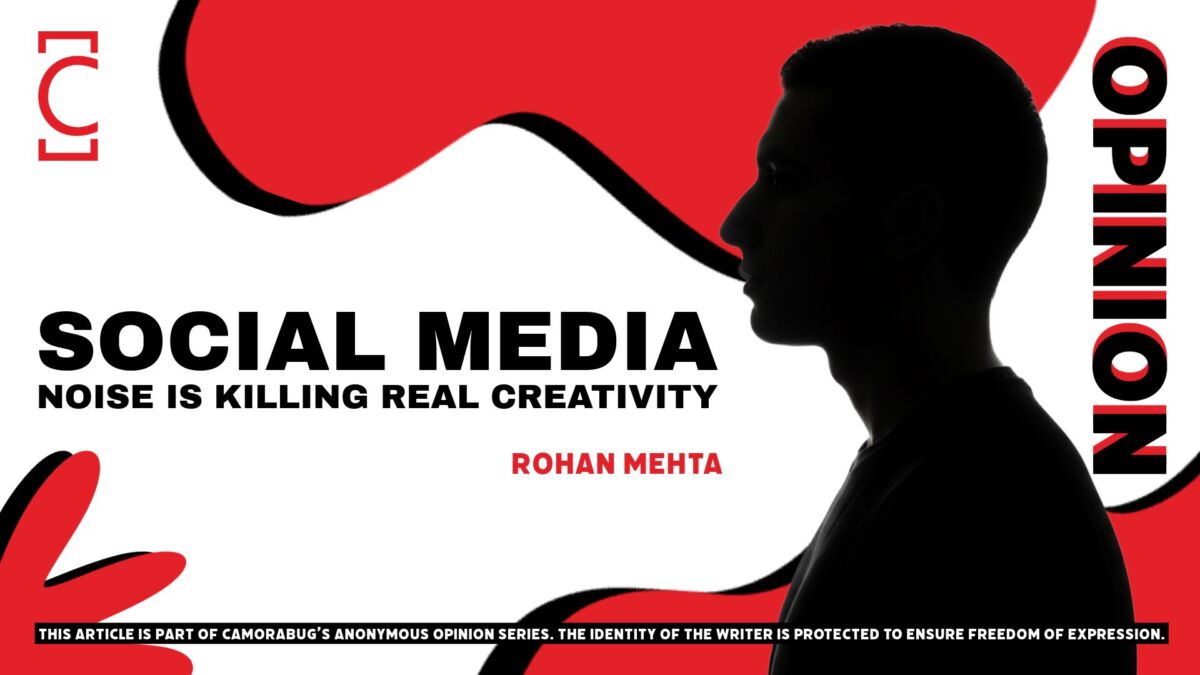
In the age of endless scrolling, real creativity is becoming rare, not because people lack talent, but because the system no longer values patience, depth, or honesty. Social media has turned creation into performance and expression into competition. The loudest voice wins, not the truest one. The fastest post gets attention, not the most thoughtful work. And slowly, without many noticing, real creativity is being pushed into corners where algorithms cannot see it.
We have built platforms that reward repetition. A trend appears, thousands copy it within hours, and suddenly originality feels risky. If something works once, it is recycled endlessly until meaning evaporates. The audience consumes, creators comply, and the cycle continues. In this environment, creativity is no longer about discovery. It is about survival.
Artists, photographers, writers, filmmakers, and musicians are no longer asking, “What do I want to say?” They are asking, “What will perform well?” That shift changes everything. When creation becomes a response to metrics instead of emotion or thought, it stops being art and starts becoming content. And content has no soul. It only has deadlines.
Social media culture has also changed how we measure success. Likes, shares, and views have replaced reflection and impact. A shallow video can outperform a decade of experience. A viral trick can silence years of study. This is not progress. This is distortion. It teaches young creators that speed matters more than skill and attention matters more than truth.
The tragedy is not that fake creators exist. They always have. The tragedy is that the system now promotes them faster than those who work honestly. When shortcuts receive applause, patience feels foolish. When imitation earns rewards, originality feels lonely. Many talented people slowly abandon their voice because it does not “fit” the algorithm.
This is where the originality crisis begins. Not in lack of ideas, but in lack of courage. It takes courage to publish work that might not trend. It takes courage to create something slow in a fast world. It takes courage to choose meaning over numbers. Most people are not failing creatively. They are being trained to betray their instincts.
We are also facing a dangerous illusion of success. A creator with ten thousand followers feels more valuable than a creator with ten deep ideas. But reach is not respect. Popularity is not legacy. Visibility is not contribution. Real creativity does not need applause immediately. It grows quietly and lasts longer.
Digital validation has become a substitute for artistic fulfillment. People post not because they feel something, but because silence feels like disappearance. This pressure creates constant production without reflection. When creation becomes routine, it becomes empty. And emptiness is contagious.
Photography, especially, has suffered. Images are no longer stories. They are thumbnails. Composition is replaced by shock. Depth is replaced by exaggeration. The camera has become a tool for attention rather than observation. We are documenting less and performing more.
Real creativity requires time, failure, boredom, doubt, and revision. Social media offers none of these. It demands speed, certainty, polish, and constant presence. These demands are not compatible with genuine artistic growth.
Some argue that platforms have democratized creativity. In theory, yes. In reality, they have commercialized it. Freedom exists, but only if it fits within trends. Expression is allowed, but only if it is digestible. Anything complex is ignored. Anything uncomfortable is buried.
The most dangerous part is that many creators no longer recognize this shift. They believe this is normal. They believe creativity means visibility. They believe silence equals irrelevance. They believe worth is measured in engagement.
But real creativity has never needed an audience to exist. It only needed honesty. It only needed intention. It only needed courage.
If creativity dies, it will not be killed by technology. It will be killed by compliance. By the willingness to follow instead of question. By the comfort of copying instead of risking.
The future of creativity depends on those who are willing to work unseen. To write what may never trend. To photograph what may never go viral. To speak even when the algorithm remains silent.
That is where real creativity survives.