For years the neighborhood of Love Canal looked like a typical American suburban community. Streets were lined with modest homes, children played in schoolyards, and families settled there believing it was a safe place to raise their children. Few residents realized that beneath their houses lay one of the most dangerous environmental hazards ever uncovered in the United States.
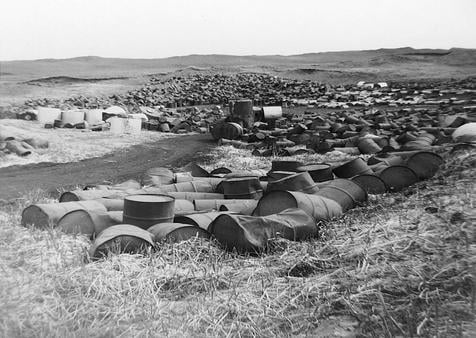
The story began decades earlier. In the 1940s the Hooker Chemical Company used a partially dug canal in the Niagara Falls area as a dumping site for industrial chemical waste. Thousands of tons of chemical byproducts were sealed in metal drums and buried in the ground. After the landfill reached capacity, the company covered the site with soil.
Years later the land was sold to the local school board, and residential development gradually expanded around the area. Homes, parks, and an elementary school were eventually built directly above and around the buried waste site.
For a time everything appeared normal. Families moved into the neighborhood unaware that the ground beneath them contained more than twenty thousand tons of chemical waste. However, problems slowly began to emerge during the 1970s.
Residents noticed strange chemical odors rising from the soil after heavy rains. Children sometimes returned from playing outside with burns or rashes on their skin. Pools of unusual black liquid occasionally appeared in basements and backyards.
One resident later described the disturbing scene to reporters.
“The ground would bubble in places and there were chemical smells everywhere.”
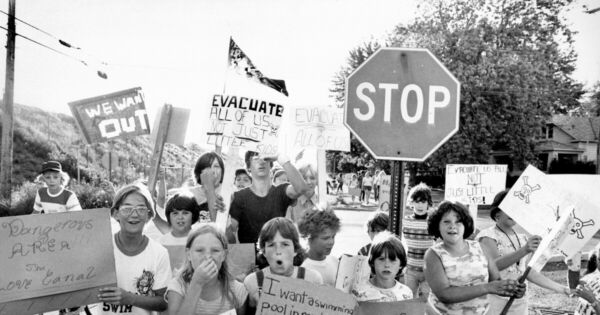
As concerns spread, local residents began organizing meetings and demanding investigations into the strange conditions affecting the neighborhood. Among the most vocal activists was a young mother named Lois Gibbs, whose child attended the elementary school built near the landfill.
Gibbs began collecting information from neighbors and documenting reports of illnesses, miscarriages, and birth defects. As more families shared their experiences, the scale of the problem became increasingly difficult to ignore.
Government scientists eventually conducted tests on soil and water in the area. The results revealed that toxic chemicals buried decades earlier had begun leaking into the surrounding environment. Heavy rains and shifting soil had broken open some of the sealed waste containers, allowing hazardous substances to spread through the ground.
Investigators discovered more than eighty different chemical compounds in the soil and groundwater. Some were known to be dangerous to human health, including substances linked to cancer and neurological damage.
The findings triggered national alarm.
In 1978 the situation reached a turning point when the United States government declared the Love Canal neighborhood a federal emergency. Hundreds of families were evacuated from their homes as authorities attempted to contain the contamination.
President Jimmy Carter later issued an emergency declaration that provided funding for the relocation of affected residents. Entire blocks of homes were eventually abandoned, leaving behind a neighborhood that had once been filled with ordinary family life.
The events at Love Canal became a powerful example of the dangers associated with industrial waste disposal and poor environmental oversight. Public outrage over the disaster helped lead to the creation of the United States Superfund program, which was designed to identify and clean up hazardous waste sites across the country.
Today the story of Love Canal remains one of the most significant environmental controversies in modern history. What began as a quiet suburban neighborhood ultimately exposed a hidden legacy of chemical pollution buried beneath the ground.
For the families who once lived there, the discovery came too late. Beneath their homes and playgrounds, decades of industrial waste had quietly transformed the landscape into one of the most infamous environmental disaster sites in America.