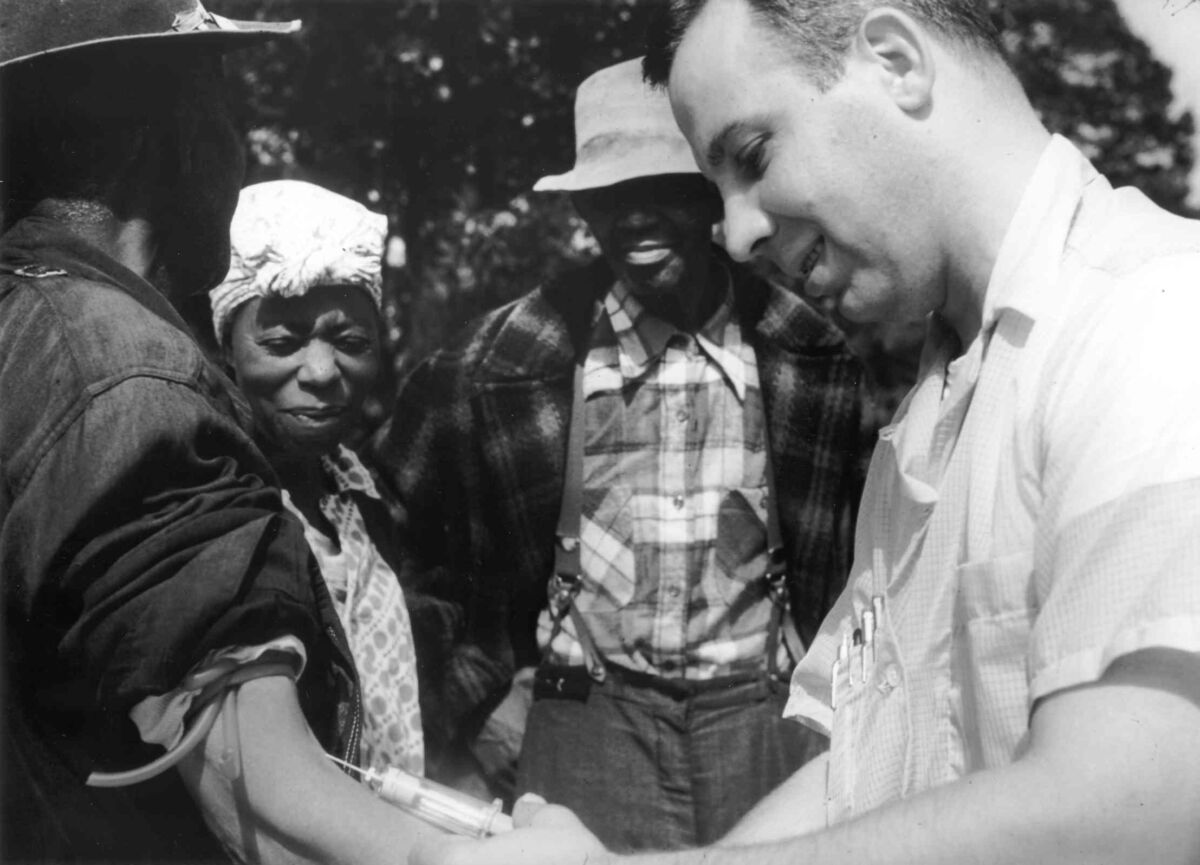
In 1932 a medical research project began in Macon County, Alabama, that would later become one of the most controversial studies in the history of American medicine. At the time, public health officials from the United States Public Health Service launched a program intended to study the long-term progression of syphilis, a bacterial disease that can cause severe damage to the body if left untreated.
The study recruited several hundred African American men, many of whom were poor sharecroppers living in rural communities. Most of the participants had limited access to medical care, and many were told they would receive treatment for what doctors referred to vaguely as “bad blood,” a local term used to describe various illnesses.
In reality, the primary goal of the project was not treatment but observation. Researchers wanted to examine how the disease developed over time without medical intervention. As a result, many of the men involved in the study were not informed about the true nature of the research.
At the time the study began, medical knowledge about syphilis was still developing. Early treatments existed but were difficult to administer and sometimes dangerous. Researchers initially justified the study by arguing that observing the disease’s natural progression would provide valuable scientific information.
However, circumstances changed dramatically during the 1940s when penicillin became widely recognized as a safe and highly effective treatment for syphilis. At that point many medical professionals expected the study to end and the participants to receive proper care.
Instead, the research continued.

Even after penicillin became the standard treatment for the disease, many of the men in the study were not given access to the medication. In some cases researchers actively prevented participants from receiving treatment elsewhere because doing so would interfere with the study’s observations.
Decades later the ethical implications of these decisions would become deeply troubling.
Peter Buxtun, a public health worker who later exposed the study, questioned the morality of continuing the research under those conditions. Reflecting on the situation, he later said,
“It was clearly unethical to continue the study once effective treatment was available.”
The Tuskegee study remained largely unknown to the general public for many years. That changed in 1972 when journalists began reporting details about the research and the conditions faced by the participants.
News coverage quickly sparked widespread outrage. Many Americans were shocked to learn that government officials had allowed the study to continue for forty years while withholding treatment from participants who trusted medical authorities.
In response to the public reaction, the United States government launched investigations into the study. The project was officially terminated in 1972, and a congressional hearing examined the ethical failures that had allowed the research to continue for so long.
In 1997, decades after the study ended, President Bill Clinton issued a formal apology to the surviving participants and their families. Speaking at the White House, he acknowledged the harm caused by the experiment.
“What the United States government did was shameful,” he said during the address.
The Tuskegee study had lasting consequences for medical research practices. In the years that followed, new regulations were introduced to ensure that human subjects participating in scientific studies must give informed consent and receive full information about the nature of the research.
Institutional review boards were established to evaluate research proposals and protect participants from unethical treatment. These safeguards now form the foundation of modern medical research ethics.
Today the Tuskegee Syphilis Study remains a powerful example of how scientific ambition can conflict with human rights when ethical oversight fails. The story continues to influence discussions about trust, accountability, and fairness in healthcare systems.
For many historians and medical professionals, the lessons of Tuskegee serve as a reminder that scientific progress must always be balanced with respect for the dignity and well-being of the people involved in research.