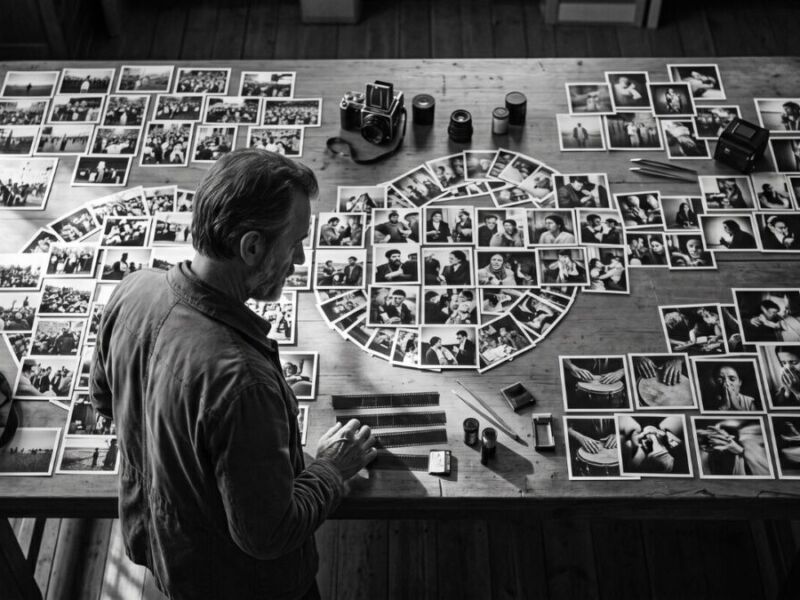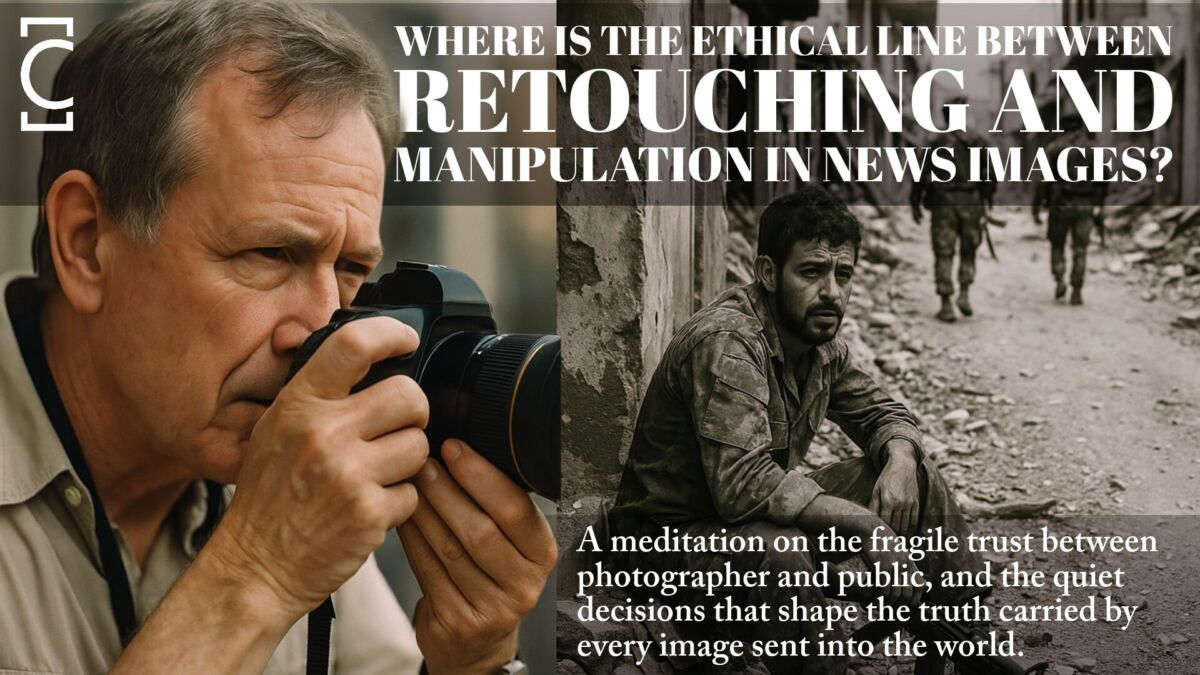
There are mornings when I still feel the weight of a camera before I lift it, the way a reporter feels the weight of a pen or a surgeon the weight of a scalpel. It is not heaviness but responsibility, the silent reminder that every frame captured in the field becomes a fragment of someone else’s understanding of the world. Long before the debates about AI, advanced retouching software, and invisible edits began to seep into the bloodstream of modern journalism, there was already this private reckoning that lived inside the hand of every photojournalist: a question not of what to shoot, but of what not to touch after the shutter fell silent. It was a line that seemed clear once, back when darkrooms smelled of chemicals and decisions were shaped by light rather than sliders. But even then, in the half-lit rooms where negatives hung like thin ghosts, choices were being made — how long to burn an edge, how far to dodge a shadow, what detail to hold, what blur to accept. Even then, ethics were not a switch but a spectrum.
I remember covering a quiet protest in the early days of my career, long before my name appeared beneath images in newspapers or digital mastheads. The air was heavy with humidity, the kind that softens colors and lays a faint sheen on every surface. A woman stood apart from the others, her sign held with the kind of trembling that comes from exhaustion rather than fear. She was not the loudest voice on that street, nor the most dramatic. But she was the one who caught my eye, because the light fell on her in a way that felt both precise and merciful, revealing not only her determination but the fatigue of a long fight. When I developed the image later that night, the contrast was low, as if the moment wanted to remain gentle. I lifted the shadows slightly, enough to match what I had seen with my eyes. And then I stopped. I did not sharpen her features, deepen the sky, or clean the wrinkles of desperation from her hands. I knew that if I went further, I would not be telling the story anymore. I would be polishing it, shaping it, smoothing it into something more cinematic than true.
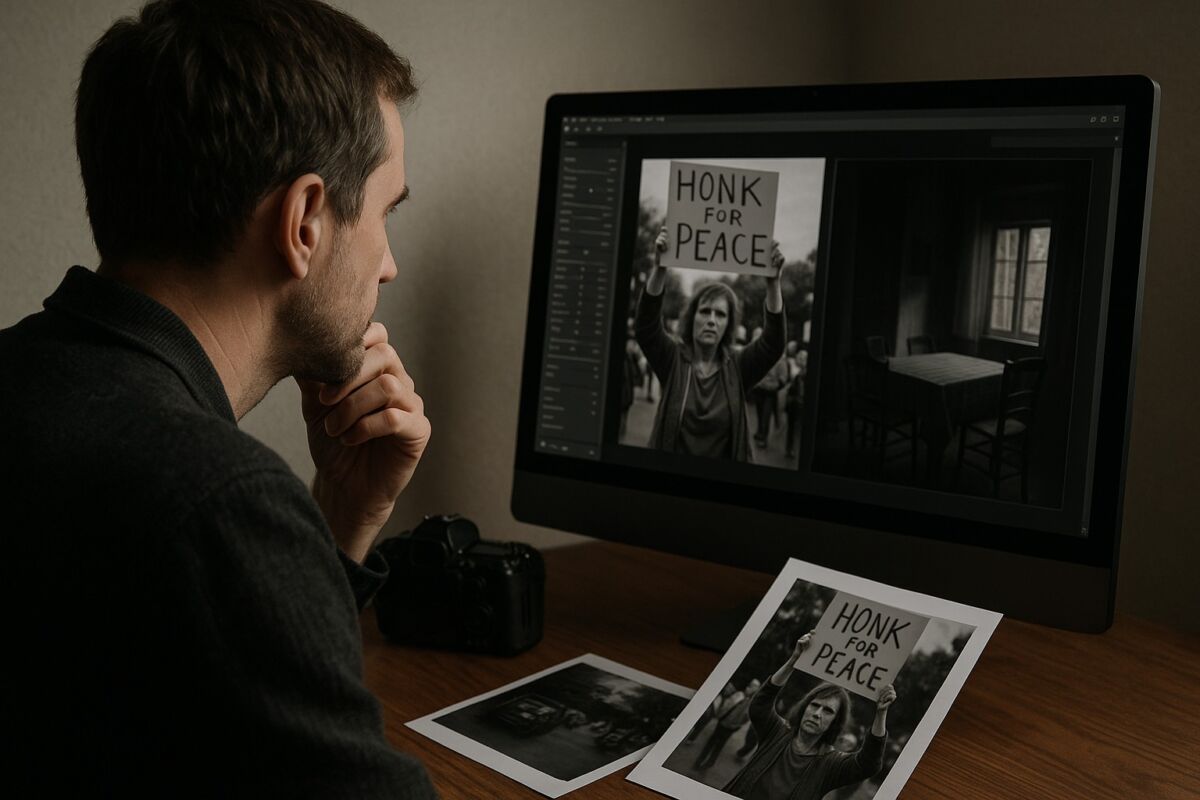
That instinct — to stop before beauty overtakes truth — is what anchors the ethical line we keep searching for in conversations that grow louder every year. Because the debate about retouching versus manipulation is never only about tools; it is about the way we decide whose story survives intact. The line shifts not with technology but with temptation. And temptation grows whenever the world grows hungry for more dramatic images, more clickable emotions, more spectacular narratives to fill the quiet spaces where nuance once lived.
Every news photographer knows that basic retouching — correcting exposure, adjusting white balance, restoring the tonality lost to harsh midday light — is part of the craft. Cameras do not see exactly as we do; sensors flatten what the eye renders gently, and sometimes the difference between a truthful image and a misleading one is a simple correction that aligns the file with the lived moment. Retouching, when done ethically, is not beautification. It is restoration. It is a small whisper in the direction of honesty.
Manipulation, however, begins where intention darkens. It begins when the image no longer represents what occurred, but what a photographer wishes had occurred. It is the removal of a distracting object that was truly there. The deepening of smoke to imply more destruction. The brightening of eyes to suggest greater sorrow. The recovery of detail that was lost to reality. The merging of moments that never intersected. Or, in the new and unnervingly soft language of artificial intelligence, the silent addition of pixels that nature never provided.
But the line is never as clear as the textbooks promise. It is shaped by context, by purpose, by the emotional pulse of a moment that demands both clarity and compassion. I have watched editors argue that a slight crop changes nothing. I have watched others insist that even the direction of a crop can reshape meaning. I have seen images rejected because a shadow fell too perfectly across a face, making grief cinematic, and others approved even though a color grade made a peaceful dusk appear foreboding. Ethics is not a fence that surrounds the profession. It is a thread we try to follow through a maze.
There was a war-zone photographer I once met in a makeshift press tent, a man who carried exhaustion like a second skin. He told me a story that returns whenever this debate resurfaces. He had captured a scene after a bombing — a child crouched beside a shattered wall. Dust drifted like pale snow, making the scene appear almost serene. In the original frame, the air was white, washed out, lacking contrast. The photographer increased the clarity slightly, trying to match the sharpness of the moment he remembered. But in doing so, the dust became smoke. The stillness became drama. The quiet shock on the child’s face became anguish. It was a small adjustment, a movement of a slider that took less than a second. But the effect was heavy enough to weigh on him for years. “I realized,” he told me, “that I had not documented the moment. I had sculpted it. I had done violence to the truth.” He deleted the image.
We draw the ethical line not for ourselves alone but because audiences trust what they cannot verify. A news image is often the only witness most people will ever meet from a distant conflict, a political upheaval, a natural disaster. When we alter these images beyond what reality offered, we are not merely adjusting pixels. We are adjusting memory — the memory of a world shared by millions who depend on us to see on their behalf.
Yet the line becomes more porous in an age where artificial intelligence can fabricate entire scenes with a prompt. News agencies now impose strict guidelines: no adding, no removing, no altering the meaning of a scene. But the harder challenge is internal, the quiet voice that must ask with every adjustment: Am I telling the story, or am I improving it? Because the moment you improve it, even with the gentlest hand, you begin to write fiction.
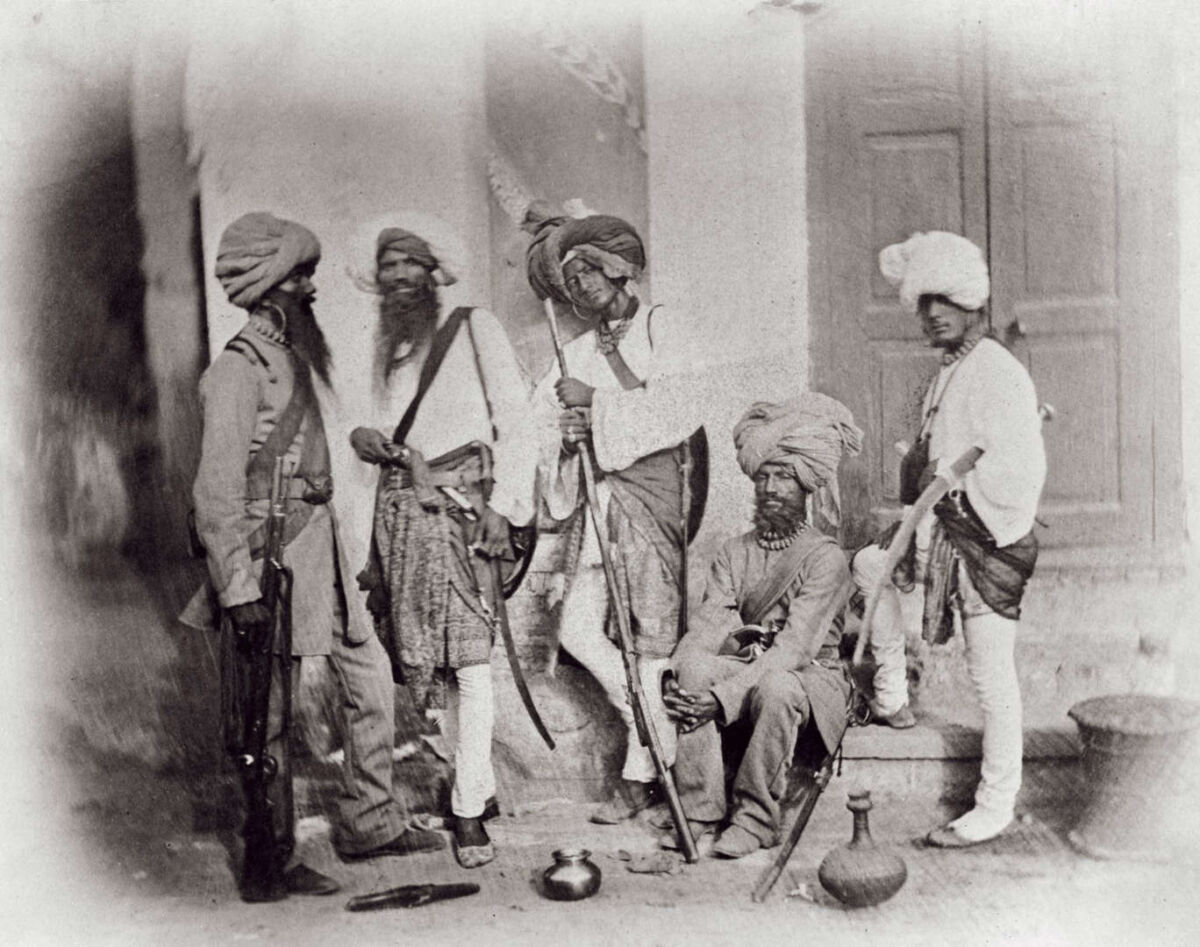
Some photographers argue that complete purity is impossible. A lens choice alters perspective. A shutter speed changes motion. A crop excludes someone standing just outside the frame. Even choosing to photograph one person over another is, in its own quiet way, a manipulation of narrative. They are right. But ethics does not require perfection. It requires intention. When we choose a lens, we do so to approximate the experience of being there, not to distort it. When we crop, it is to clarify, not to fabricate. The heart of the ethical line lives not in the tools we use but in the motive behind each adjustment.
I have stood in newsrooms where editors debated whether brightening a dimly lit hospital room was acceptable. Some argued that raising the exposure merely revealed what was already there, honoring the scene’s details. Others said the darkness was part of the truth — the failing electricity, the lack of resources, the quiet struggle that lightening the frame would erase. And they were all right. And they were all wrong. That is what makes this conversation endless, and endlessly human.
The truth is that the line between retouching and manipulation is not a boundary drawn on a map. It is more like the horizon — always ahead, always shifting, always defining the space between light and shadow. It demands vigilance, humility, and a willingness to accept that sometimes the most honest choice is to leave an image imperfect. Reality is rarely tidy. Journalism should not be either.
Every generation of photographers faces its own version of this question. For those who came before us, it was the ethics of the darkroom. Now it is the ethics of the algorithm. Soon it may be the ethics of synthetic imagery, of verifying whether a photojournalist even needed to be present for the moment they claim to have captured. But whatever future tools appear, the same ancient truth will remain: the role of a journalist is not to create truth, but to witness it.
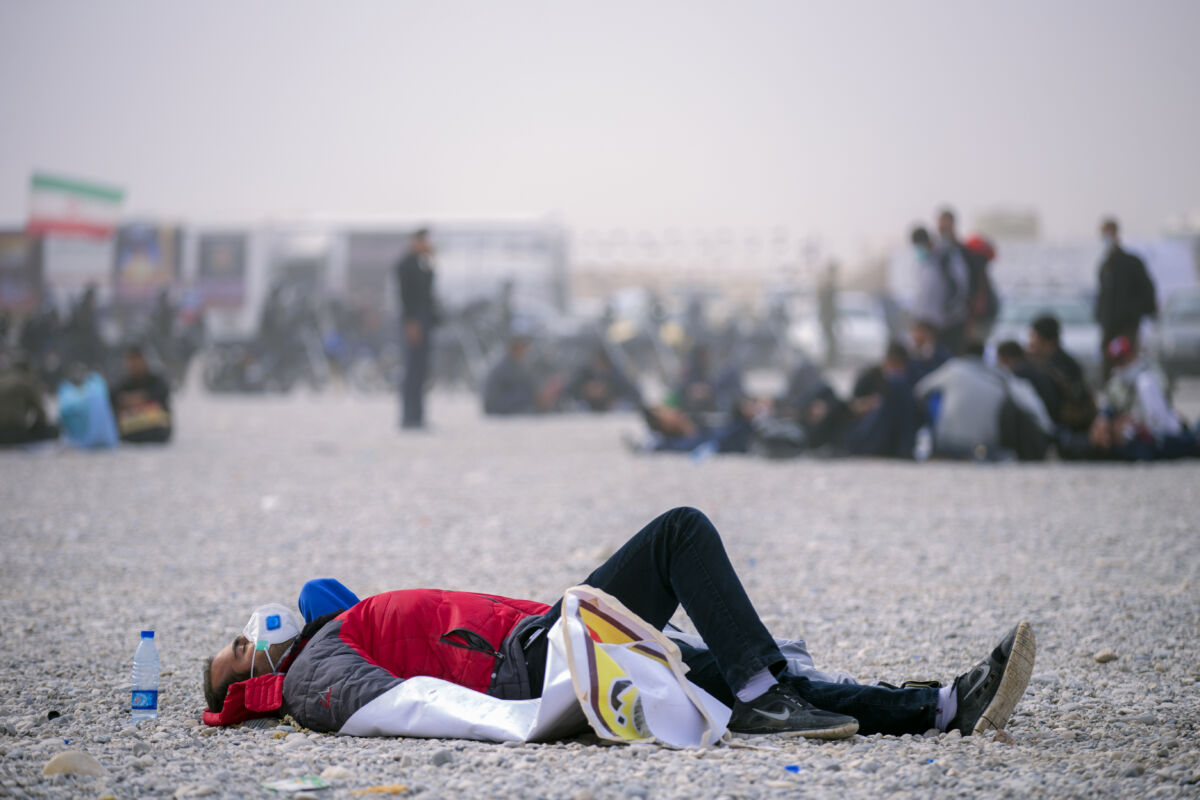
When I think back to that woman at the protest, her quiet resilience illuminated by soft afternoon light, I remember how easy it would have been to heighten her emotion with a deeper contrast or darker shadows. Nobody would have known. But I would have known. And ethics often begins in the places where nobody is watching.
The ethical line is not simply where retouching ends and manipulation begins. It is where honesty ends and ambition begins. It is where the image stops being a window and becomes a mirror for the photographer’s desires. It is in the subtle shift from documentation to decoration, from witnessing to storytelling, from truth to persuasion.
And perhaps that is why this question will never have a final answer, only a lived one. Each photograph asks it anew. Each edit forces us to pause. Each publication tests our integrity. The line is not fixed, but the responsibility to search for it is.
In the end, the ethical line lives in a quiet place — the moment before you touch the file, when the image is still unaltered, still innocent, still carrying the world exactly as it was. It waits there, in the silence between what you saw and what you are tempted to show. And if you listen closely, it will tell you when to stop.