The initial encounter with any large-scale cultural festival is almost always defined by sensory overload. There is a rush of movement, overlapping sounds, and an overwhelming density of people. For a photographer arriving on a standard editorial assignment, the immediate instinct is to capture the loudest moments. The resulting images are often vibrant and energetic but ultimately superficial. They document the spectacle rather than the underlying human rhythm.
Stepping away from the rapid turnover of the daily news cycle allows a visual storyteller to completely reframe their relationship with time. Committing half a decade to documenting a single ongoing festival fundamentally changes the resulting narrative. It is the difference between writing a breaking headline and authoring a deeply researched book. When the pressure to deliver immediate content is removed, the photographer is free to observe the quiet interactions that happen in the margins of the main event.
The Illusion of the First Encounter
During the first year of any long-term documentation, the camera acts as a barrier. You are a stranger navigating a complex social ecosystem. The subjects are highly aware of being observed, and the resulting photographs often carry a slight, unavoidable stiffness. The community is presenting its public face to an outsider.
The narrative shifts dramatically when you return for the second, third, and fourth years. Familiarity breeds invisibility. The people who organize the event, the families who attend religiously, and the vendors who work the periphery begin to view your presence as part of the established routine. The performative smiles vanish. You are no longer an intrusive media presence; you are the dedicated observer who always comes back. This earned trust is the only way to access the raw, unscripted moments that elevate a photograph from a mere record to a compelling piece of art.
Filtering Noise Through Monochrome
Festivals are inherently chaotic visual environments. They are flooded with competing colors, erratic lighting, and constant background motion. Attempting to capture this in full color often results in a frame that is too busy for the eye to parse. The core emotion of the scene gets drowned out by the visual noise of the surroundings.
Adopting a strict black and white aesthetic for a project of this scale is a deliberate act of reduction. It strips away the distracting neon signage and the mismatched clothing of the crowd. The frame is immediately simplified into geometry, contrast, and human expression. This forces the viewer to engage directly with the interaction happening at the center of the photograph. When you are compiling an archive that spans five years, monochrome also provides a crucial visual consistency. It ties disparate years and shifting physical locations together under a single, unified cinematic atmosphere.
Curating the Decisive Archive
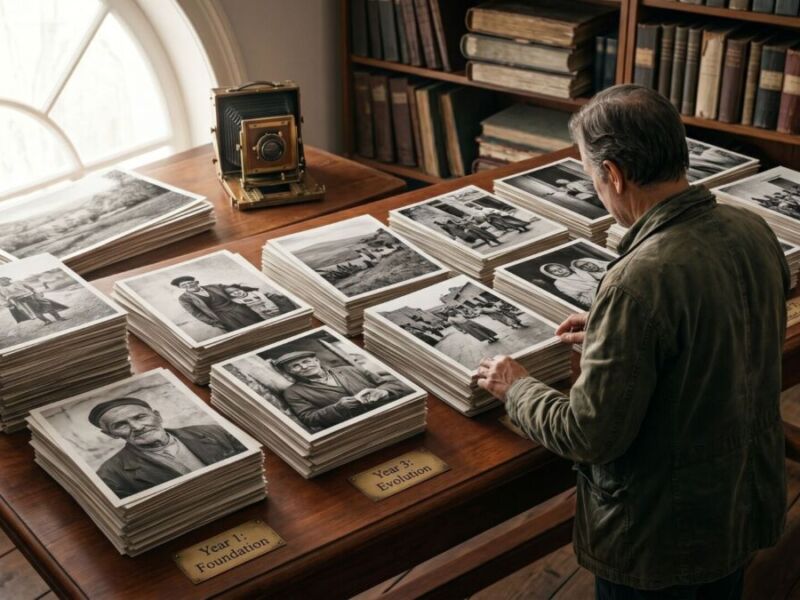
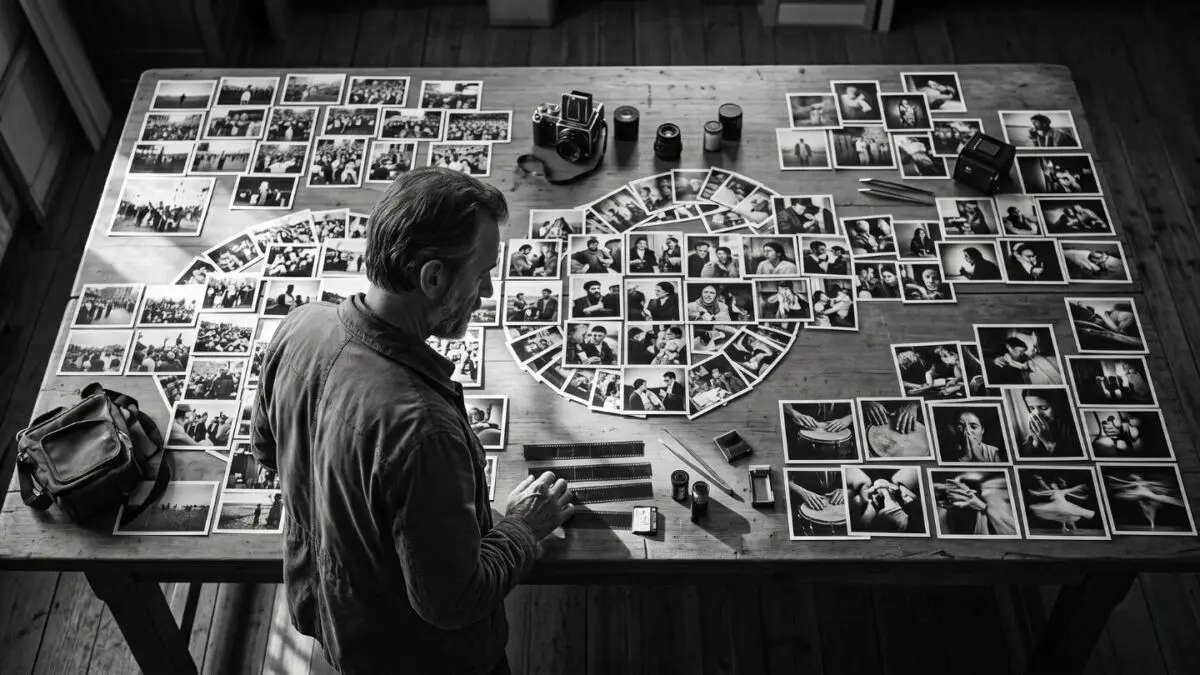
The final challenge of a multi-year project is not the shooting itself but the formidable task of editing. A five-year archive contains thousands of frames, but a 2500 word editorial feature or a fine art photobook only has room for a fraction of them. The editing process must be ruthless and intentional.
The goal is not to show everything that happened. The objective is to distill the entire five-year span into a cohesive sequence that conveys the emotional truth of the environment. You look for images that speak to one another across time. A wide environmental shot from year one might sit perfectly next to a tight, intimate portrait taken in year four. This level of editorial pacing relies on a slow film mentality. The transitions between the photographs matter just as much as the images themselves, guiding the reader through a deeply immersive visual journey.