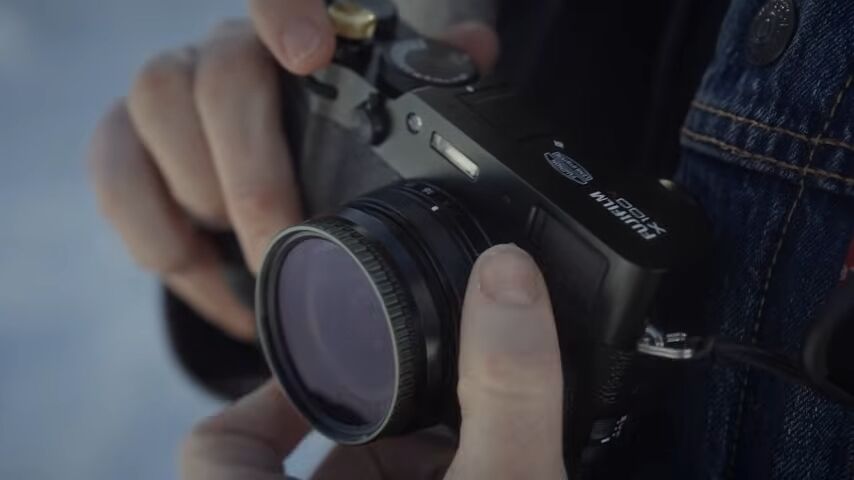
When Yodobashi Camera published its list of the top twenty best-selling compact cameras of 2025, seeing the Fujifilm X100VI in the number one position felt almost inevitable. Not because it is easy to buy, but because demand has never really cooled since the day it launched. In fact, its biggest obstacle has never been popularity. It has always been availability. That makes its success even more remarkable, because selling out repeatedly should slow a product down, not push it to the top of sales charts.
What makes this achievement stand out is that the X100VI remains difficult to find even now. Retailers struggle to keep it in stock. Orders stretch into long waiting lists. Many buyers have to wait months. And yet, enough units still reached customers in 2025 for it to become the best-selling compact camera at one of Japan’s largest and most competitive retailers. That alone shows how powerful its demand truly is.
However, this list also comes with an important context. The Kodak PixPro FZ55, which dominated Map Camera’s overall best-seller list for 2025, is missing from Yodobashi’s ranking. Not because it failed, but because Yodobashi does not sell that particular model. Once that Kodak-shaped absence is acknowledged, the field changes. With the runaway budget success removed from competition, the X100VI naturally rises to the top as the most desired premium compact camera in Japan.
That distinction matters. The X100VI is not the cheapest camera. It is not the most accessible. It is not even the most available. It is simply the one people want the most.
This tells us something important about today’s compact camera market. It is no longer driven purely by price or practicality. It is driven by emotion, identity, and experience. The X100VI offers a kind of photographic simplicity that feels rare in modern systems. One lens. One body. One clear way of seeing. That limitation becomes its strength.
And because photography has become increasingly complex over the years, many photographers now crave the opposite. They want fewer choices, not more. They want a camera that removes hesitation. The X100VI does exactly that. It strips photography back to intent.
This is why its success feels deeper than just sales. It represents a cultural shift. A move away from feature-heavy systems and toward focused, personal tools. The camera is not bought because it is practical. It is bought because it feels right.
Looking further down the list only strengthens this argument. The second-best-selling camera is Canon’s PowerShot SX740 HS, a model that is nearly eight years old. Its continued popularity shows that new technology alone does not drive demand. Reliability, familiarity, and usefulness still matter more than innovation for its own sake.
That pattern continues with the Panasonic TZ99, which sits close behind. It has barely evolved from its earlier versions, yet people continue to buy it. These cameras prove that trust outlasts novelty. If something works, people stay loyal.
Then comes the Ricoh GR IV in fourth place, which represents a different kind of demand. It is not just popular. It is chased. Backorders, lotteries, and supply shortages have only intensified desire. Ricoh cannot make enough units to satisfy the market, and yet it continues to sell every camera it produces. Scarcity here does not kill momentum. It fuels it.
The fifth spot, occupied by the Fujifilm X half, tells a more complicated story. It exploded at launch, gained massive attention, and then cooled rapidly once supply caught up. Its presence in the top five alongside discounts and bundle offers shows how fragile hype can be when availability stabilizes. Popularity is powerful, but it is also temporary if it is not supported by long-term identity.
Together, these top five cameras paint a fascinating picture. There is no single formula for success anymore. Old cameras thrive. New cameras dominate. Fixed lens cameras win. Zoom cameras sell steadily. The compact camera market is not unified. It is fragmented by emotion.
Yet through all of that fragmentation, the X100VI remains consistent.
It is not just selling. It is setting a standard.
As the list continues, that diversity becomes even more striking. Rugged outdoor cameras like the OM System TG-7 share space with luxury tools like the Leica Q3. Fujifilm’s own medium format GFX100RF appears beside entry-level point-and-shoots. The compact camera category has expanded so far that price and size no longer define it. Desire does.
Canon’s role in this market is also important. While Fujifilm holds the crown at number one, Canon dominates the list in volume, with more models in the top twenty than any other brand. Canon is not winning the spotlight, but it is winning presence. Its cameras exist everywhere, across every price level and user type.
Canon’s decision to increase compact camera production confirms that manufacturers now understand something important. The point-and-shoot revival is not nostalgia. It is practical. It is driven by creators who want simplicity, speed, and portability without complexity.
Still, none of those cameras carry the same cultural weight as the X100VI.
The X100VI is no longer just a product. It is a statement. It represents restraint in a market built on excess. It proves that limitation can create clarity. It reminds photographers that tools do not need to overwhelm to inspire.
Every time it tops a sales chart despite being difficult to buy, it reinforces one truth. Modern photography is not about having more. It is about choosing better.
And that is why the Fujifilm X100VI refuses to slow down.

- Panasonic LUMIX 40mm f/2 S Lens and S9 Special Edition Announced at NAB 2026 - April 21, 2026
- How to Shoot Alone Without Losing Motivation - April 14, 2026
- How “Community” Became a Marketing Strategy - February 15, 2026