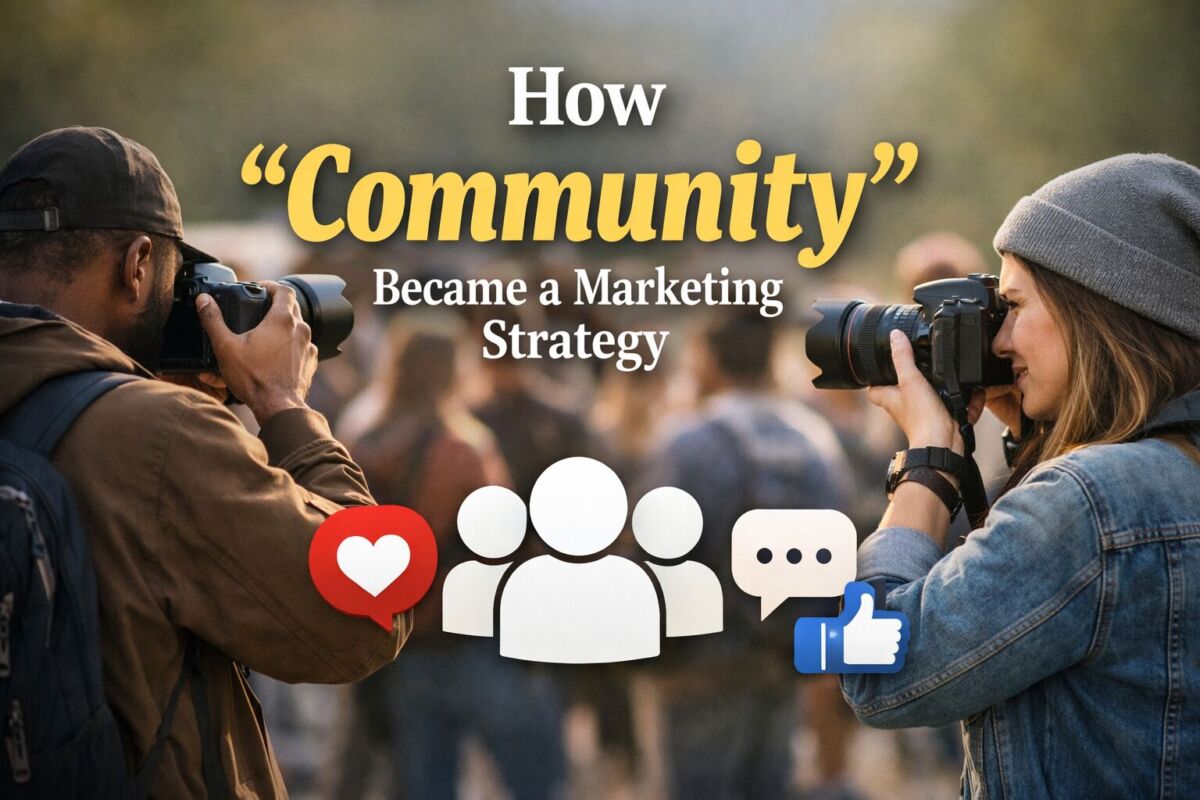
Community used to be something slow. It formed through time, disagreement, shared failure, and long conversations. It was not a brand identity. It was not a slogan. It was something built between people who needed each other. In photography and creative spaces, community meant small groups, collectives, darkrooms, shared studios, and independent publications where support was practical, not performative.
Today, community has become a product. It is a marketing asset. It is written into brand campaigns, platform descriptions, and influencer bios. “Join our community” now usually means join our customer base, our content pipeline, or our free labour network. The word remains warm, but the function has changed completely.
In the modern creative economy, belonging is no longer something you grow into. It is something you are invited to consume.
Brands speak about community to build emotional loyalty. Platforms speak about community to justify unpaid contribution. Publications speak about community to replace payment with gratitude. Workshops speak about community to sell access rather than education. The word creates comfort while removing negotiation.
Once photographers are framed as community members rather than professionals, their work becomes participation instead of labour. And participation is rarely paid.
This shift did not happen suddenly. It evolved as creative industries moved online and needed a language that softened the reality of extraction. Asking people to contribute free content sounds exploitative. Asking them to be part of a community sounds generous. The same action is performed, but the emotional framing changes everything.
A photographer submitting work to a platform is not “helping the community.” They are supplying content that builds traffic, authority, and commercial value. When that act is framed as belonging, the economic imbalance disappears from view.
The strongest form of marketing is not advertising. It is identity. When people feel they belong to something, they defend it, promote it, and work for it without being asked. Community language turns customers into ambassadors and creators into volunteers.
This is especially visible in photography spaces. Social platforms encourage photographers to feel like contributors to culture while their images train algorithms, fill feeds, and drive advertising revenue. Publications invite submissions “from our community” while building editorial authority from unpaid labour. Brands create ambassador programs that feel like recognition but function like unpaid marketing departments.
The photographer is told they are valued. The system is designed so they are useful.
Community marketing works because it replaces transaction with emotion. Once emotion enters, professionalism exits. Asking about payment becomes awkward. Asking about rights feels greedy. Questioning usage becomes uncomfortable. Community is supposed to be generous. And generosity is easily exploited.
This is why community-based systems rarely publish clear contracts. They rely on atmosphere, not agreement. They rely on culture, not clarity.
Another problem is how community language flattens hierarchy. Platforms claim everyone is equal. Brands claim they are “just creators too.” Publications claim they are “part of the same ecosystem.” In reality, power remains one-directional. One side controls distribution, monetisation, and visibility. The other side supplies work and loyalty.
Community becomes a mask for structural imbalance.
The emotional cost of this system is heavy. Photographers begin to confuse loyalty with self-worth. They stay in harmful arrangements because leaving feels like betrayal. They tolerate unpaid work because they fear exclusion. They defend systems that exploit them because identity is now attached to participation.
This is how belonging becomes leverage.
Community marketing also reshapes how photographers compete. Instead of negotiating as professionals, they compete as members. They try to be more supportive, more visible, more generous. This generosity benefits platforms more than it benefits individuals. Cooperation is redirected upward.
Even criticism is softened. Calling out exploitation becomes “negativity.” Questioning power becomes “drama.” Community culture often polices discomfort to protect commercial harmony.
The photography industry reality is that many platforms would collapse without unpaid community labour. They rely on constant submissions, engagement, promotion, and visibility work done by photographers who are told they are lucky to belong.
This is not collaboration. It is outsourcing disguised as culture.
True community is reciprocal. It protects its members. It distributes power. It allows disagreement. It does not profit from silence. Marketing communities are the opposite. They depend on obedience, gratitude, and emotional attachment.
The difference is simple. In real community, people grow together. In marketing community, one side grows while the other contributes.
Photographers deserve to exist as professionals first and members second. Belonging should never replace contracts. Connection should never replace compensation. Support should never replace rights.
Until that boundary is restored, community will remain one of the most effective tools for selling labour without paying for it.

- Panasonic LUMIX 40mm f/2 S Lens and S9 Special Edition Announced at NAB 2026 - April 21, 2026
- How to Shoot Alone Without Losing Motivation - April 14, 2026
- How “Community” Became a Marketing Strategy - February 15, 2026