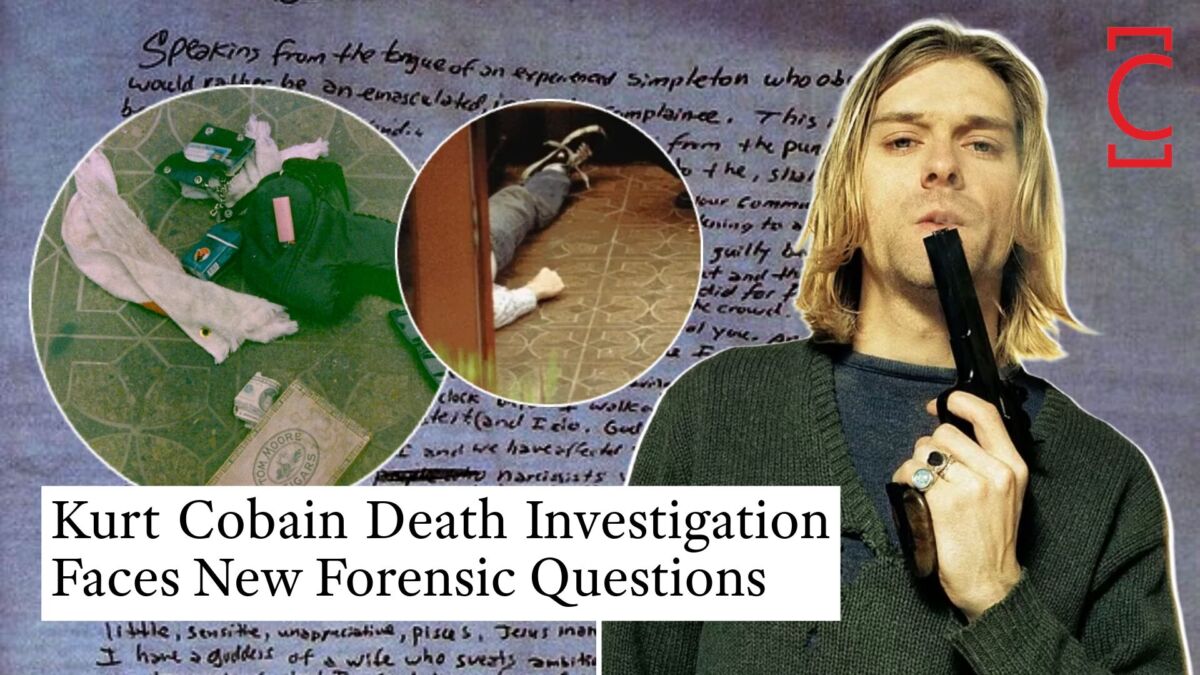
In April 1994, the world woke to the news that Kurt Cobain had been found dead in a room above his garage at his home in Seattle. The King County Medical Examiner ruled his death a suicide caused by a self-inflicted shotgun wound. For many, the ruling closed a chapter that felt both tragic and inevitable. Cobain had publicly struggled with addiction, chronic pain, and the weight of sudden fame. The narrative, painful as it was, appeared complete.
But history has a way of reopening what once seemed settled.
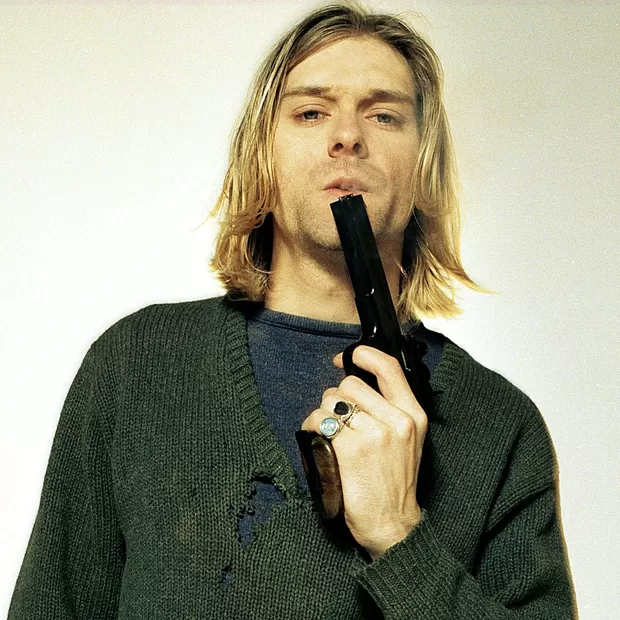
A newly circulated independent forensic analysis is now challenging aspects of the official findings. The review, conducted by private researchers unaffiliated with law enforcement, argues that certain medical and physical details deserve renewed scrutiny. Their central claim is not simply that questions exist, but that the original interpretation of the evidence may have been too narrow.
At the heart of this renewed debate is toxicology. The 1994 autopsy documented a high concentration of heroin in Cobain’s system. The independent team contends that the reported levels could have rendered him unconscious very quickly. In their assessment, it would have been physiologically difficult, perhaps impossible, for him to perform the physical actions required to position and fire a shotgun afterward. They point to reported organ stress and respiratory indicators as signs that the overdose may have preceded the gunshot wound in a more significant way than originally concluded.
Toxicology, however, is rarely straightforward. Individuals with long histories of opioid use often develop significant tolerance. What appears lethal on paper can affect different bodies in different ways. Medical examiners typically consider not only the numerical concentration of a substance but also contextual evidence, timing, and scene reconstruction. The original autopsy ruled the shotgun wound as the cause of death, with heroin intoxication listed as a contributing factor.
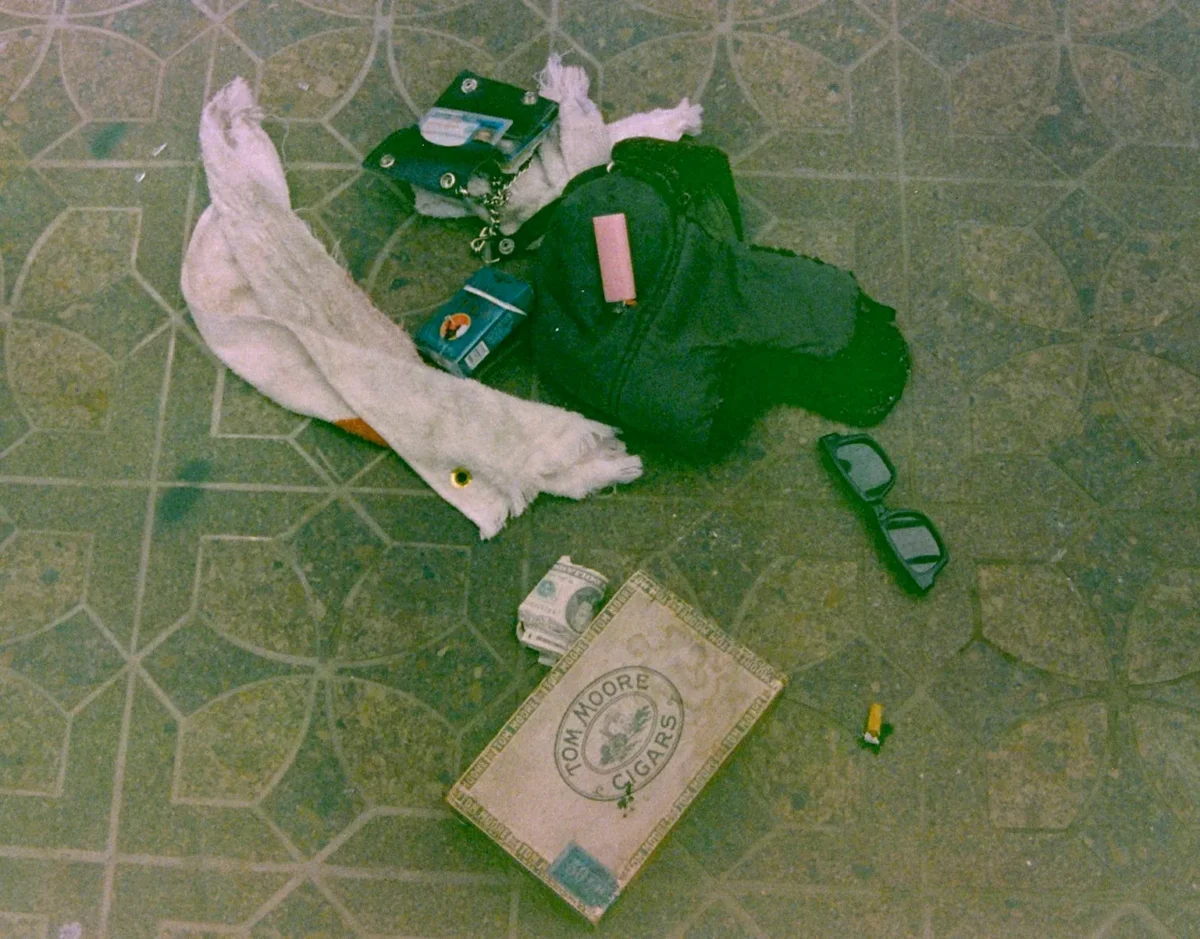
The physical scene has also come under renewed examination. Cobain was found with a Remington Model 11. The independent researchers argue that the reported placement of the spent shell casing and the positioning of the firearm raise questions about whether the weapon discharged in the manner described. They claim that controlled tests using the same model produced ejection patterns that did not perfectly align with the documented scene.
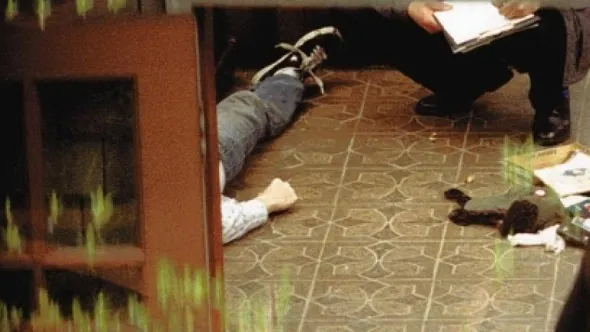
Law enforcement has previously addressed similar concerns. In 2014, on the twentieth anniversary of Cobain’s death, the Seattle Police Department reviewed the case and released additional crime scene photographs. Officials stated at that time that no new evidence altered the original conclusion. As of February 2026, authorities maintain that the case remains closed and that the medical examiner’s ruling stands.
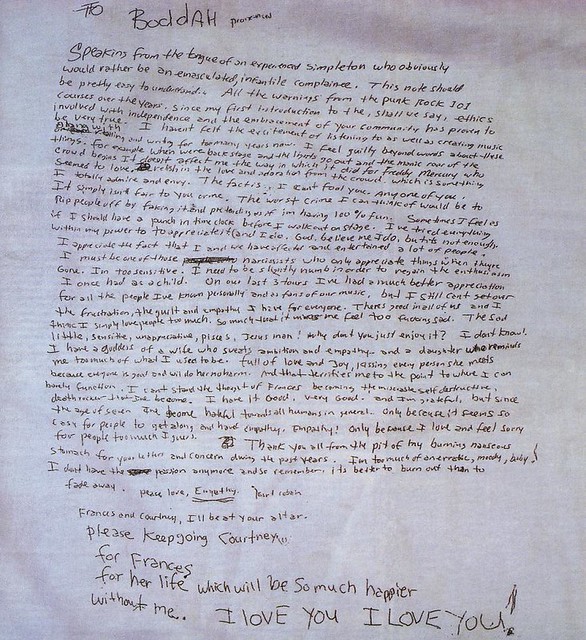
Another focal point of the renewed debate is the handwritten note found at the scene. The majority of the letter reads as a farewell to the music industry and to fans. Only in its final lines does it directly reference suicide. The independent review suggests stylistic differences in the closing sentences, raising the possibility of later additions. Handwriting analysis, however, is inherently interpretive, and past evaluations have produced differing opinions without leading to formal legal reconsideration.
What makes the Kurt Cobain death investigation uniquely persistent in public consciousness is not only the forensic detail but the cultural weight surrounding it. As the frontman of Nirvana, Cobain reshaped popular music in the early 1990s. The release of Nevermind changed the commercial trajectory of alternative rock almost overnight. “Smells Like Teen Spirit” became more than a hit single. It became shorthand for generational frustration.
Cobain’s death at 27 placed him among a long list of artists whose lives ended abruptly at the height of influence. For many fans, accepting the suicide ruling felt like accepting the fragility of genius itself. For others, unanswered emotional questions evolved into forensic suspicion. The line between grief and doubt has never been entirely clear.
The new forensic review does not present direct new physical evidence from the original scene. Instead, it reinterprets existing documentation. That distinction matters legally. Law enforcement agencies typically require newly discovered material evidence, not reinterpretations, to reopen a closed investigation. Officials have stated that they remain open to reviewing credible new findings but have seen nothing to warrant formal reconsideration.
The debate now lives in two parallel spaces. In one, the official record remains unchanged. In the other, researchers and segments of the public continue to analyze, question, and reconstruct. The friction between those spaces reflects a broader modern reality: high-profile cases rarely fade quietly in the age of digital archives and independent research.
It is also important to consider the psychological context of 1994. Cobain had recently left a rehabilitation facility. He had written about exhaustion with fame and creative pressure. Close associates described periods of withdrawal and despair. These documented struggles have long supported the suicide conclusion in the public mind.
Yet skepticism persists. Critics of the ruling argue that the neat arrangement of certain items at the scene and the technical details of firearm mechanics deserve further transparent explanation. Supporters of the official conclusion respond that trauma scenes can vary widely and that selective interpretation of photographs decades later risks distortion.
What remains beyond dispute is the scale of Cobain’s impact. His voice still fills headphones. His lyrics still circulate through younger generations who were not yet born when he died. That continued relevance fuels the enduring need for clarity. When cultural figures occupy mythic status, ambiguity feels heavier.
The renewed attention in 2026 does not rewrite history. It reopens conversation. Whether that conversation leads to legal reconsideration is uncertain. Authorities stand by their original findings. Independent analysts stand by their reinterpretation.
Between those positions lies a broader truth about memory, grief, and public figures. The story of Kurt Cobain has never belonged solely to investigators. It belongs to fans, to historians of music, and to a culture that continues to examine how fame, addiction, and vulnerability intersect.
For now, the official classification remains unchanged. The case is recorded as suicide. The new forensic review has not altered that legal status. What it has altered is the intensity of discussion. Three decades later, the questions still resonate, not because facts have disappeared, but because meaning continues to evolve.
Cobain once wrote about feeling misunderstood. In death, that feeling seems to echo. Whether future evidence will surface is unknown. What is certain is that the conversation around the Kurt Cobain death investigation is unlikely to fade. The music endures. So do the questions.
Was Kurt Cobain’s death officially ruled a suicide?
Yes. The King County Medical Examiner ruled in 1994 that Kurt Cobain died by suicide from a self-inflicted shotgun wound.
What is the new forensic review claiming?
The independent review questions toxicology interpretation, firearm mechanics, and aspects of the suicide note. It argues that certain details may not align with the official narrative.
Has the Seattle Police Department reopened the case?
No. As of February 2026, authorities state that there is no new material evidence warranting a reopening.
What role did heroin play in the investigation?
Toxicology reports showed heroin in Cobain’s system. The autopsy listed heroin intoxication as a contributing factor, but the cause of death was ruled the gunshot wound.
Why does the debate continue after 30 years?
Cobain’s cultural influence, combined with ongoing reinterpretation of forensic details, has kept public interest alive.

- Panasonic LUMIX 40mm f/2 S Lens and S9 Special Edition Announced at NAB 2026 - April 21, 2026
- How to Shoot Alone Without Losing Motivation - April 14, 2026
- How “Community” Became a Marketing Strategy - February 15, 2026