A coalition of international journalism organizations has introduced a proposal that could redefine the standards of global photojournalism. In a joint statement released this week, representatives from the World Press Photo Foundation, major press councils, and advocacy groups including the Committee to Protect Journalists called for news agencies to require original RAW files for all published photographs. The move reflects growing anxiety over the rapid advancement of AI image generation and the increasing difficulty of verifying visual authenticity in breaking news environments. For decades, photojournalism has operated on the assumption that viewers believe what they see. That trust, once implicit, is now in crisis.
The proposed standard would mandate that photographers — whether staff or freelance — submit the untouched RAW file alongside any processed JPEG delivered for publication. In practical terms, this means that every image appearing in news outlets could be traced to an unaltered sensor capture, ensuring that no visual elements were added, removed, or significantly manipulated beyond basic tonal adjustments. News agencies would be required to archive these RAW files for internal verification and potential external audit if the image’s authenticity is later challenged. Supporters of the proposal argue that this is not an unnecessary burden but a crucial step in preserving the credibility of journalism at a moment when synthetic images can be generated faster than factual ones can be verified.
The urgency behind the measure is driven not only by technological threats but by real-world incidents. Over the past year, several AI-manipulated images — including fabricated war scenes, political gatherings that never occurred, and digitally altered protest photographs — circulated widely before being debunked. In multiple cases, the public struggled to distinguish between authentic documentary images and algorithmically produced ones. Journalism boards say the industry can no longer rely on internal ethics alone; external safeguards must be standardized. One representative stated, “If audiences begin to doubt the integrity of news images, the entire foundation of journalism becomes unstable. We must restore a chain of trust from the camera to the public.”
Yet despite broad support among advocacy groups, the proposal has generated complex discussions among working photographers. Many support the initiative as a necessary modernization of ethical standards, but others warn of unintended consequences. Photojournalists working in conflict zones or repressive regions worry that RAW files may contain metadata — such as GPS coordinates — that could compromise their safety or reveal the identities of vulnerable subjects. The coalition acknowledges these concerns and has clarified that exceptions may be allowed in cases where storing or transmitting RAW files presents security risks. Still, several photographers have expressed fear that the policy, if implemented rigidly, could hinder their ability to work fluidly in dangerous situations.
News editors and agencies are also divided. Large wire services, which already require RAW files for contest submissions and high-stakes reporting, are more open to the shift. Smaller outlets, however, fear the logistical strain of managing massive archives of RAW data. Preservation, storage, and retrieval infrastructures would need to be significantly expanded. Despite these obstacles, many industry leaders argue that the investment is necessary, noting that the cost of losing public trust is far greater than the cost of building new storage systems.
There is also a broader cultural dimension to the conversation. The introduction of mandatory RAW submission represents more than a procedural change; it marks a new era in which photojournalism must actively defend its integrity. For the first time, photographers are being asked not only to report truth but to provide verifiable proof of it. This shift reflects a growing recognition that images — once considered self-evident — are now competing with synthetic visuals that are indistinguishable from real scenes to the untrained eye. Even seasoned editors have admitted difficulty identifying manipulated images without additional data.
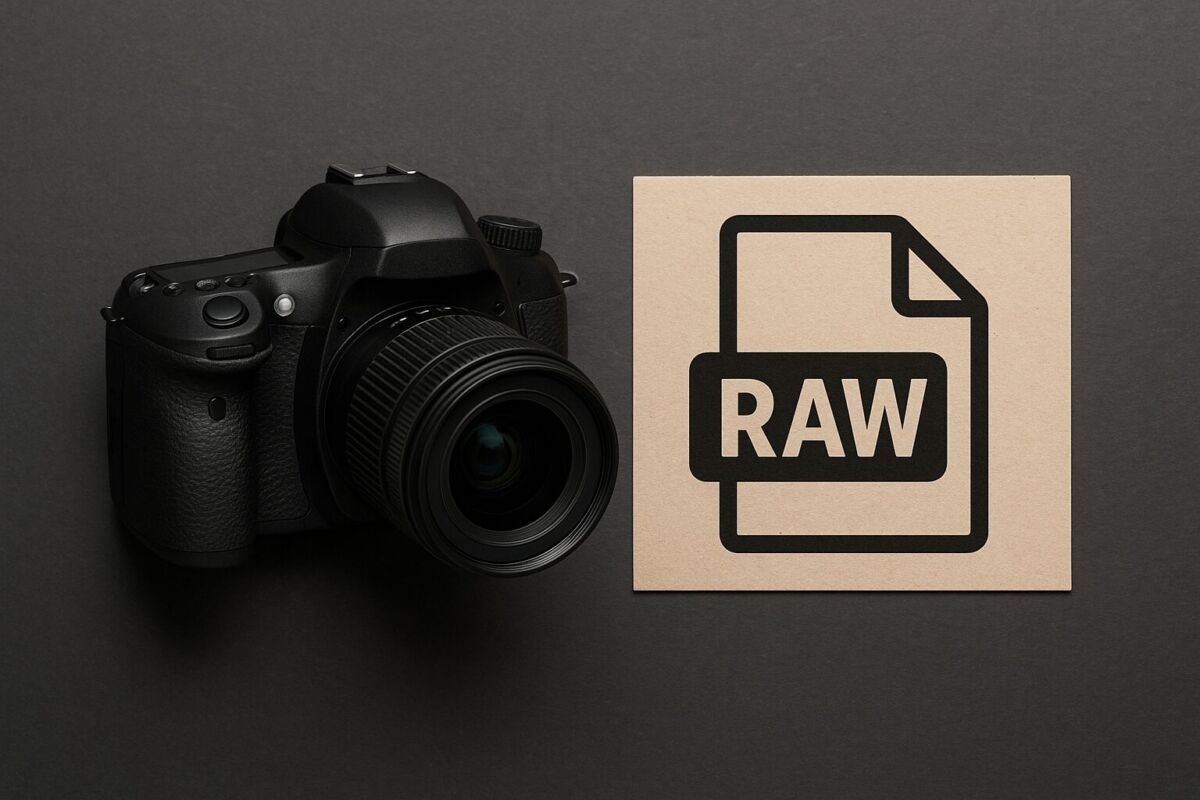
The proposal has sparked debate in press freedom circles as well. Some critics argue that standardizing RAW submissions could be used by certain governments to demand access to materials that might endanger journalists or sources. Others note that transparency measures must be deployed carefully to avoid creating new vulnerabilities. The coalition insists that the policy is not meant to expose sensitive information but to establish a framework for authentication within newsrooms, not public databases.
Despite the complexity of these challenges, momentum is building. Several major news organizations have already expressed willingness to pilot the system, and early discussions suggest that industry-wide adoption may be possible within the next two to three years. If implemented globally, the RAW submission standard would represent one of the most significant transformations in modern journalism — a recalibration of trust designed to meet an age in which truth and illusion are increasingly difficult to distinguish.
In the end, the proposal reflects a fundamental reality of the media landscape: photography, once trusted to reveal the world, must now work harder than ever to prove that it reflects it accurately. Whether the policy becomes universal or remains aspirational, the conversation itself marks a turning point. It acknowledges that the future of journalism will depend not only on capturing the truth, but on securing it.