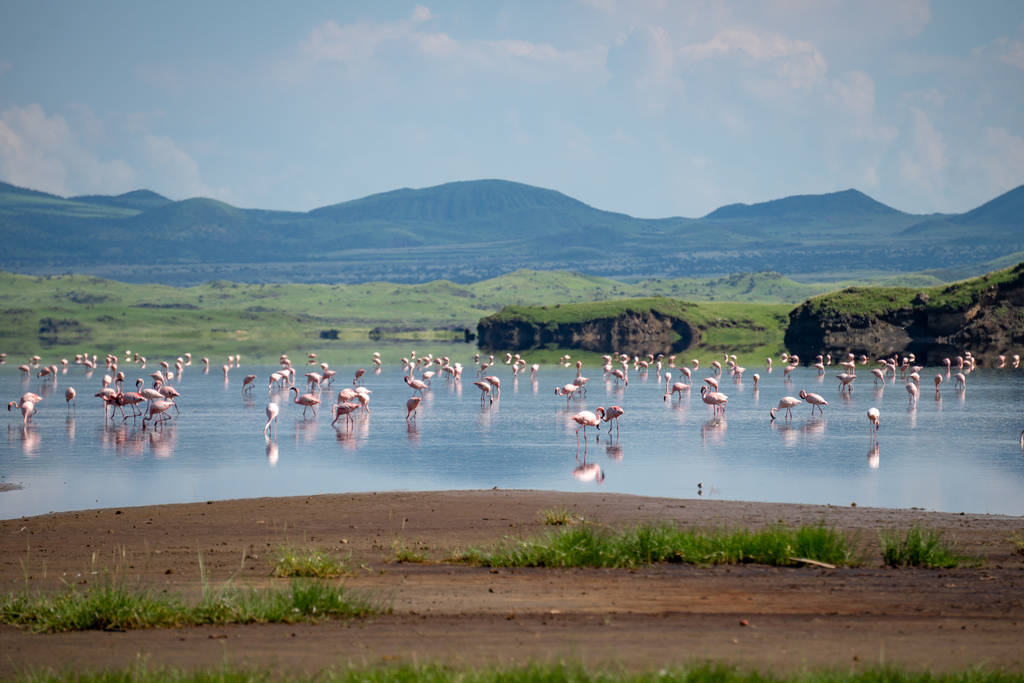
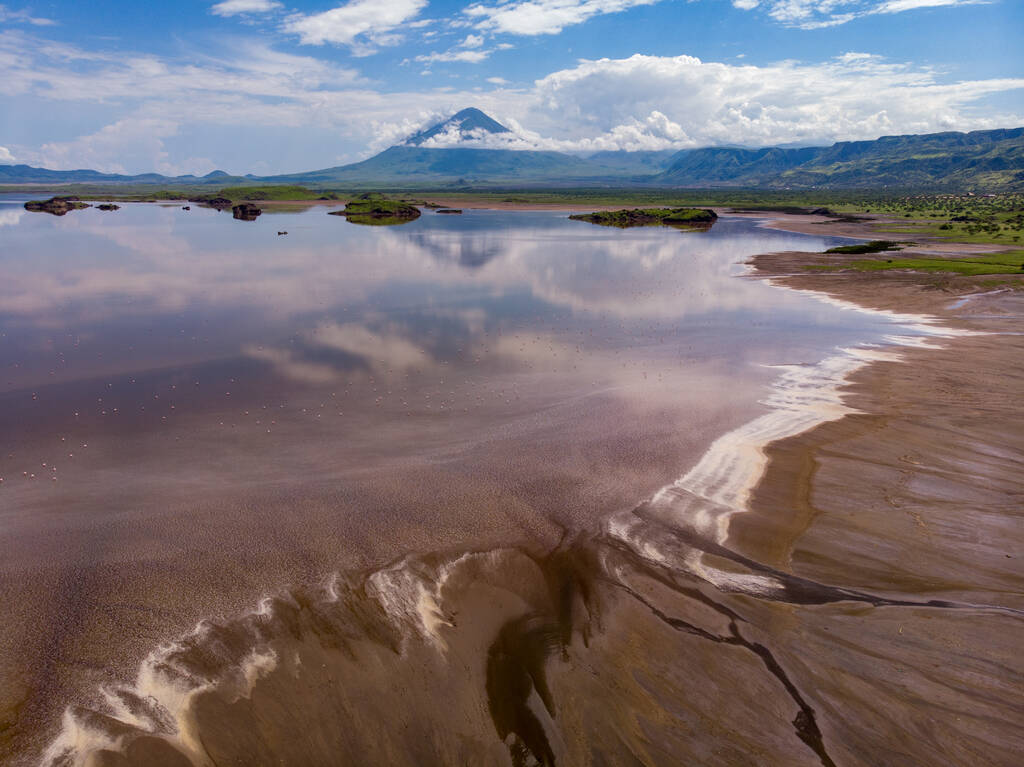
Lake Natron lies in the northern part of Tanzania near the border with Kenya, within the eastern branch of the Great Rift Valley. At first glance the lake appears beautiful, even calm, with wide shallow waters reflecting the surrounding volcanic hills. Yet beneath that quiet surface exists one of the most chemically extreme environments found in any natural lake on Earth.
The water of Lake Natron contains large quantities of sodium carbonate and other alkaline minerals. These minerals originate from volcanic ash and nearby geothermal activity that feed into the lake through rivers and underground springs. As the hot sun evaporates water from the shallow basin, the mineral concentration increases dramatically.

The result is water with a pH that can reach around ten and sometimes even higher. In simple terms, the lake’s chemistry is similar to strong household cleaning solutions. Temperatures in the shallow waters can also rise above forty degrees Celsius during the hottest months of the year.
These conditions make survival extremely difficult for most animals. Fish are scarce and only a few specialized microorganisms can tolerate the chemical composition. When birds or animals die in the lake, mineral deposits may coat their bodies. Over time these deposits can preserve the shapes of the animals, creating the appearance that they have turned into stone.
This unusual preservation became widely known through the photographs of wildlife photographer Nick Brandt. During a visit to the lake he discovered the preserved remains of birds along the shoreline. Brandt later photographed these remains carefully placed on branches and rocks, creating haunting images that drew global attention to the strange chemistry of Lake Natron.
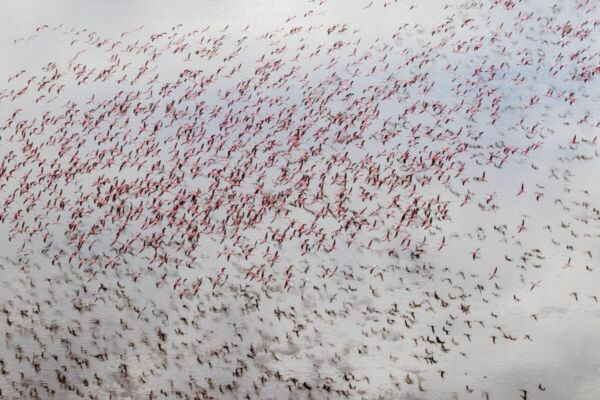
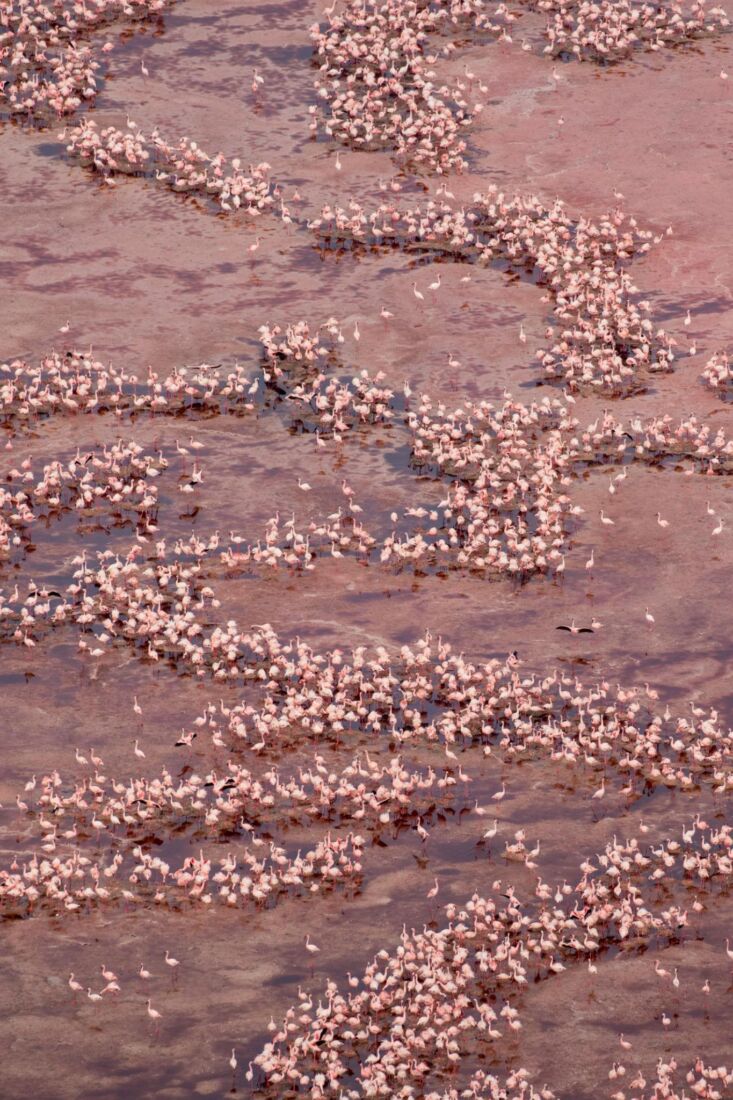
Despite its harsh environment, the lake plays an essential ecological role. Lake Natron is the most important breeding ground in the world for the lesser flamingo. Each year millions of flamingos gather on the lake’s shallow salt flats to build small mud nests and raise their chicks.
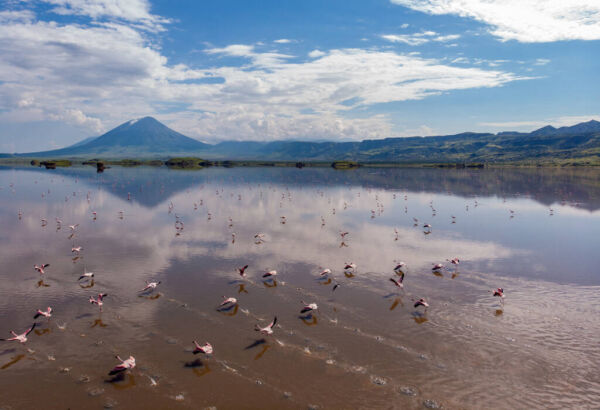
The reason flamingos thrive here is simple. The same alkaline water that prevents most predators from surviving also protects the birds. Crocodiles and other large animals cannot tolerate the lake’s chemistry, leaving the flamingos relatively safe while nesting.
The lake’s red and orange colors come from microorganisms called halophilic algae and bacteria that flourish in the salty water. These organisms produce pigments as part of their metabolism. When sunlight reflects across the shallow surface, the lake often appears deep crimson from above.
From the ground the landscape looks stark and quiet. Salt crusts cover the shoreline. Occasional flamingos move slowly through the shallow water while distant volcanic peaks rise across the horizon. Yet when viewed from the air, Lake Natron reveals its full character. The water shifts between shades of red, orange, and pink, forming natural patterns that stretch across the basin.
Lake Natron demonstrates how extreme environments can still support specialized forms of life. It also reminds scientists that ecosystems often thrive in places that initially appear completely inhospitable.