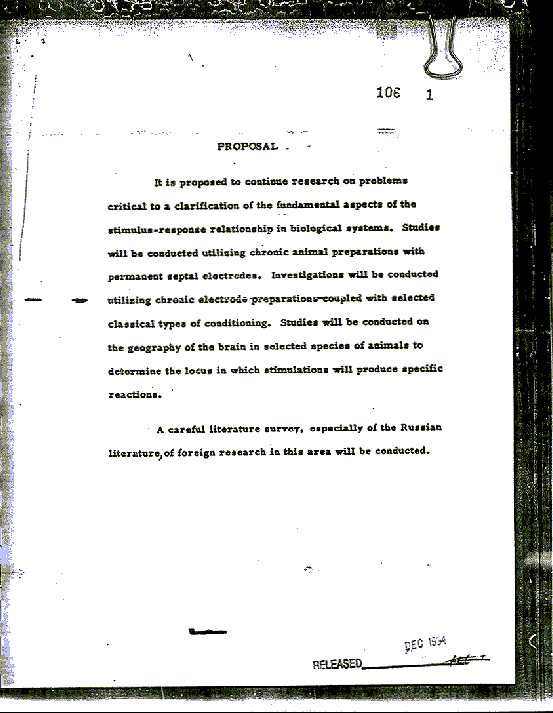
In the tense political atmosphere of the early Cold War, intelligence agencies around the world began exploring new methods of psychological influence. Governments feared that enemies might develop techniques capable of manipulating human thoughts or extracting secrets from captured agents. Within this climate of suspicion and competition, the Central Intelligence Agency launched one of the most controversial research programs in its history.
The project eventually became known as MK Ultra. Initiated in 1953 under the direction of CIA chemist Sidney Gottlieb, the program focused on studying how chemicals, drugs, and psychological techniques might alter human perception, memory, and behavior. The underlying goal was to explore whether methods of mind control or interrogation enhancement could be developed for intelligence purposes.
Much of the research centered on the effects of psychoactive substances, particularly LSD, which had only recently been discovered at the time. Scientists involved in the program believed that such substances might influence consciousness in ways that could reveal new information about human psychology.
Experiments were conducted in laboratories, universities, hospitals, and occasionally in locations where participants were unaware they were part of a research project. Some volunteers knowingly participated in drug trials, but in other cases individuals were reportedly exposed to substances without their informed consent.
As the program expanded, MK Ultra eventually included more than one hundred separate research projects exploring topics such as sensory deprivation, hypnosis, psychological stress, and the effects of various chemical compounds on human behavior.
For many years the program remained classified, known only to a limited number of government officials and researchers. That secrecy began to unravel during the mid 1970s when investigations by journalists and congressional committees revealed fragments of the project’s existence.
The revelations shocked many observers. One of the major complications facing investigators was that numerous MK Ultra records had been deliberately destroyed in 1973 as part of a large-scale document purge ordered within the CIA.
Despite the missing files, surviving records and testimony from former participants provided enough information to outline the scope of the research. Congressional hearings held in 1975 examined the program as part of broader investigations into intelligence agency activities during the Cold War.
During these hearings, Senator Frank Church expressed concern about the potential consequences of such programs if left unchecked.
“The potential for the disastrous rise of misplaced power exists and will persist,” he warned during testimony examining intelligence practices.
Public reaction to the discoveries was intense. Many critics argued that conducting experiments involving drugs and psychological manipulation without proper consent represented a serious violation of ethical standards.
Supporters of intelligence research at the time argued that the program emerged from fears that rival nations were developing similar techniques. During the early Cold War there were widespread concerns that adversaries might be exploring methods of brainwashing or psychological control.
Even so, the ethical questions surrounding MK Ultra remain the central focus of historical discussions about the program today.
In the years following the investigation, reforms were introduced to increase oversight of intelligence agencies and to strengthen ethical standards governing research involving human subjects. Government institutions also adopted stricter review procedures designed to ensure that participants in scientific studies receive clear information and voluntary consent.
Today MK Ultra continues to appear in books, documentaries, and academic studies examining the intersection of science, psychology, and government secrecy. The program’s history illustrates how fears during periods of geopolitical tension can lead institutions to explore controversial methods in the pursuit of national security.
More than half a century later, the story still provokes debate about the boundaries of scientific research and the responsibilities of governments when experimenting with techniques that affect the human mind.