There was a time when a camera felt like a complete tool. It arrived with everything needed for the job. A secure build, clear buttons, full sized ports and room for accessories that worked without compromise. Today cameras still look modern and impressive, but many photographers feel something has changed. They sense that pieces of the tool are disappearing quietly. Some call it progress. Some call it design evolution. But many working photographers feel the absence in their hands. They try to plug something in and there is no port. They try to mount an accessory and it does not sit properly. They try to work the way they used to and realise the camera has removed a function they depended on.
This change has not happened suddenly. It is a slow removal of features that camera companies consider old or unnecessary. A port disappears here, a button disappears there, a useful bracket gets replaced with a smaller piece that feels less secure. People do not notice at first. They focus on the new sensor, the new processor, the new low light performance. Only later during a real job do they discover that something essential has gone missing. This is one of the reasons many photographers talk about modern camera limitations more often now. They feel that the tools they trusted are slowly becoming incomplete.
One of the clearest examples is the full sized HDMI port. For years it was a basic part of any serious camera used for video work. It allowed stable external recording. It allowed clean monitoring. It allowed secure connection during events and shoots where movement was constant. Many companies are now replacing this with micro HDMI. The micro port feels delicate. It bends easily. It disconnects with slight movement. Photographers and videographers who shoot weddings, concerts or documentaries know how frustrating this is. One accidental pull and the feed is gone. The smaller port does not match the demands of real work, yet it is becoming common in new bodies. This is why the camera features removed issue has become an important topic among working shooters.
Another missing piece that people quietly miss is the PC sync port. Studio shooters relied on it for triggering lights reliably. The port was simple and strong. It worked in every situation. Many modern cameras have removed it completely. They force shooters to depend on wireless triggers that can fail, lag or misfire. This creates tension during commercial shoots. A tiny misfire can cost time, energy and confidence. The old port existed for a reason. It offered certainty. Its disappearance shows that the focus has shifted from practical use to design minimalism.
The removal of dual card slots in some cameras also created concern. Photographers who shoot once in a while may not feel the loss. But wedding photographers, journalists, documentary shooters and event professionals depend on redundancy. A single card can fail. A single card can corrupt. Dual slots are not a luxury. They are a form of security that protects real moments. When companies remove the second slot to save space or cost, they take away the safety net that many professionals built their workflow on.
The same story appears with battery grips. Many new cameras are not designed to support traditional battery grip systems. This limits long shooting sessions. Some companies offer smaller grip additions that do not function like full grips. The grip used to be a stable extension of the camera. It offered better handling and longer life. Many photographers used it for comfort, especially during long events. The removal or reduction of grip compatibility makes shooting less comfortable and affects stability.
The hot shoe has also changed quietly. Some brands now use proprietary smart shoes that break compatibility with third party flashes and microphones. This pushes photographers into buying ecosystem locked accessories. It also makes older and reliable tools suddenly unusable. A flash that worked for years becomes useless on a new body. A microphone that recorded countless interviews no longer fits. This loss is not always mentioned in product announcements. Photographers discover it later, often during a shoot.
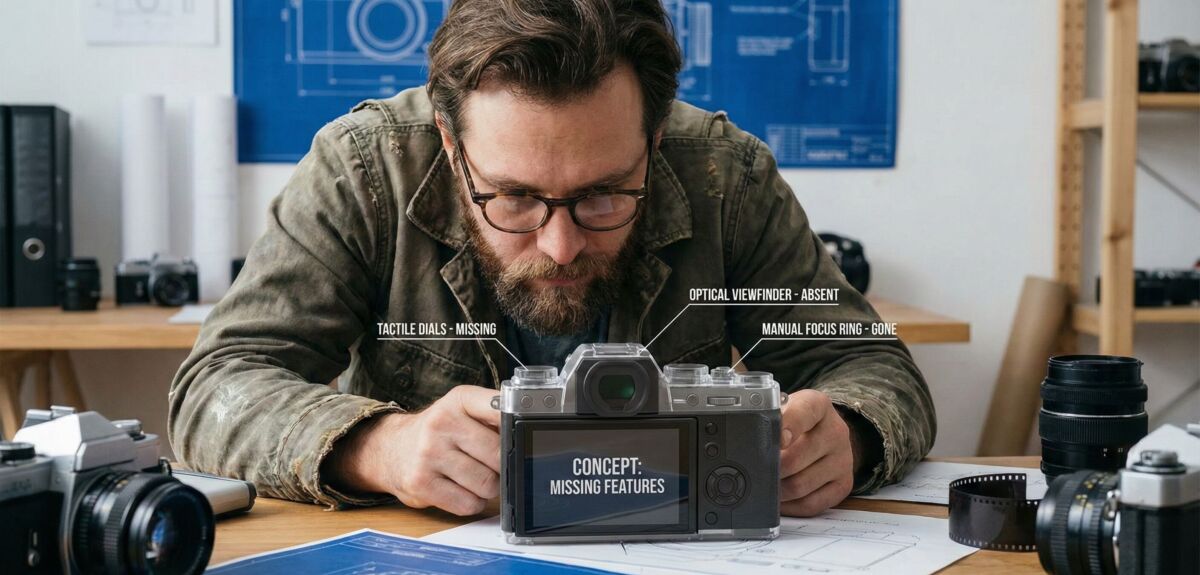
Another change is the disappearance of mechanical switches and dedicated buttons. Older cameras had switches that photographers could use without looking. They could change modes by feel. They could adjust settings during action. Modern design sometimes replaces these with touchscreen menus. Touchscreens are convenient for viewing images, but slower during moments that require fast reflexes. A touchscreen cannot replace the speed of a mechanical button that you can find with your thumb during a moving scene. When a button disappears, the workflow slows down. The photograph that could have been captured slips away.
Some features disappear in software too. Companies remove old colour profiles, limit custom settings or reduce certain functions that previous models offered. Photographers who depend on those features feel the absence immediately. They remember the way their old camera behaved and cannot recreate it. This affects creative habit. It affects style. It affects the natural flow of working with the tool.
Another quiet removal is the robust build quality that older cameras were known for. Many new cameras feel lighter and smaller. This is useful on paper, but sometimes the lighter build leads to less durability. The camera might feel fine during normal days, but photographers who work outdoors or in unpredictable weather notice the difference. They feel the body is more fragile. The grip feels thinner. The camera demands more careful handling. This changes the relationship between the photographer and the tool. Confidence becomes replaced with caution.
There is also the issue of older lens compatibility. Some brands are slowly removing support for their older mounts. The lenses that served photographers for decades no longer attach without adapters. And even with adapters, the autofocus behaviour changes. Some features lag. Some lenses lose functionality. Photographers feel like they are being pushed to abandon glass they invested in years ago. This creates financial and emotional weight. A lens is more than a piece of gear. It carries memories and moments. When companies shift to new mounts without full support, they create a painful gap in the system.
The disappearance of certain ports affects field work too. Tethering photographers who shoot products or fashion depend on stable USB connections. Some cameras now use tiny connectors that disconnect easily. This interrupts the shoot. It stops the flow. It affects the team around the photographer. What used to be a smooth workflow becomes an unstable routine.
The quiet shrinking of the optical viewfinder is another change many photographers feel. Even though mirrorless technology brings advantages, some shooters still miss the clarity and natural feel of an optical view. They miss the absence of lag. They miss the way the world looked directly through the lens. The loss of that connection affects the way they shoot. It changes their emotional link to the scene.
All these changes add up to a bigger truth. Camera companies try to design modern bodies that look clean and advanced. But in the process, they sometimes forget the real world needs of photographers. They remove features not because they are unnecessary, but because they do not match the new design language. The result is a tool that looks more modern but feels less complete for real work.
Photographers want reliability. They want stability. They want a camera that supports them, not one they have to work around. When important features disappear quietly, photographers begin to feel limited. They begin to feel like their tools are moving away from their needs instead of evolving toward them.
This is why the conversation around camera features removed is growing. People are not asking for old technology. They are asking for practical design. They want the features that helped them work without stress. They want companies to remember the real situations where cameras are used. A documentary filmmaker in a crowded street. A wedding photographer racing between moments. A wildlife photographer waiting in unpredictable weather. A studio photographer who needs stable connections. These needs are not old fashioned. They are essential.
The future of cameras should be about balance. New technology can coexist with the features that made the tool dependable. A camera should not sacrifice usability for a clean design. It should not remove pieces of the tool that shaped years of professional workflow. Photographers feel the impact deeply because these small removals change the work in ways that are not always visible to outsiders.
A good camera is not only measured by its sensor or processor. It is measured by how it behaves in the hand during real moments. It is measured by its ability to stay stable when everything around is moving. It is measured by how well it listens to the needs of the photographer. The features that disappear quietly are often the ones that supported these moments. Their absence tells a story about the direction of modern camera design. It is a story worth paying attention to.
FAQ
Why are camera companies removing old features
Because they follow design trends that prioritise smaller bodies and simpler surfaces, even when these choices remove practical tools.
Why is the full sized HDMI port important
It offers stronger and more secure video connections compared to micro HDMI which disconnects easily.
Do photographers really need dual card slots
Yes. Dual slots protect important work by providing backup when one card fails.
Why do modern cameras feel less durable
Lighter designs often use thinner materials, which can reduce long term toughness.
How can photographers avoid these limitations
By choosing bodies that keep essential features and by paying close attention to port layout, build quality and workflow needs.