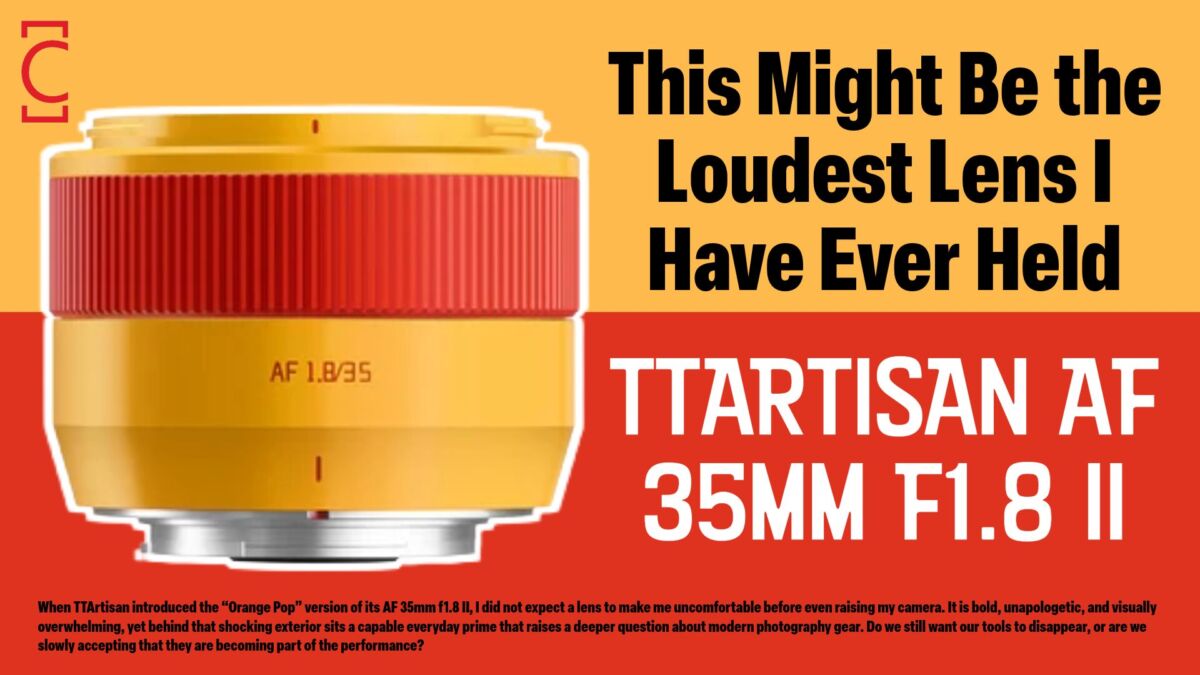
I have used enough lenses to know that most of them follow the same visual language. They are designed to be neutral, serious, and invisible. They exist to serve the image, not compete with it. That is why this lens felt like such a disruption the moment I saw it. The bright yellow body and red focus ring immediately break every unspoken rule of camera design. It does not try to blend in with the camera. It takes control of the camera’s identity.
That first reaction was not excitement. It was hesitation. I imagined walking into a street scene, a wedding, or even a quiet market with this lens mounted, and I could already feel how much attention it would pull. Cameras already change the way people behave. A lens like this amplifies that effect. It announces your presence before you even lift the viewfinder. That alone makes it a controversial choice for photographers who rely on subtlety.
What makes this more interesting is that once the shock of the design fades, you realise that nothing else about the lens is experimental. It is the same AF 35mm f1.8 II that TTArtisan sells in black and silver. The optics are unchanged. The build is unchanged. The performance promise is unchanged. Only the personality is different. This contrast between wild appearance and sensible engineering is what makes the lens so confusing and, at the same time, so fascinating.
The lens is built from aviation-grade aluminium and weighs just under 200 grams, making it comfortable for long shooting sessions. It covers APS-C sensors and delivers a focal length equivalent to just over 50mm, which remains one of the most natural perspectives in photography. It is a focal length that fits into almost any genre, from street and portrait work to food, travel, and daily documentation. That versatility makes the loud design feel even more contradictory because the lens itself is so practical.
Optically, TTArtisan has taken a straightforward but effective approach. With ten elements arranged in seven groups, including ED and high-index glass, the lens is designed to control aberrations while keeping contrast and clarity strong. The bokeh is soft, rounded, and pleasant, with a gentle cat’s eye effect toward the edges that adds character without becoming distracting. The output feels mature and balanced, which makes the colourful exterior even more surprising because nothing in the images suggests novelty or gimmickry.
Autofocus performance also reinforces that seriousness. The STM stepping motor delivers quiet and reasonably quick focusing, and support for face and eye detection on Sony, Fujifilm, and Nikon bodies makes it practical for modern shooting workflows. In everyday use, it behaves exactly like a standard contemporary prime lens. There is no performance penalty for choosing the loud version, and that is important. It means the choice is purely emotional and aesthetic.
Even small design details show careful thought. The USB-C port for firmware updates is built into the rear lens cap rather than the lens body itself. This keeps the lens exterior clean and avoids visible ports that could break the visual flow. It is a subtle but intelligent solution that reflects proper engineering discipline beneath the bold styling.
The problem, or perhaps the intention, is that this lens forces you to make a statement whether you want to or not. With a black lens, you control when your presence becomes noticeable. With this one, attention is automatic. For documentary, street, or journalistic work, that can be a serious disadvantage. Subtlety is often the difference between a natural moment and a staged reaction. In those environments, this lens feels almost intrusive.
At the same time, photography is no longer limited to quiet observation. A large part of modern visual culture lives in social media, branding, lifestyle creation, and aesthetic-driven storytelling. In those spaces, gear becomes part of the visual narrative. Colour is not a distraction but an extension of identity. Seen through that lens, the Orange Pop version starts to make sense. It is not trying to be invisible. It is trying to be expressive.
TTArtisan has already explored this colour language with its mini LED light designed to resemble a classic film canister. On a small accessory, the design feels playful and nostalgic. On a full lens, it becomes a commitment. You are not adding colour to your setup. You are redefining its entire presence. That shift from decoration to identity is what makes this lens such a strong statement.
The pricing reinforces that honesty. At around $140, it is only slightly more expensive than the standard versions. The extra cost is not for better optics or improved performance. It is for character. You are paying for difference, not superiority. That transparency is refreshing in a market that often hides style behind marketing language.
Personally, I still find the design difficult to accept. I prefer equipment that disappears into the background so that the story stays in front. This lens insists on becoming part of the story whether I invite it or not. That does not make it wrong. It simply means it belongs to a different kind of photographer.
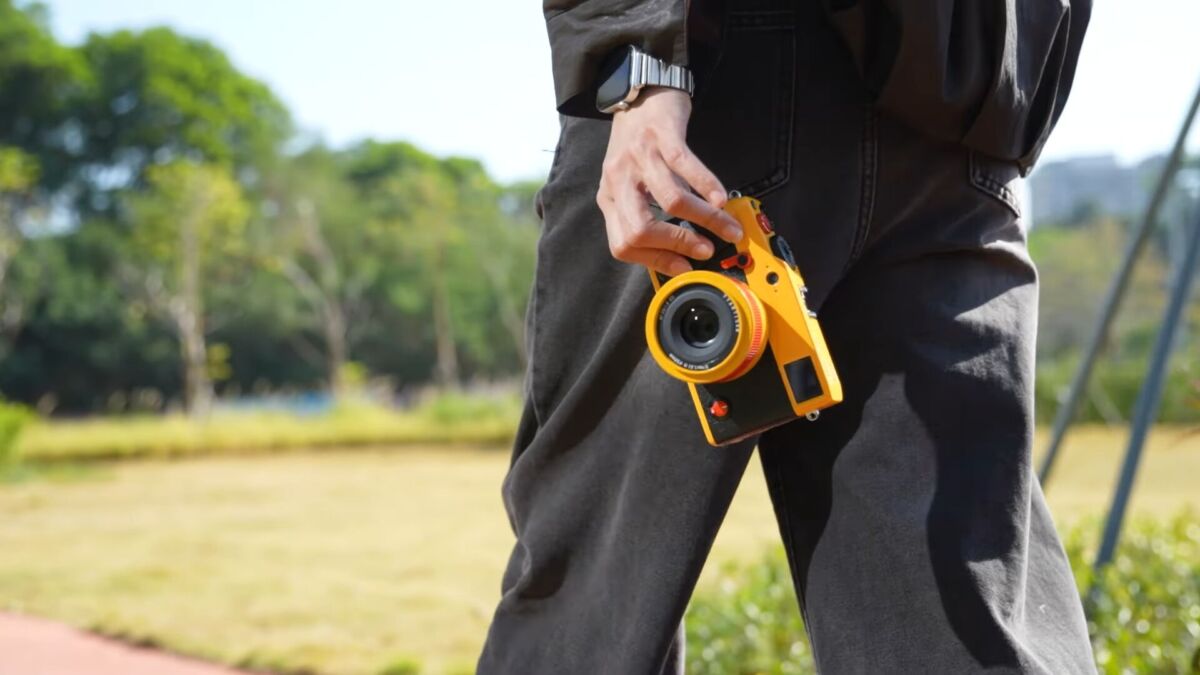
And perhaps that is its real value. It exposes a shift in photography culture. We are moving away from tools that exist purely for function and toward objects that carry personality. Cameras are becoming cultural symbols as much as technical instruments. The Orange Pop lens stands right at that intersection.
I may never mount it on my main camera, but I respect its confidence. In a world of safe, predictable design, it chooses risk. In a market full of silent tools, it chooses to speak. Whether you find it ugly or bold depends on what you want your photography to say before you even press the shutter.

- Panasonic LUMIX 40mm f/2 S Lens and S9 Special Edition Announced at NAB 2026 - April 21, 2026
- How to Shoot Alone Without Losing Motivation - April 14, 2026
- How “Community” Became a Marketing Strategy - February 15, 2026