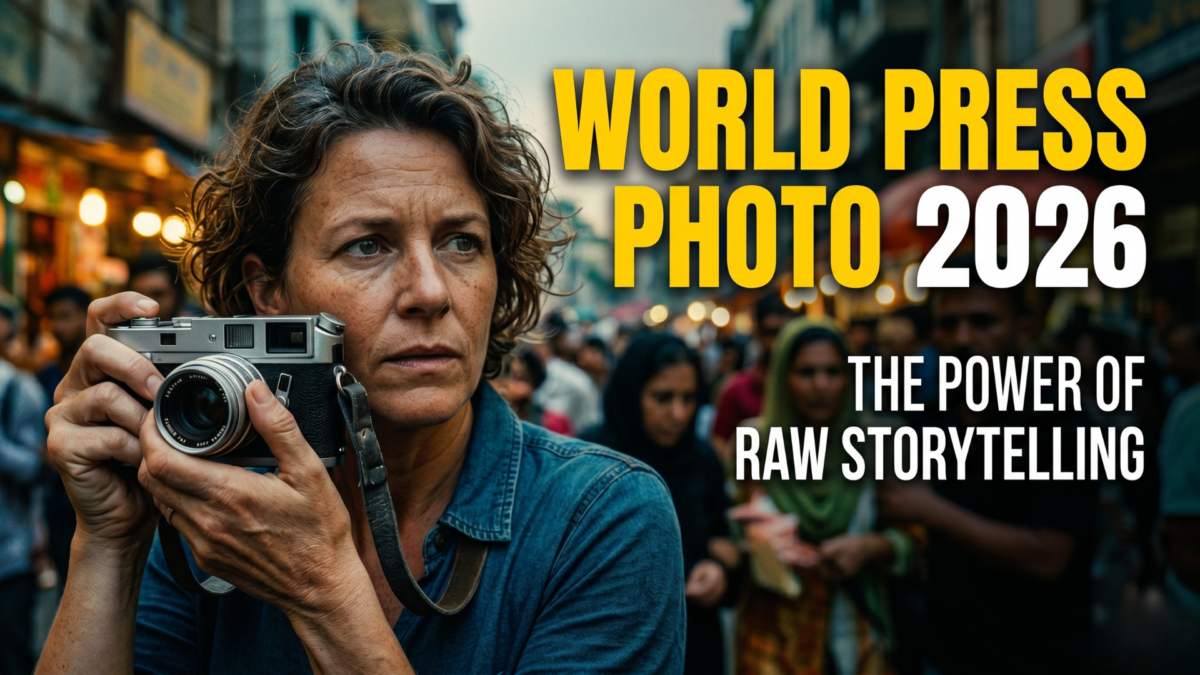
The true measure of a photograph is rarely found in its technical perfection. It is found in its capacity to make us feel the weight of a specific human experience. The winners of the 2026 World Press Photo Contest were announced this April, and the awarded images serve as a masterclass in this exact philosophy. The global jury did not elevate polished aesthetics or manufactured drama. They chose photographs that confront the viewer with raw, unscripted reality.
For working documentary photographers, these awards offer more than just an annual recap of global events. They provide a clear framework for how visual storytelling is evolving. The winning images strip away the noise of our frantic digital age and force a moment of uncomfortable observation. They remind us that the core of photojournalism is not about speed but about immense patience and the courage to witness history as it unfolds.
The Anatomy of an Award Winning Frame
The 2026 Photo of the Year was awarded to American photojournalist Carol Guzy for her devastating image titled “Separated by ICE.” Captured inside a US federal building, the photograph documents a family violently torn apart by the state. The power of this image lies entirely in its raw emotional center. Guzy has spent her career following families to map the real consequences of government actions, and that long-term dedication is evident in the frame. The image does not ask for sympathy; it demands attention. It is a painful, necessary observation that shakes the viewer out of complacency.
When analyzing frames of this caliber, the cinematic eye becomes apparent. The photographer must anticipate the human reaction before it happens. Guzy’s image works because it captures the precise fraction of a second where the emotional tension shatters. This level of storytelling cannot be achieved by rushing into a room and firing off a high-speed burst. It requires the discipline of presence.
Witnessing the Unscripted Reality
The contest finalists further reinforce this commitment to unflinching documentary work. Victor J. Blue’s coverage of the Achi women in Guatemala captures a quiet but immensely powerful moment of justice outside a courtroom. The photograph distills decades of trauma and resilience into a single, cohesive visual narrative. Similarly, Saber Nuraldin’s work documenting the aid emergency in Gaza confronts the viewer with the overwhelming scale of human suffering while maintaining a focus on individual dignity.
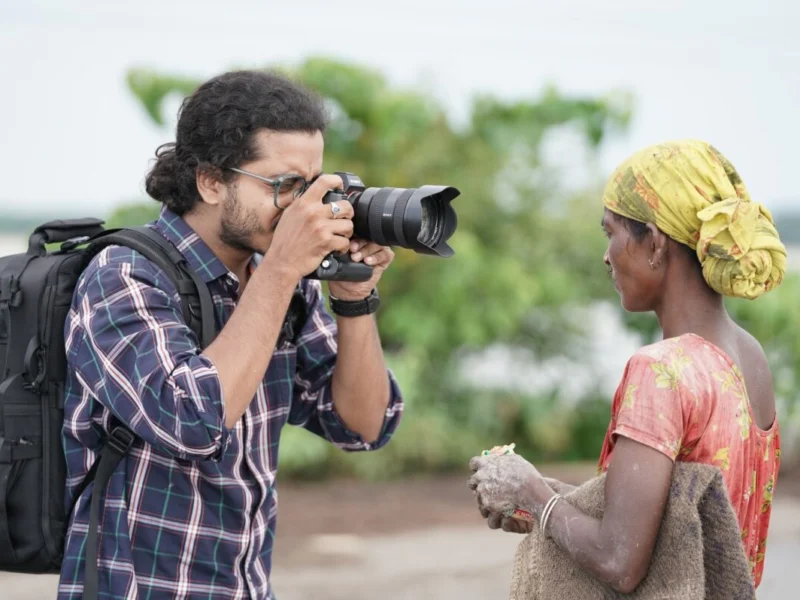
These images share a common thread. They reject the staged reality that dominates modern media. The photographers had to become invisible observers, allowing the environment to breathe and the subjects to exist authentically within the frame. This is the essence of building a narrative that actually matters. It is about distilling a complex environment into a single frame that holds profound authority.
Cultivating the Slow Perspective
In a year where the industry is obsessed with automated generation, the 2026 World Press Photo winners prove that human intuition remains irreplaceable. A camera can expose a scene perfectly but it takes a deeply observant human to understand why the scene matters. The awarded photojournalists demonstrated an unwavering commitment to slow observation. They lingered in the uncomfortable spaces. They waited for the physical elements and the emotional weight to align.
This approach is exactly what modern audiences are craving. People are fundamentally fatigued by manufactured perfection. They want the messy, raw truth. As we look at the winning images from 2026 we are reminded that our role as visual storytellers is not to sanitize the world. Our job is to document it honestly.