I did not renew Flickr Pro because it was exciting. I renewed it because it was stable. It felt dependable in a way that most platforms no longer do. When everything around photography started to feel like a marketplace disguised as community, Flickr still felt like a library. That sense of calm was powerful. It made me believe I was supporting something ethical, something that respected images and the people who made them. Over time, though, I started to notice that calm can also hide stagnation, and stability can quietly turn into avoidance.
The first thing I realized was that my subscription was not really paying for progress. It was paying for preservation. Flickr Pro was not evolving alongside my needs as a photographer. It was simply maintaining the same promise it had always made. Unlimited storage, original resolution files, no advertising. These features once felt revolutionary. Now they feel basic. Storage is no longer a premium service. It is infrastructure. Almost every serious platform offers it. When Flickr Pro still treats storage as its main strength, it shows how little its idea of professional photography has shifted.
I began asking myself what I was truly receiving in return for the subscription. Beyond storage and comfort, there was very little. Flickr was not helping me protect my work. It was not helping me distribute it. It was not helping me earn from it. It was not helping me understand where my images traveled once they were uploaded. It was simply holding them. That is not meaningless, but it is no longer enough.
Copyright was the first place where my trust started to weaken. Flickr’s licensing system always felt abstract. I had chosen my settings years ago and rarely thought about them again. In a world where images are scraped automatically, repurposed commercially, and absorbed into AI training pipelines, that casual approach now feels risky. I realized that Flickr was not guiding me through those risks. It was leaving me alone with them. A paid platform should help its users understand modern threats. Flickr largely pretends the internet has not changed.
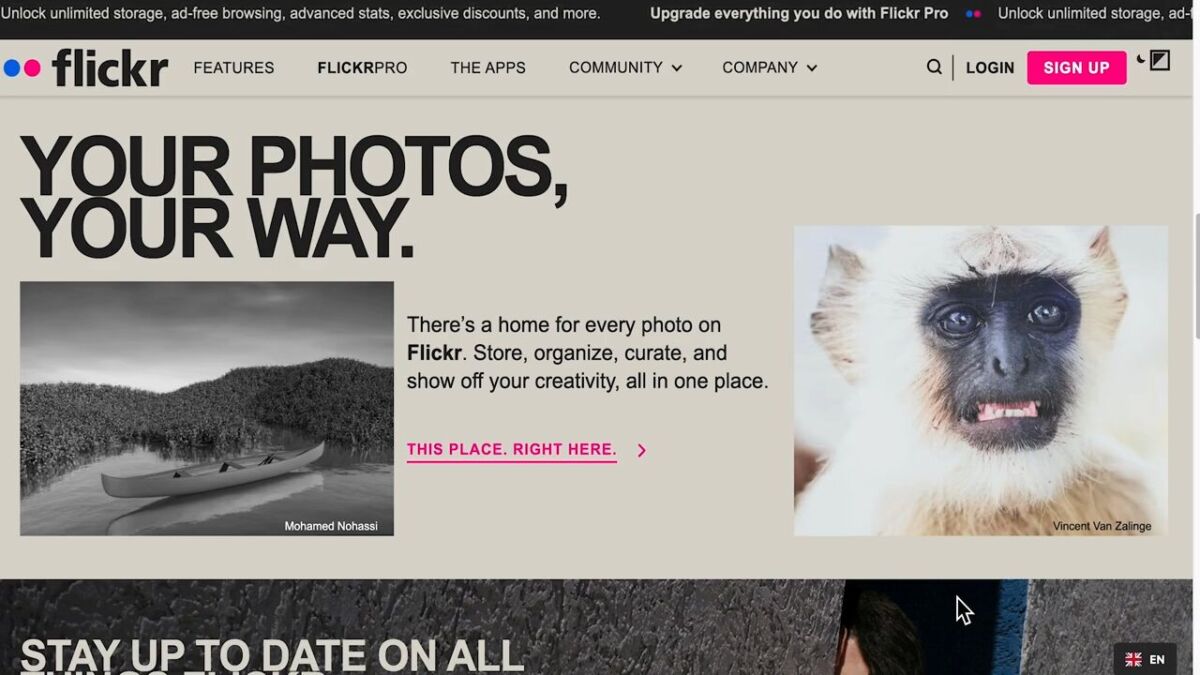
When I looked for tools to track where my images were being used, I found none. There were no alerts, no monitoring systems, no meaningful copyright defense mechanisms. The platform that claimed to respect photography did not offer any serious way to defend it. That contradiction stayed with me. Respect is not a feeling. It is something that shows up in systems and protection. Flickr Pro talks about respect, but it rarely implements it.
The more I paid attention, the more I noticed that Flickr avoided engaging with photography as work. It treated photography as an archive activity rather than a professional practice. There were no tools to license images. No integrated way to sell prints. No client galleries. No usage analytics that mattered beyond likes and views. Everything remained personal and static. Meanwhile, photographers were struggling to survive financially in an industry that had become more demanding and less forgiving.
Community used to be my main reason for staying. Flickr once felt alive. Conversations were thoughtful. Critique was serious. Relationships grew slowly and deeply. In 2026, the structure is still there, but the energy is not. Groups exist, but many feel quiet. Comments are fewer and shorter. Discovery feels accidental rather than intentional. I no longer feel that Flickr is actively building community. It is simply maintaining its shell.
What bothered me was not that Flickr changed. It was that it did not change. While every other platform was forced to respond to new realities, Flickr remained frozen in its original idea of what photography online should look like. That idea was noble once. Now it feels incomplete.
I also became aware of how much my subscription depended on emotional attachment. I stayed because my archive was there. Years of work lived on that platform. Leaving would mean migrating, reorganizing, and emotionally closing a chapter. That difficulty benefited Flickr more than it benefited me. I was paying partly because stopping felt harder than continuing. That realization was uncomfortable.
When platforms survive on hesitation rather than satisfaction, something is wrong.
Flickr Pro never actively harmed me. It never exploited my work aggressively. It never drowned me in advertising. Those things matter. But absence of harm is not the same as presence of care. Care requires effort. Care requires adaptation. Care requires standing with photographers as the industry becomes more complex and more dangerous for creators.
I noticed how little Flickr spoke about AI, about scraping, about platform rights, about ownership erosion. It remained neutral when neutrality was no longer enough. At a time when photographers needed institutions to defend their interests, Flickr chose silence. It chose safety over leadership.
What I eventually understood was that Flickr Pro was selling quietness, not protection. It was selling familiarity, not power. It was selling comfort, not capability. That is why it still feels pleasant to use but increasingly difficult to justify.
I do not regret my years on Flickr. It gave me space to grow. It gave me a sense of belonging when photography felt simpler. But in 2026, my expectations are different. I no longer want just a place to store my past. I want a platform that helps protect my future.
A paid service should not survive only because it is polite and calm. It should survive because it fights for the people who trust it with their work. Until Flickr Pro becomes that kind of platform, it will remain what it is now for me: a peaceful archive, not a professional ally.

- Panasonic LUMIX 40mm f/2 S Lens and S9 Special Edition Announced at NAB 2026 - April 21, 2026
- How to Shoot Alone Without Losing Motivation - April 14, 2026
- How “Community” Became a Marketing Strategy - February 15, 2026