In photography today, being featured is treated as a milestone. It is announced proudly, shared widely, and framed as proof that one’s work has been validated by an editorial authority. For many photographers, especially those working independently, the feature has become a form of professional currency. It signals progress in a crowded field and offers a sense of arrival. Yet when the excitement settles, what remains is rarely examined with the same seriousness. Very few photographers stop to measure what they actually received against what they gave away.
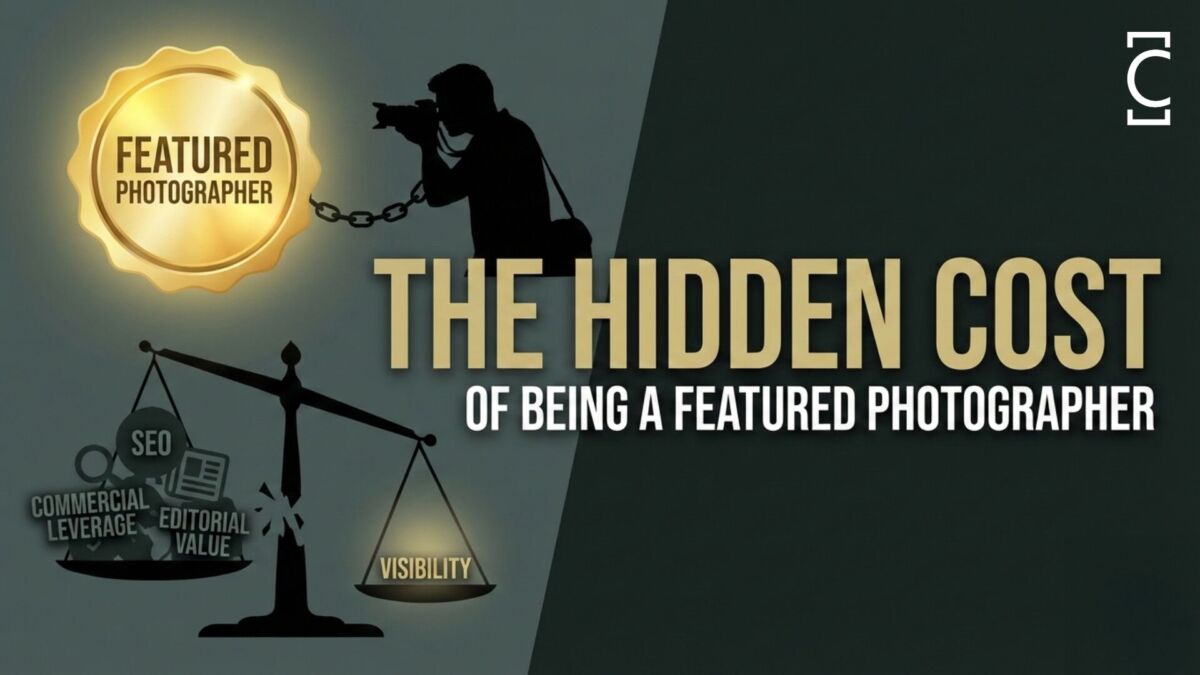
A feature is not just an article. It is content inventory. It is traffic generation. It is brand reinforcement. It is search engine authority. It is marketing material. For publications, it is a low-cost, high-value asset that can be reused, referenced, indexed, and monetised long after the photographer has stopped seeing any benefit from it. For the photographer, it is usually a moment. A screenshot. A link. A sense of pride. These two forms of value are not equivalent, yet they are treated as if they are.
Most photography features are unpaid. That is now considered normal. The logic presented is that exposure replaces payment. But exposure is not a currency that can be exchanged for equipment, rent, insurance, or legal protection. It is not measurable in a way that guarantees sustainability. It is speculative. It is based on the hope that visibility may lead to something else. Publications, however, do not operate on hope. They operate on metrics. Page views. Search ranking. Brand authority. Sponsorship attractiveness. Audience growth. These are concrete benefits, and every feature strengthens them.
When a photography feature is published, the publication immediately gains original editorial content without bearing the production cost. The photographer has done the work over years, often self-funded. Travel, equipment, editing time, and experience are already invested. The publication receives finished material that can be packaged into a story. This is an extraordinary economic advantage that is rarely acknowledged openly. In most other creative industries, such content would require payment or licensing. In photography journalism, it is increasingly expected to be free.
The term “featured photographer” also serves as branding for publications. It signals curation and authority. It tells readers that this platform discovers talent, defines quality, and shapes visual culture. The more photographers it features, the stronger this perception becomes. Each feature reinforces the publication’s position as a gatekeeper. Yet gatekeeping without compensation shifts power entirely to one side. It builds institutional authority while weakening individual bargaining power.
Search engine optimisation is another hidden gain. A photography feature article is rich with keywords, names, project descriptions, and visual metadata. Over time, it improves the site’s ranking in searches related to photography, portfolios, genres, and locations. This attracts organic traffic that converts into advertising value or brand credibility. Years later, that article may still be pulling readers to the publication, long after the photographer has stopped receiving any attention from it. The benefit is permanent for the platform and temporary for the creator.
Photographers are rarely given ownership over how the feature is archived, reused, or indexed. The article becomes part of the publication’s permanent catalogue. It may be referenced in newsletters, reposted on social media, included in marketing decks, or cited in funding proposals. The photographer’s work quietly becomes an institutional asset. This is not inherently unethical, but it becomes questionable when no compensation or contractual clarity exists.
Most features are built on vague agreements. Photographers are asked to submit images, text, and personal narratives without clear licensing terms. Sometimes the language is deliberately soft. “For editorial use.” “For promotion.” “Non-exclusive rights.” These phrases sound harmless, yet they often grant broad permission without defining limits. The photographer assumes the feature is a one-time use. The publication often interprets it as perpetual editorial ownership.
The imbalance is worsened by the emotional framing of features. Photographers are encouraged to feel grateful. Gratitude discourages negotiation. Gratitude replaces contracts. Gratitude makes people accept conditions they would question in any other professional transaction. When something is framed as an honour, asking for compensation feels inappropriate. This is one of the most powerful tools in the system. The language of recognition suppresses the language of rights.
Being a featured photographer also strengthens a publication’s relationship with advertisers and sponsors. A site that regularly publishes fresh visual stories appears active, relevant, and culturally connected. This makes it attractive to brands looking for association with creativity and authenticity. The photographer’s work indirectly fuels commercial partnerships they will never see or benefit from. The feature becomes part of a business ecosystem from which the creator is excluded.
Meanwhile, photographers often measure the value of a feature through social reactions. Likes, shares, comments, and private messages. These are emotionally rewarding but economically fragile. They create the illusion of progress without creating stability. Many photographers collect dozens of features across platforms yet remain financially insecure. The visibility does not translate into negotiating power because it is not formalised, not contractual, and not tied to payment structures.
Another quiet cost is how features shape self-worth. Over time, photographers begin to evaluate their work based on how often it is selected by publications rather than its depth, honesty, or long-term importance. The feature becomes a metric of legitimacy. This shifts creative motivation from storytelling to selection. Work is produced to be feature-friendly rather than personally or socially necessary. That is a cultural cost that cannot be measured in money.
Publications benefit from this shift. Feature-friendly work is predictable. It fits visual trends. It performs well online. It maintains audience engagement. It reduces editorial risk. Photographers who adapt to this system become content suppliers rather than authors. The word author implies control, ownership, and intention. The word supplier implies output and volume. Many features quietly move photographers from the first category to the second.
There is also the question of rights over accompanying text. Photographers are often asked to write about their projects. These texts are intellectual property. They are essays, statements, and narratives that could be developed into books, exhibitions, or long-form publications. Once published under a feature, that text becomes part of the publication’s editorial archive. Reusing it elsewhere may require permission, yet the original creation was unpaid.
The phrase “photo publication exposure” is frequently used as justification. Exposure suggests that attention itself is a form of compensation. But exposure without structural support is unstable. It benefits those who already have financial security and harms those who depend on their work to survive. It creates a system where only the privileged can afford to participate fully.
From a photographer rights perspective, the problem is not that features exist. The problem is that they operate without transparency. A feature should be a professional agreement, not an emotional exchange. It should define usage rights, duration, distribution, and compensation. Without these, photographers surrender control while publications accumulate power.
The photography industry reality is that most platforms rely on unpaid creative labour. This is rarely acknowledged openly because it would expose how fragile the business model truly is. Instead, the narrative is shaped around passion, visibility, and community. These are real values, but they cannot replace fair economic structures.
Being a featured photographer can still have value. It can introduce work to new audiences. It can create connections. It can strengthen a portfolio. But its value is conditional. It depends on whether the photographer understands the transaction. It depends on whether rights are protected. It depends on whether the feature is treated as a step in a career strategy rather than a reward in itself.
The hidden cost is not just financial. It is cultural. It teaches photographers to accept symbolic recognition instead of material fairness. It trains them to trade ownership for visibility. It normalises unpaid labour in a professional industry.
Publications gain authority, content, visibility, SEO strength, and commercial credibility. Photographers usually gain a moment of attention and a line in their biography. These are not equal exchanges. Until they are recognised as transactions rather than honours, the imbalance will remain.
This is not an argument against features. It is an argument for honesty. A photography feature article is a professional product. It has measurable value. That value should be shared more fairly.

- Panasonic LUMIX 40mm f/2 S Lens and S9 Special Edition Announced at NAB 2026 - April 21, 2026
- How to Shoot Alone Without Losing Motivation - April 14, 2026
- How “Community” Became a Marketing Strategy - February 15, 2026